Did you know? The broader POS payment market could expand from around USD 119 billion in 2024 to USD 338 billion by 2034, at about 11% CAGR.
The future of POS systems seems to be taking shape less around machines and more around software, data, and how people actually work day to day. What businesses expect from a POS setup has been shifting for a while now. Faster insights. More flexibility. Fewer rigid parts.
- The global POS terminals market is expected to reach around USD 185 billion by 2032, growing at roughly a 7.7% CAGR.
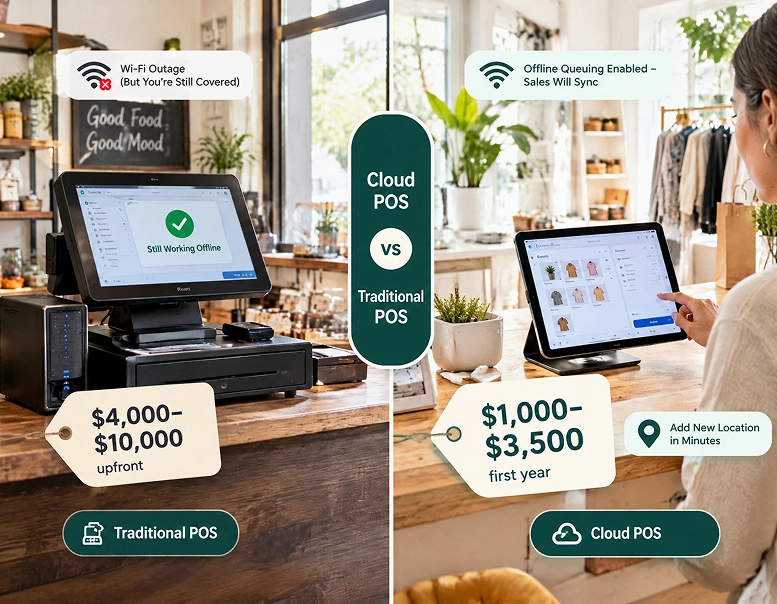
- Cloud-based POS platforms are among the fastest-growing segments. Data forecast to expand from about USD 6.2 billion in 2024 to over USD 45 billion by 2033. This marks the broad adoption of cloud architecture in the POS future.
Industry research increasingly treats POS technology as part of a wider digital backbone, not just a checkout tool sitting at the edge of operations. Checkout itself feels different, too. It can happen across devices. Across spaces, connected to live data. Designed to stay out of the way when things are busy.
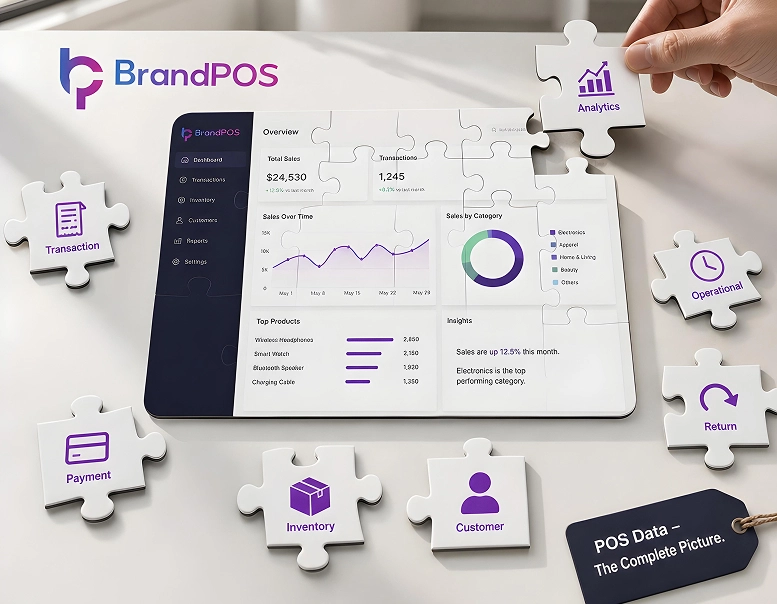
Modern POS platforms often feed into inventory planning, staff coordination, fraud checks, customer patterns, and managerial decisions. Not always perfectly. But more often than before.
- The SoftPOS market was valued near USD 349.6 million in 2024. It is projected to grow to around USD 418.8 million in 2025. It can potentially reach over USD 1.4 billion by 2032 (~19% CAGR)
All of this hints at a deeper shift. The future POS system appears to be moving toward something broader. Less about recording a sale. More about supporting how a business runs as a whole, in a centralised fashion.
- In the past, in 2024, about 53% of all retail transactions were completed using contactless payments, up from 40% in 2022.
For organisations considering technology choices over the next decade, this shift is worth noting. It may help shape systems that grow steadily. Systems that adapt over time. And systems that remain useful as expectations continue to evolve.
Evolution of POS Systems
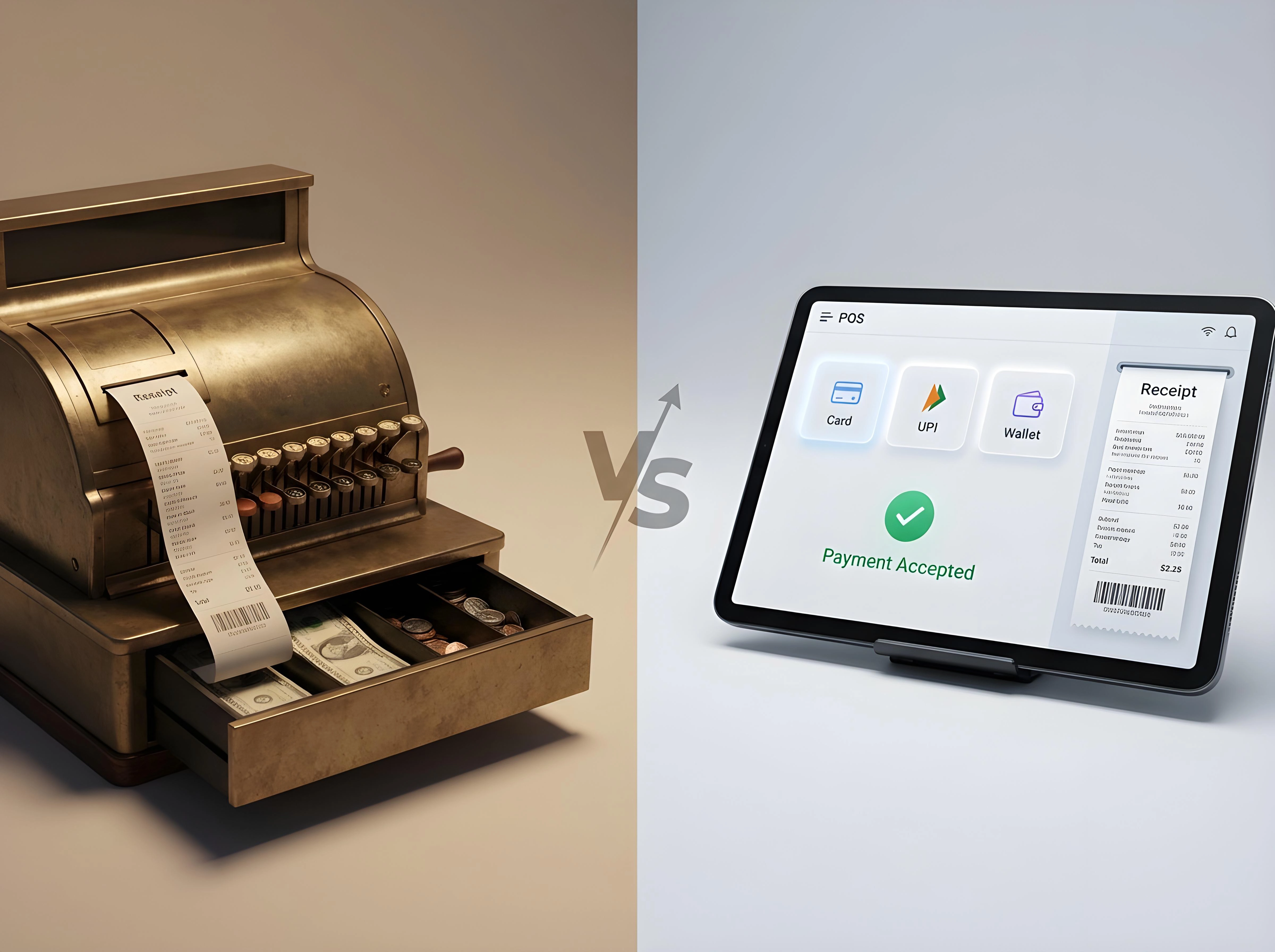
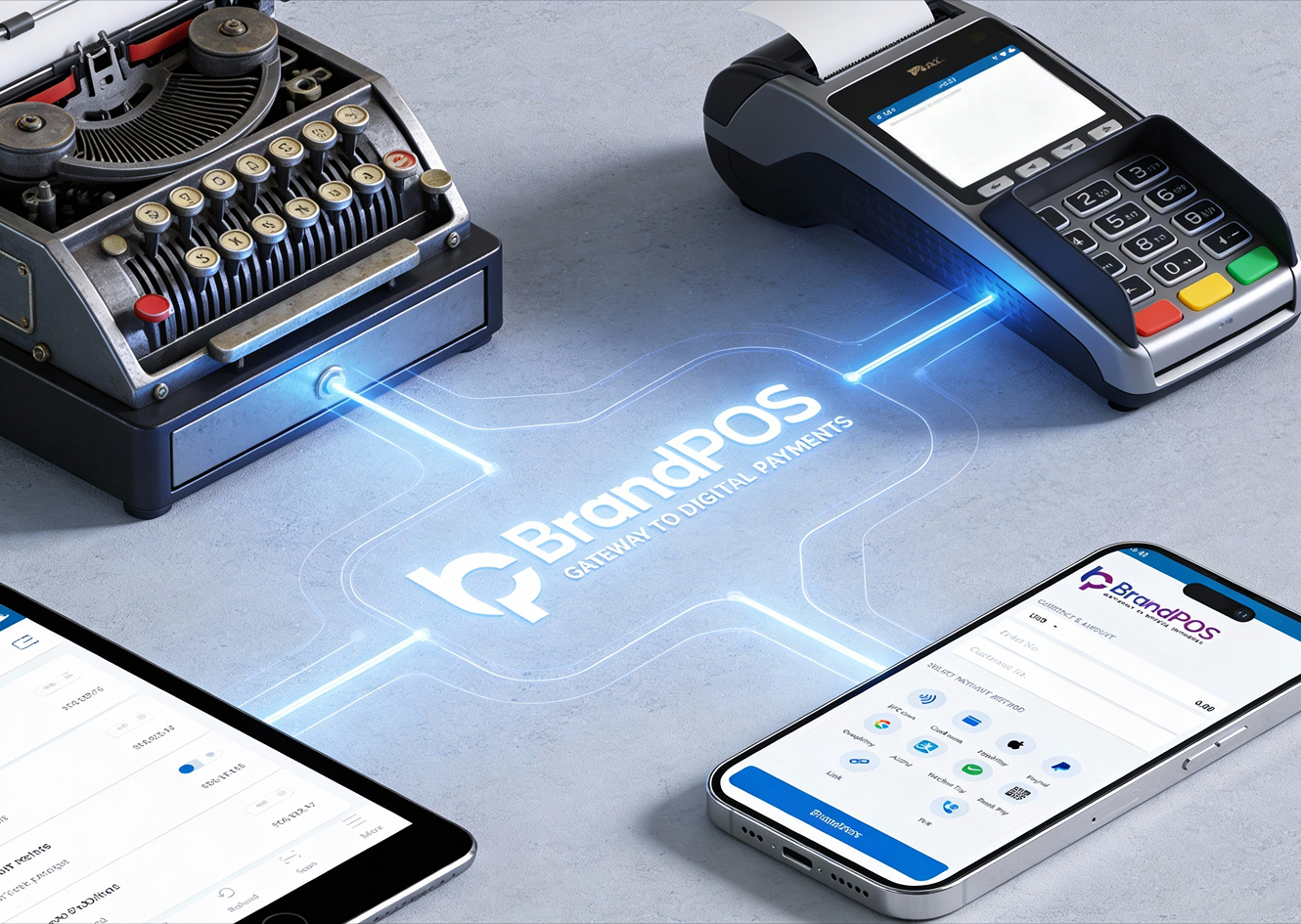
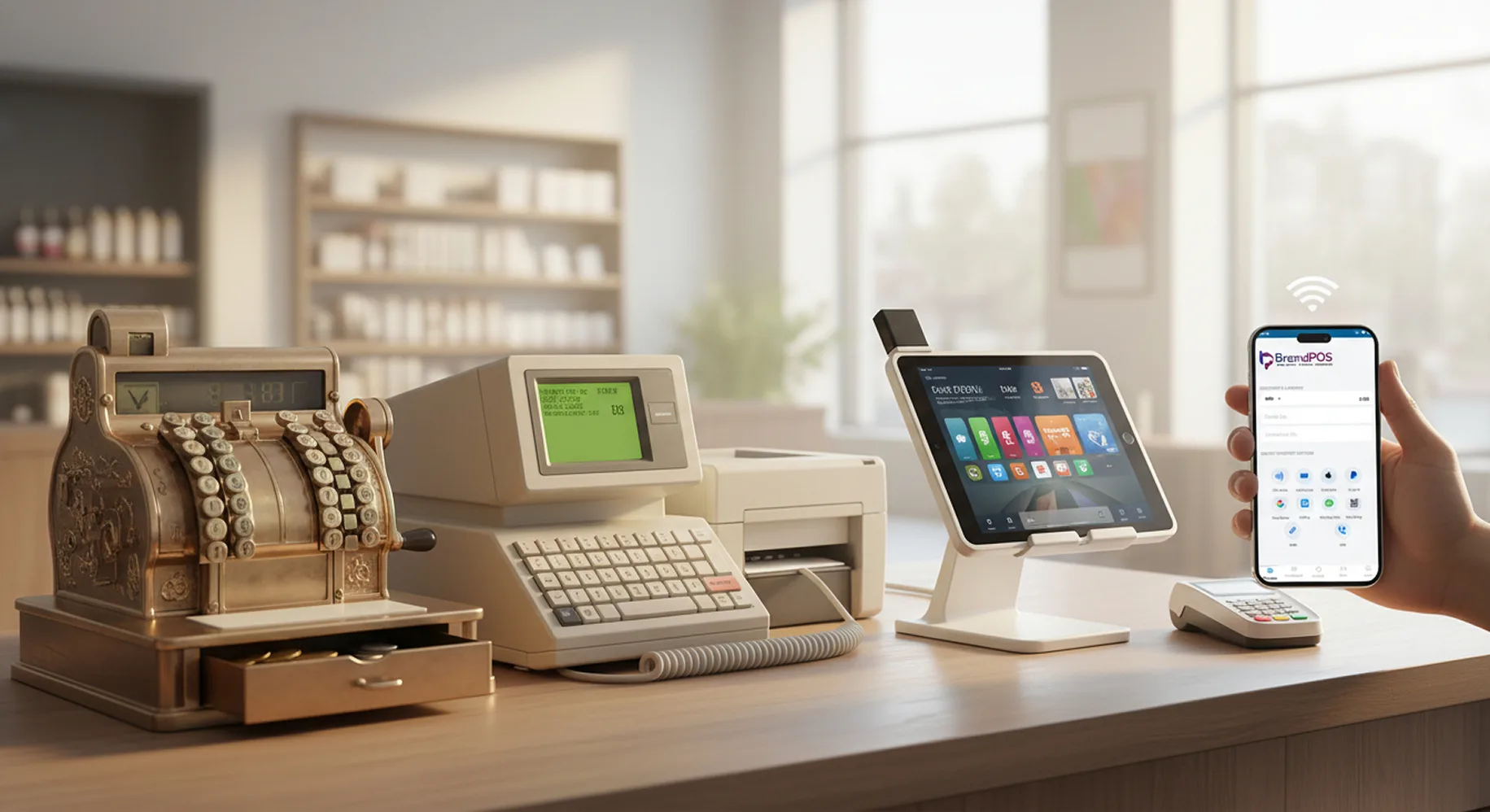
The evolution of POS systems reflects broader changes in commerce and computing.
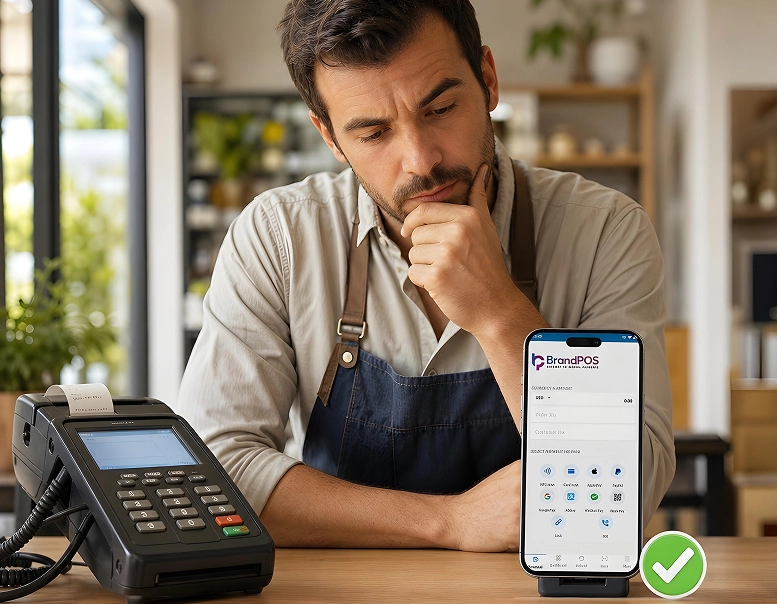
Ready to ditch the card machine?
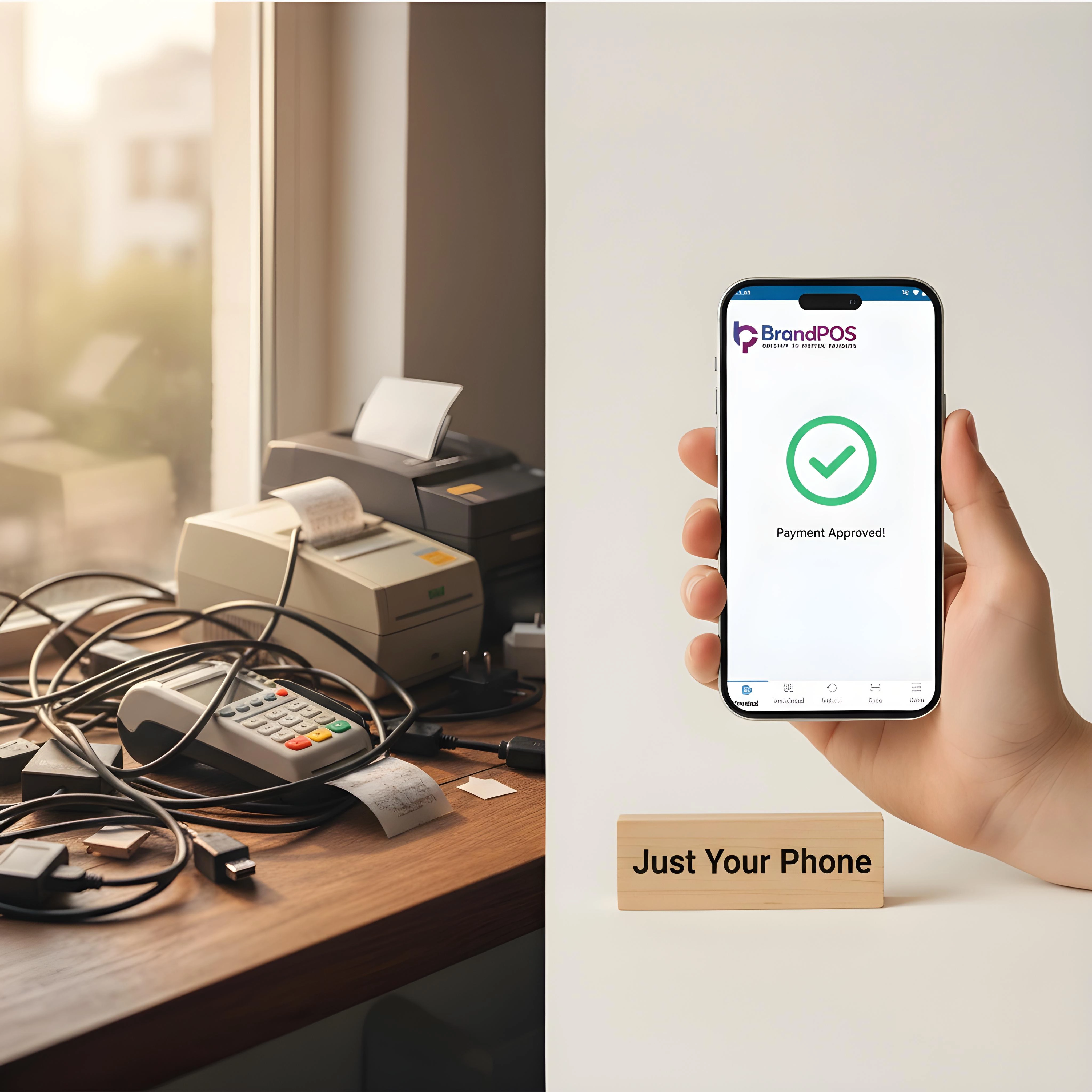
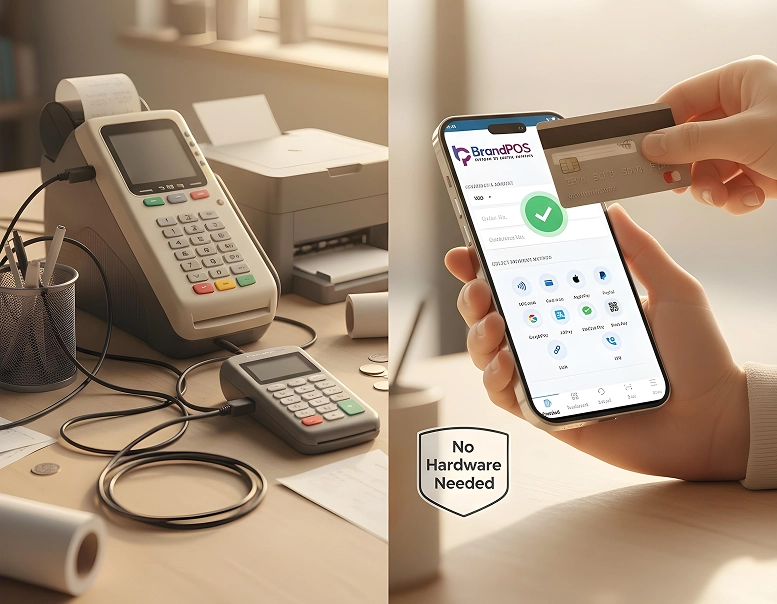
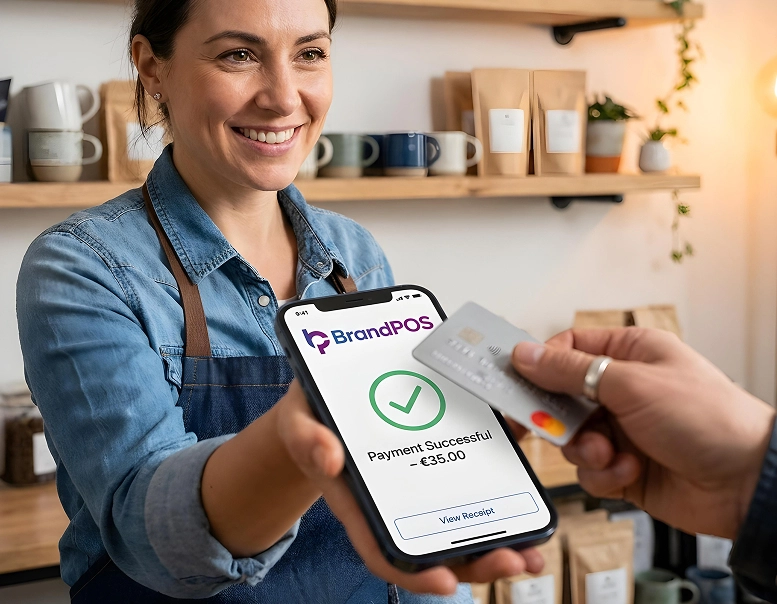
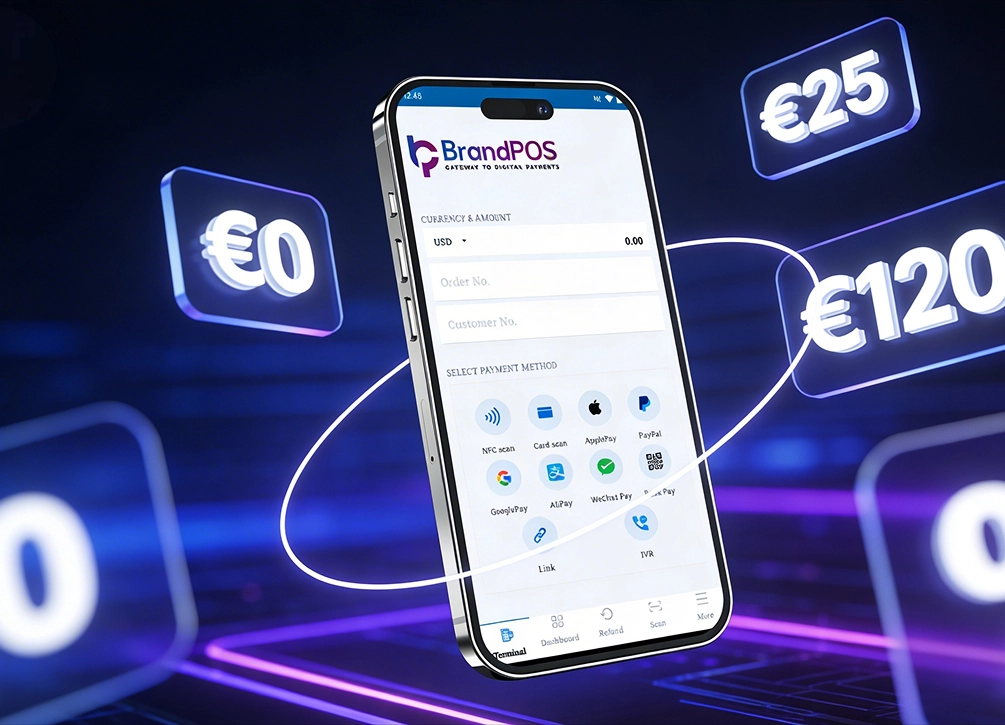
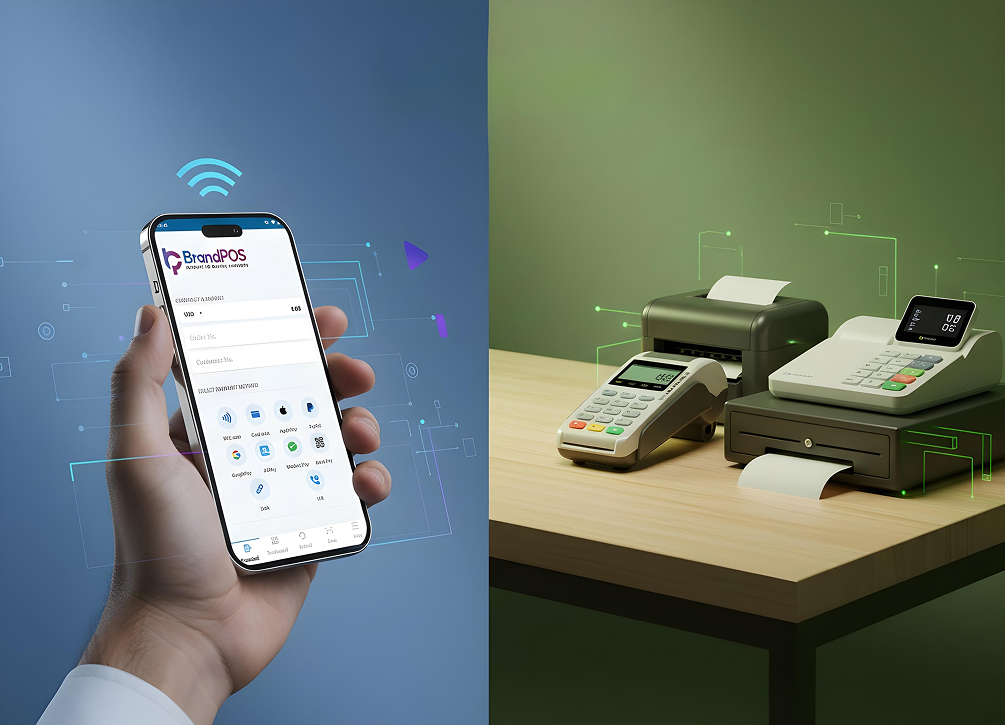
BrandPOS turns any Mobile phone into a certified POS terminal - no cables, no setup headaches.
Get Started for FreePhase 1: Mechanical and Early Electronic POS
- Did you know about the Ritty Model I? It was the first mechanical cash register - designed to counter theft. James Ritty made it to stop his bartenders from scamming the business by pocketing revenue themselves.
- At its beginning stage, registers had drawers with a bell - it acted as a psychological motif of establishing that a transaction had taken place. Having a bell attached to the drawer, it acted as an alarm system too, and the bell announced the whole floor with it's tinkle, whenever the drawer was opened, to provide safety.
- Manual data bookkeeping was done, and there was no internet-based centralisation.
Phase 2: Hardware-Centric Digital POS
- The IBM 3650 and 3660 introduced the commercial barcode scanners, which were coupled by printers.
- In the year 1986, Gene Mosher brought in touchscreen POS which was a huge shift from manual data entry. It drastically reduced training time and efforts, once needed for traditional POS systems.
- Systems remained location-bound and hardware-dependent. There were a lot of hardware and data was static.
Phase 3: Networked and Cloud POS
- Year 2000 onwards saw the onset of dynamic data dealing at the backdrop of the SaaS revolution. Centralized databases and cloud storage came into light.
- Multi-location visibility and reporting at real-time became possible.
- iPad was launched around this era, and it cleanly replaced bulky terminals. It integrated POS software, brought in remote updates and scalability, and reduced entry costs by 90%!
- This phase laid the foundation for the pos future. Considering the API economy, POS found itself being merged with accounting and marketing software too. It became the whole deal - a complete business operating system.
Your Phone Is Already a POS Terminal
Stop paying for hardware you don't need. Download BrandPOS and start accepting payments in minutes.
Download the App FreePhase 4: Software-Driven and Mobile POS
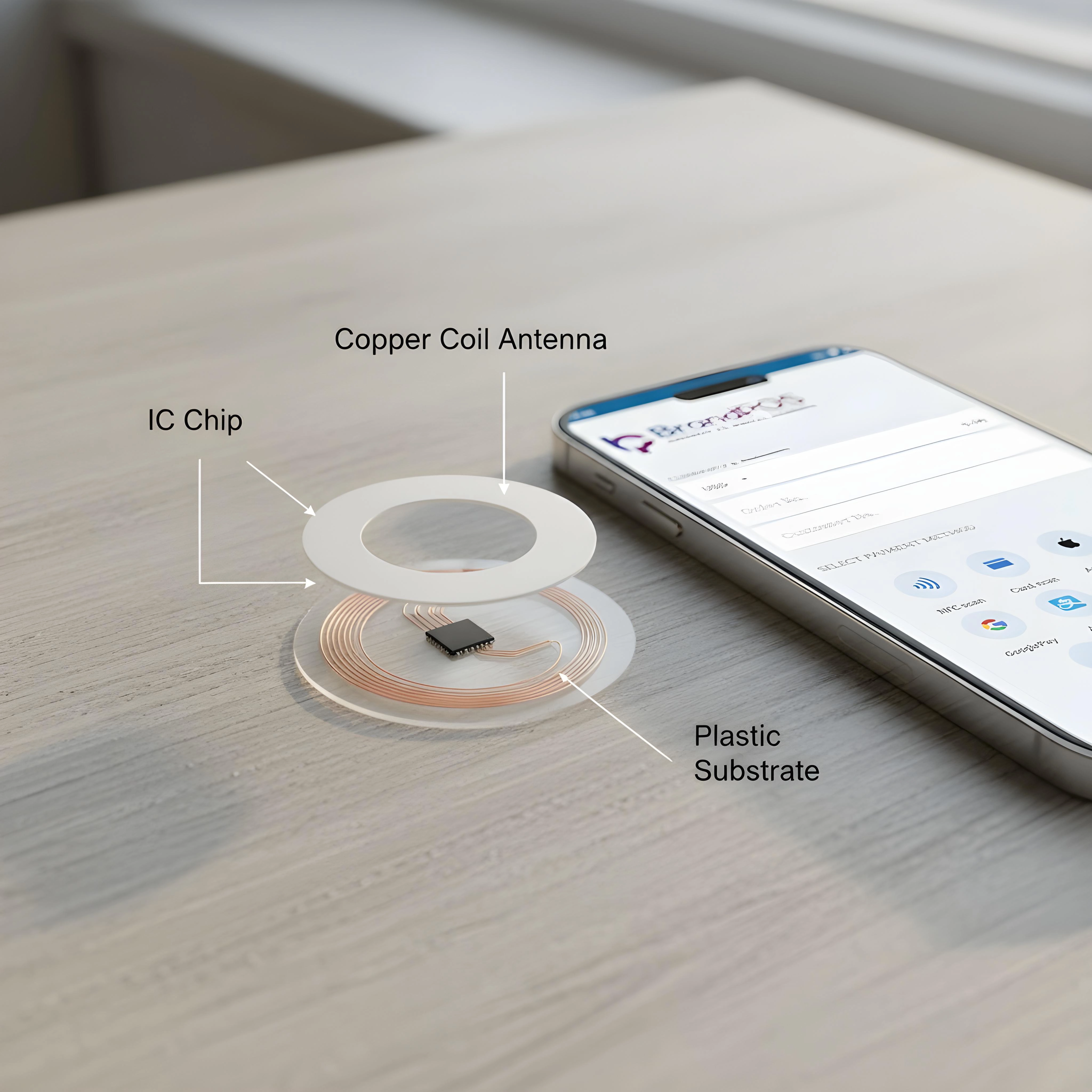
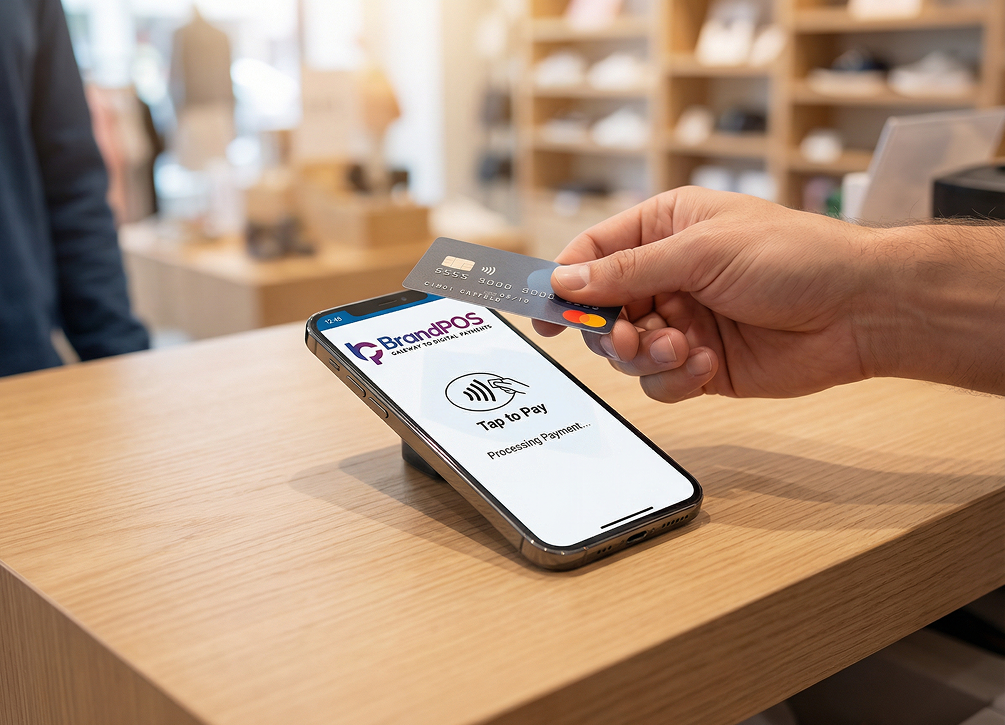
- From 2016 to the present, scan-to-pay and tap-to-pay in e-payments have ruled the world. POS functionality has shifted to a hardware-free reality with software layers. NFC has become standardised in all OS devices.
- Transactions have become invisible and happen in a jiffy. The entire store has been filled with 'points' of sales. The faster the checkout, the higher the customer retention.
- With AI and Edge computing, offline strength and long-term data retention can be coupled and morphed into something omniscient. The new age POS is potent to handle 100% operational capacity.
- Each phase has reduced friction and increased personal touch, and now they are pushing the future of POS systems forward.
Key Trends Shaping the Future of POS
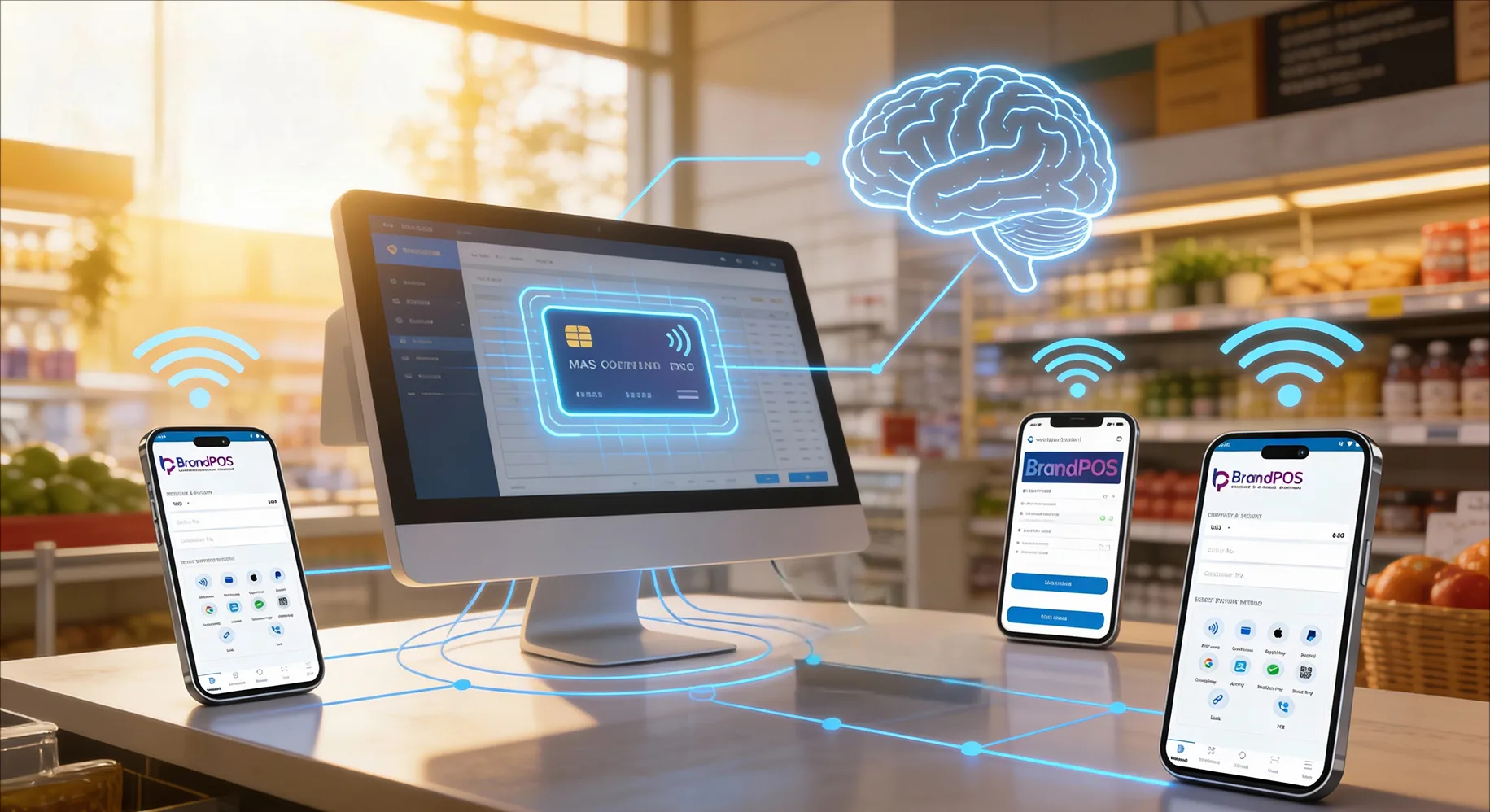
The once-seen checkout/billing counter is currently a world-class intelligence network. This next-gen POS system is being shaped by several converging trends.
The software-based POS systems help the small businesses (40% market share) immensely with their scan-to-pay features. This helps them bypass expensive payment terminals.
Unique reality and Agentic AI is used as an autonomous system that can automatically adjust pricing and alert when the price is low - it tracks live sales momentum and generates trends.
100% accuracy in the digitalisation of operations.
1. Cloud-Native Architecture
The hyperintelligent modern-day POS Cloud infrastructure is central to the future POS system. It employs ubiquitous intelligence to facilitate instant sync and real-time prediction.
Key impacts:
- Real-time synchronization across several retail locations of chains.
- Faster deployment and infinite scalability.
- Reduced dependence on on-site IT - this increases the system's immunity to downtimes or rush-hours.
- Continuous software improvement - the system can self-heal. No need for an on-site IT team.
2. Contactless and Digital-First Payments
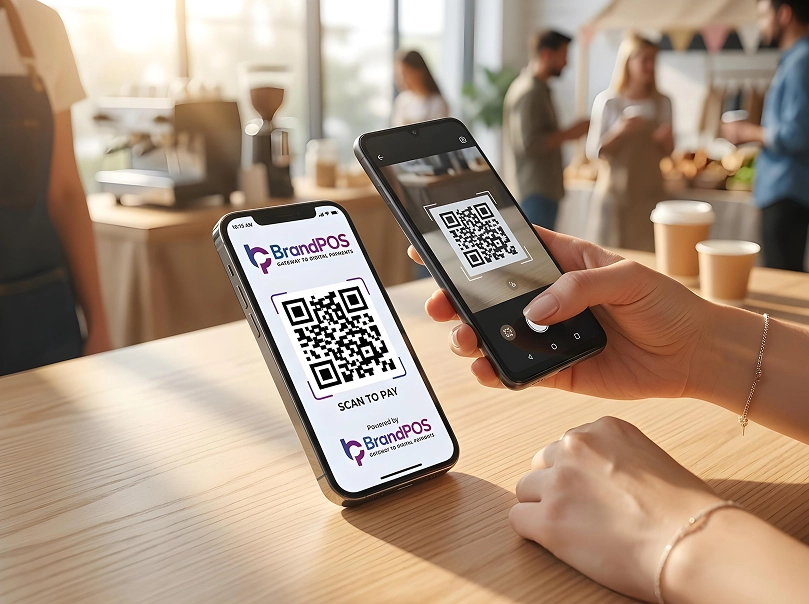
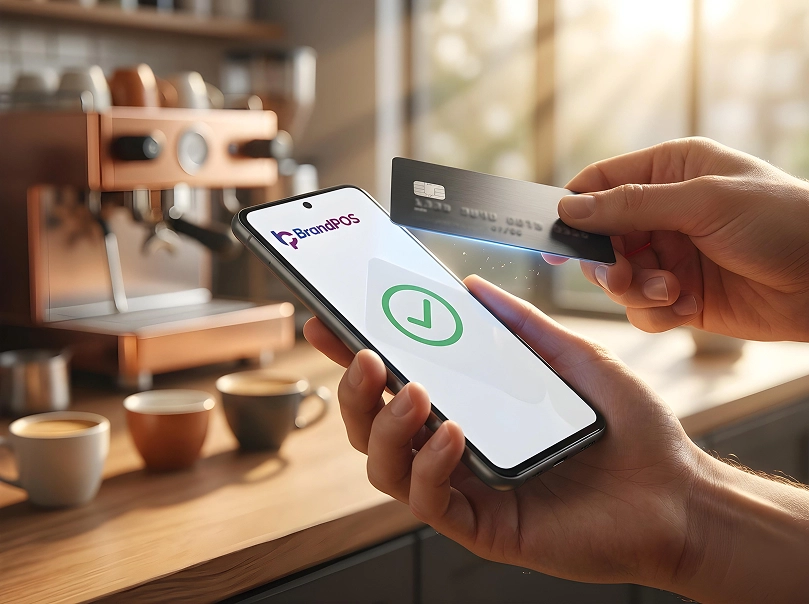
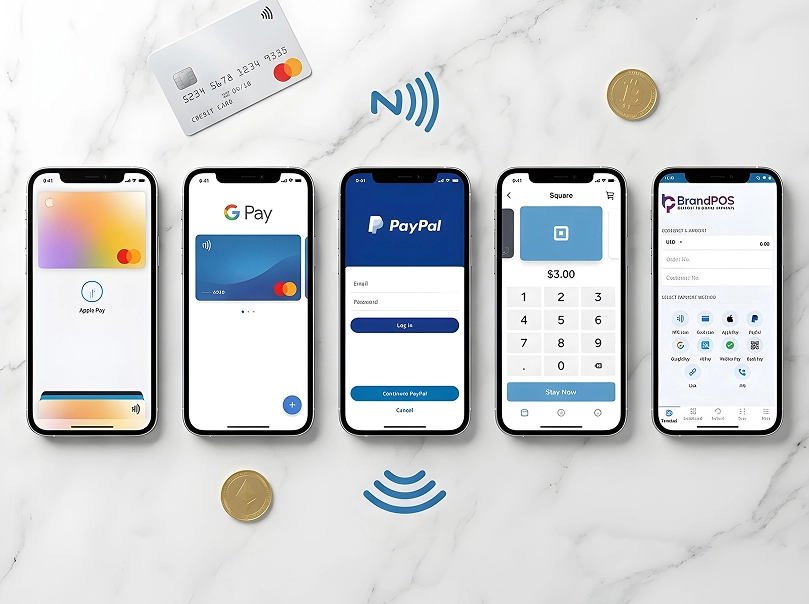
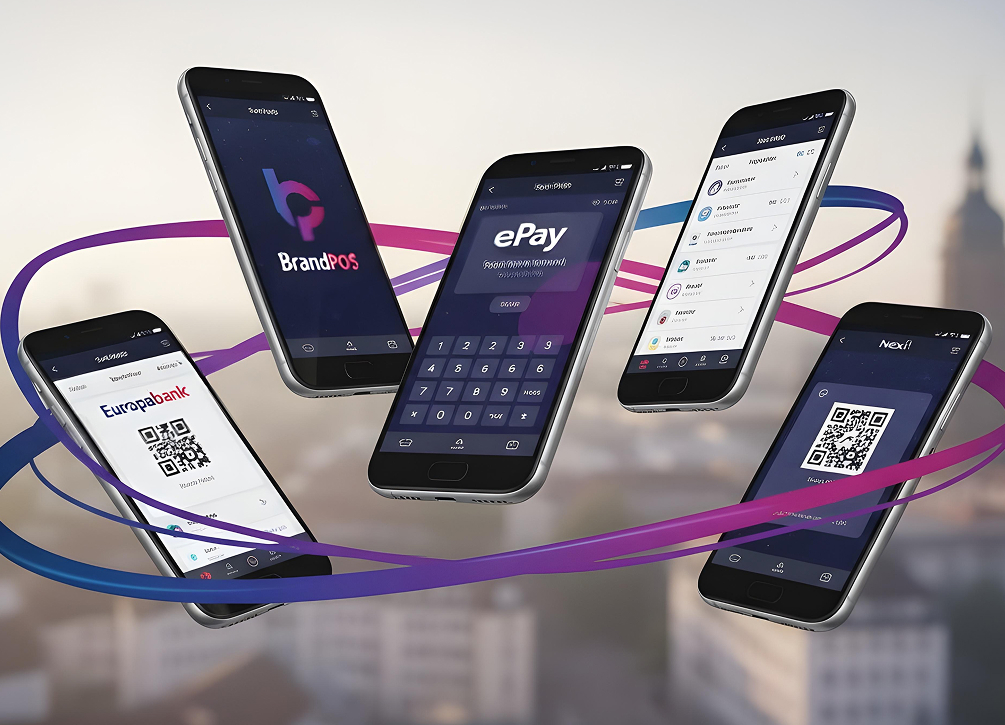
Zero hardware investment. Contactless cards, mobile wallets, and QR payments are the core of the POS payment system.
Operational impact it creates:
- Extremely minimal checkout time in the pos future with 100% flexibility. The more the lag, the less the retention.
- No need for proprietary hardware when everything is paperless and touchless. Your existing smartphone is enough to handle heavy checkouts.
- Very high-contact places like KFC and malls have employed self-checkouts, which reduces costs on checkout staff. The software is sophisticated enough to deal with
3. AI-Driven Intelligence
POS platforms have become insanely predictive by incorporating machine learning.
Use cases:
- Demand forecasting
- Dynamic pricing insights
- Fraud detection
- Staff optimization
The future POS is analytical to the point of multi-dynamic optimization.
5. Omnichannel Convergence
POS systems now act as connectors between online and offline commerce. It is the cement that never fails.
Capabilities include:
- Unified customer profiles allow a hyperpersonalised approach.
- Shared inventory pools. There's a concept of the endless aisle - where even if an item is out of stock from one location, it is never lost, it can be brought from another location and shipped directly to the customer.
- Cross-channel order fulfillment. BOPIS (Buy Online, Pick Up In-Store) has been ruling ever since.
The future POS system supports commerce wherever it happens.
Benefits of Modern POS Systems
As POS systems evolve, their benefits expand beyond checkout.
Core Benefits in the Future POS Landscape
- Faster and more flexible payment acceptance
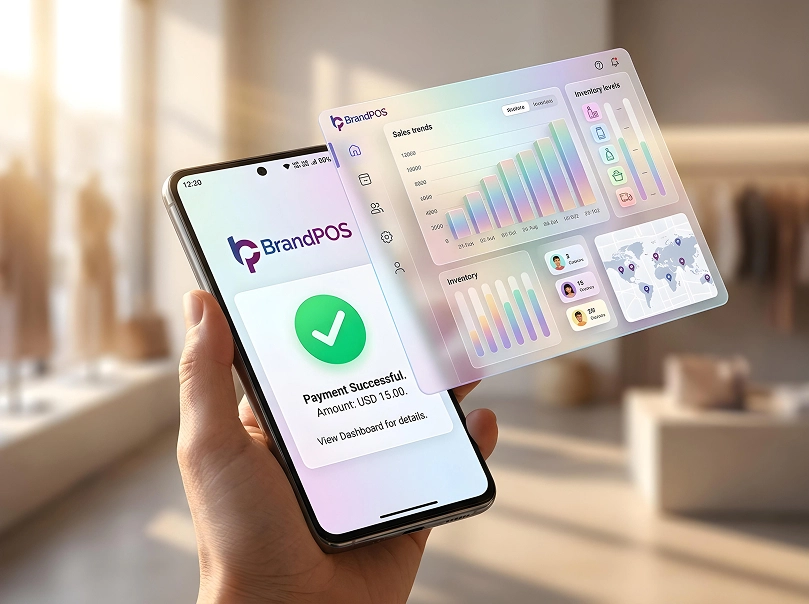
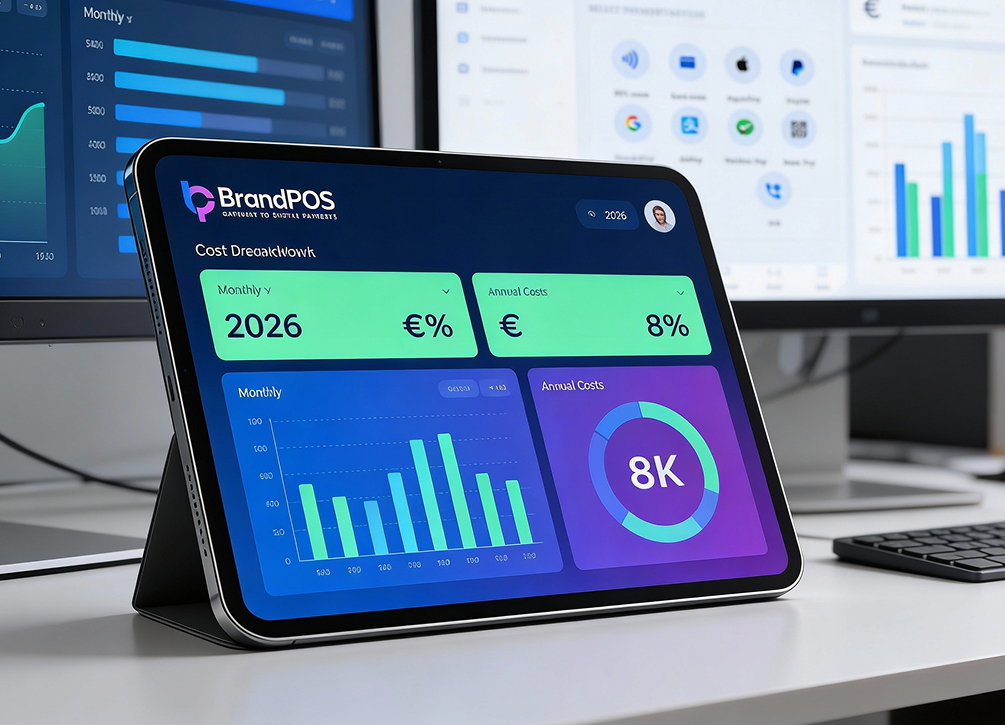
- Centralized operational visibility
- Improved inventory accuracy
- Reduced manual reconciliation
- Data-driven decision support
- Easier compliance with payment regulations
In the future of POS systems, these benefits are expected, not premium features.
Types of POS Systems in the Future Ecosystem
| POS Type | Primary Role | Strengths | Limitations |
|---|---|---|---|
| Traditional POS | Operational control | Deep workflows, reliability | Hardware dependency |
| Cloud POS | Centralized management | Scalability, visibility | Internet reliance |
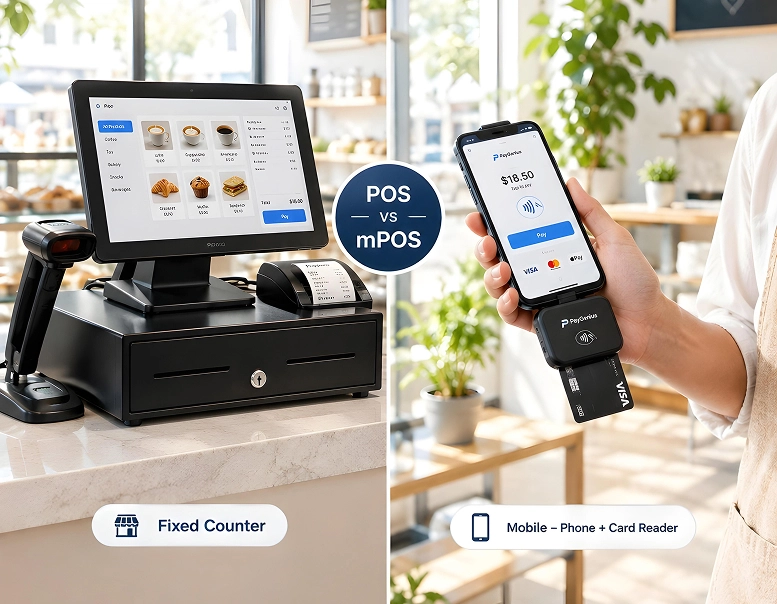
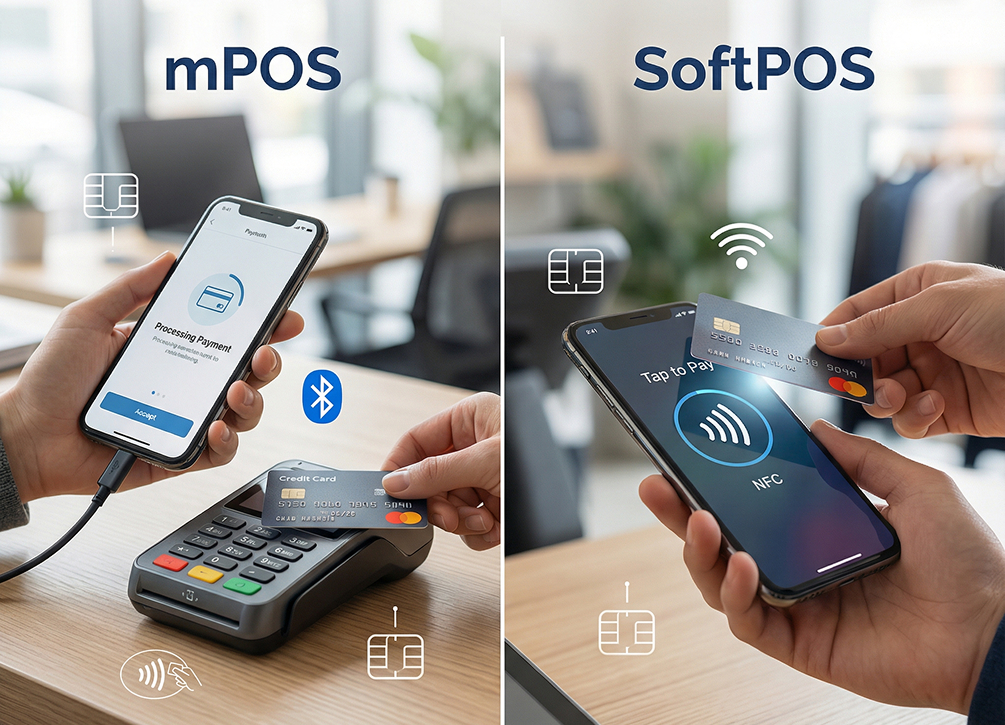
| Mobile POS | On-floor transactions | Flexibility, speed | Limited depth |
| SoftPOS | Device-based payments | Low cost, rapid rollout | Software-centric controls |
Most businesses will not choose just one. The pos future is hybrid.
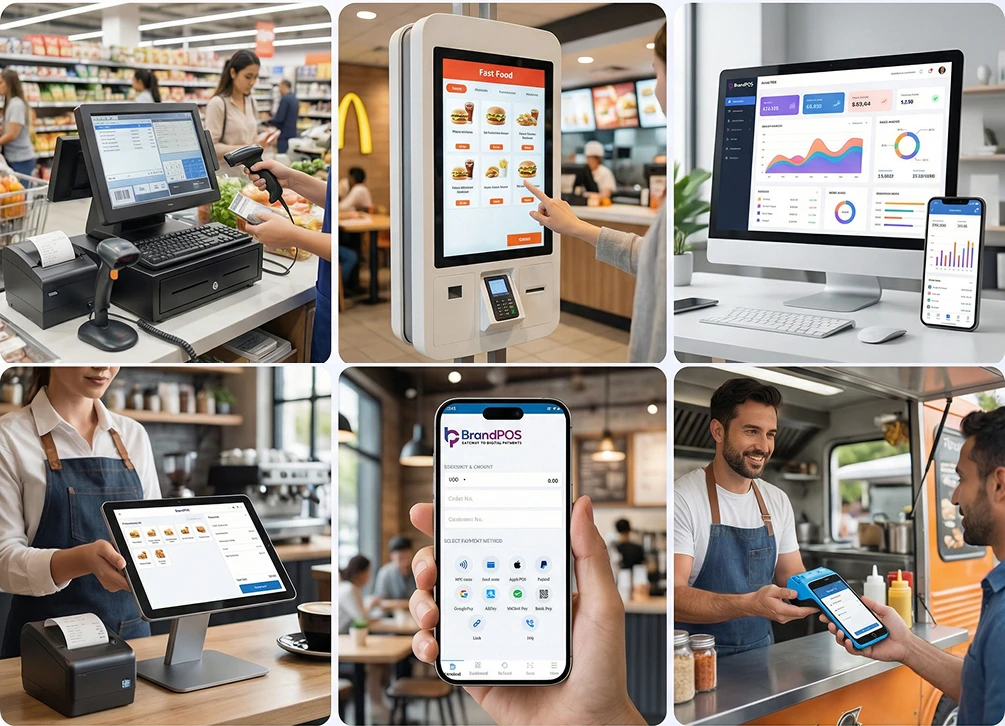
POS System Use Cases in Practice
Retail
- Unified inventory across stores and e-commerce
- Mobile checkout to reduce queues
- Loyalty integration
Grocery
- High-volume transaction handling
- Queue-busting with mobile payments
- Price and promotion accuracy
Restaurants
- Order-to-kitchen integration
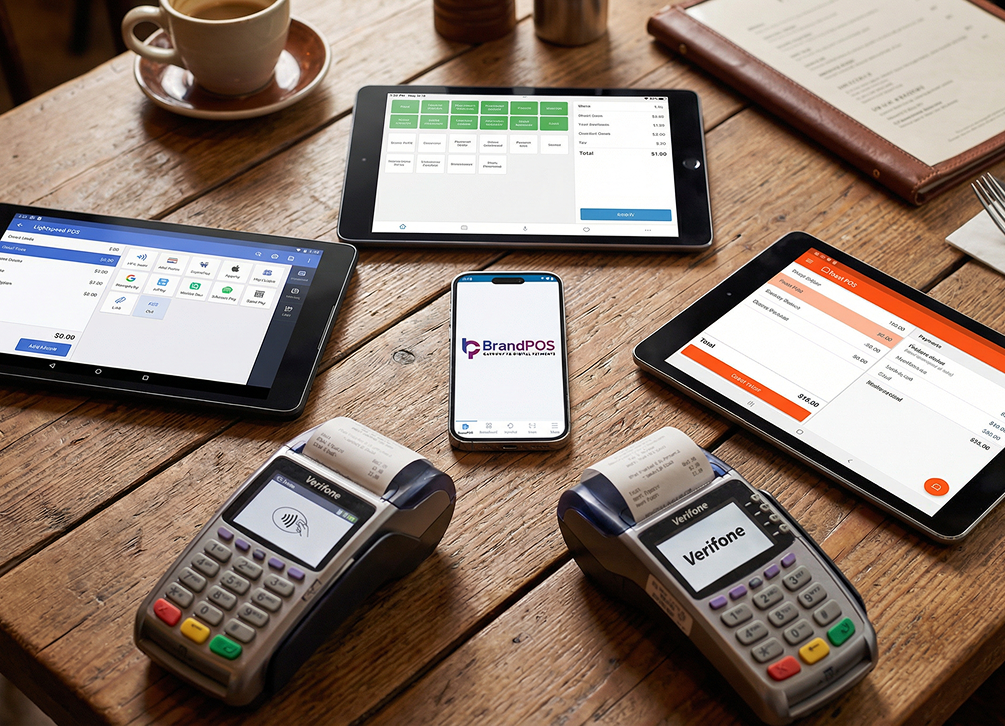
- Table-side payments
- Reduced checkout congestion
Services and Events
- On-site and mobile acceptance
- Temporary deployments
- Minimal hardware logistics
These use cases demonstrate how the future of POS systems adapts to context rather than enforcing a fixed model.
Industry-Specific Innovation
Different industries are shaping the future POS system in distinct ways.
| Industry | Primary POS Focus |
|---|---|
| Retail | Omnichannel and inventory depth |
| Grocery | Speed, reliability, throughput |
| Hospitality | Order coordination and payments |
| Healthcare | Security and compliance |
| Events | Mobility and rapid setup |
The pos future is modular, not uniform.
Challenges Facing POS Systems
Despite progress, challenges remain.
Key Challenges
- Security complexity as systems become more connected
- Integration burden across multiple platforms
- Training requirements as workflows change
- Balancing flexibility with control
These challenges are driving vendors to simplify interfaces and strengthen software-level controls in the future of POS systems.
What to Expect in the Next 5–10 Years
Looking ahead, several patterns are emerging.
Likely Developments
- Hardware becomes optional for many merchants
- Software updates replace hardware refresh cycles
- AI insights become standard features
- Hybrid POS environments dominate
- Checkout becomes increasingly invisible
The future POS will be defined less by devices and more by experience and intelligence.
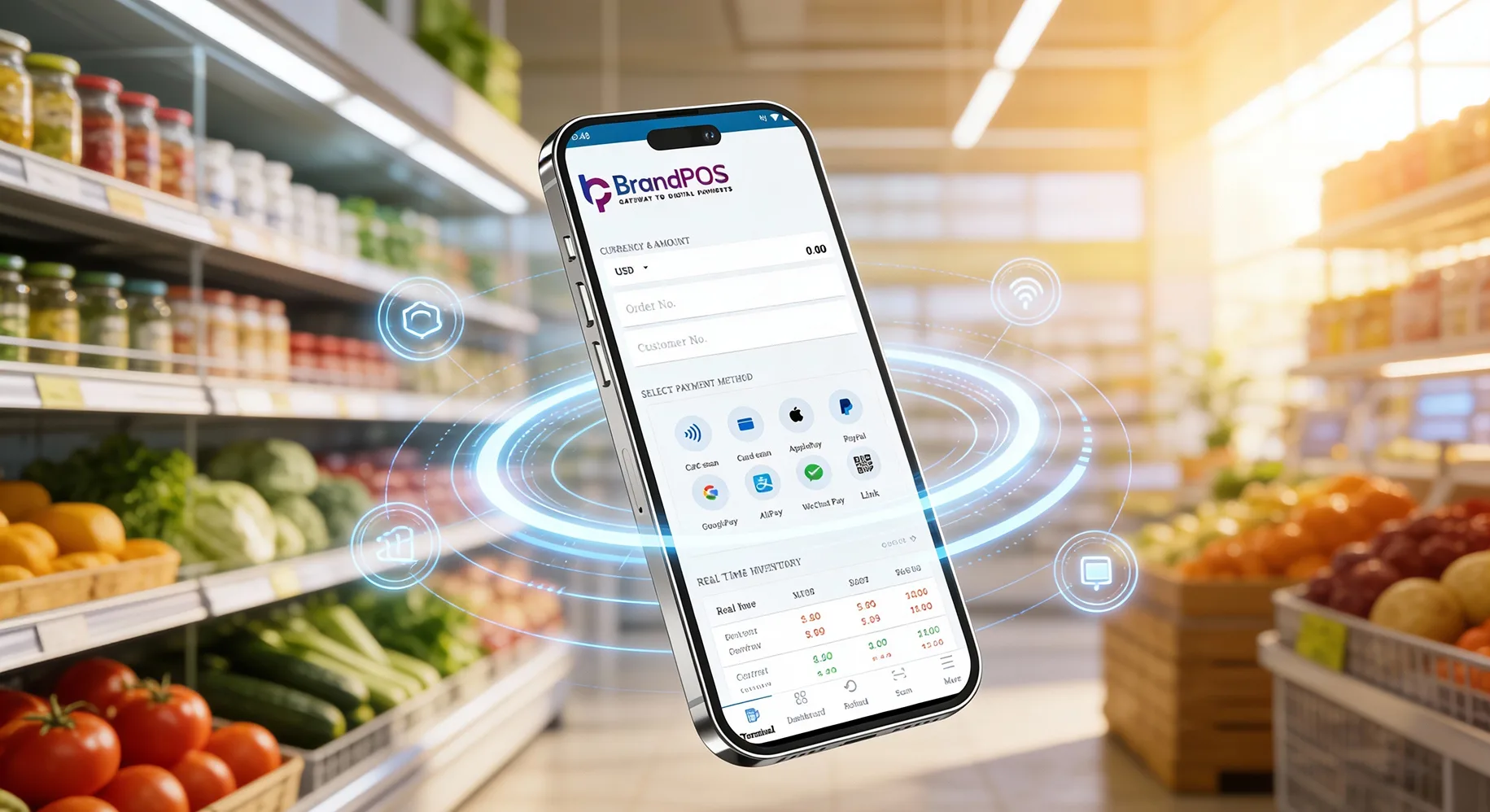
BrandPOS: Best SoftPOS App for Your Grocery Store
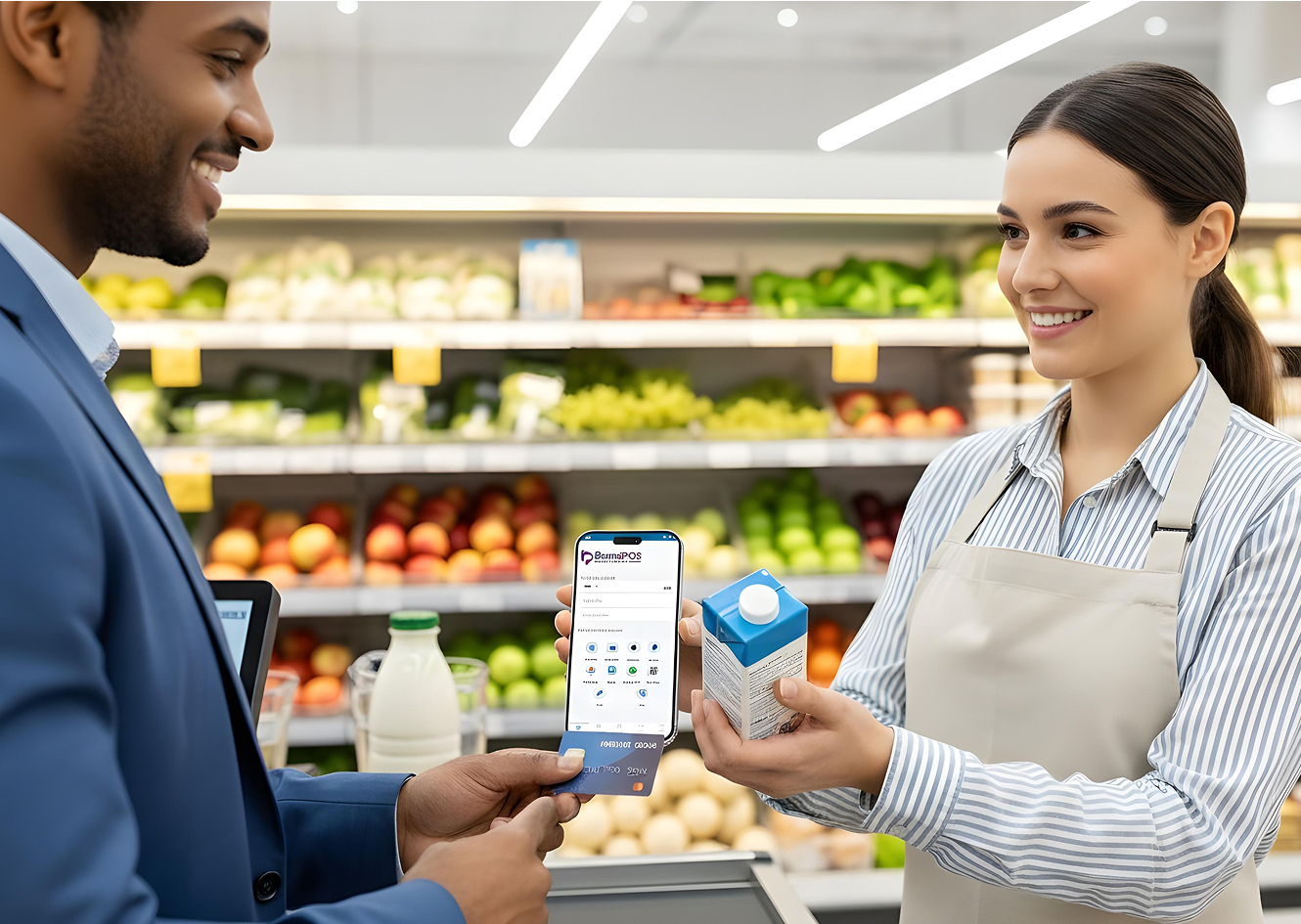
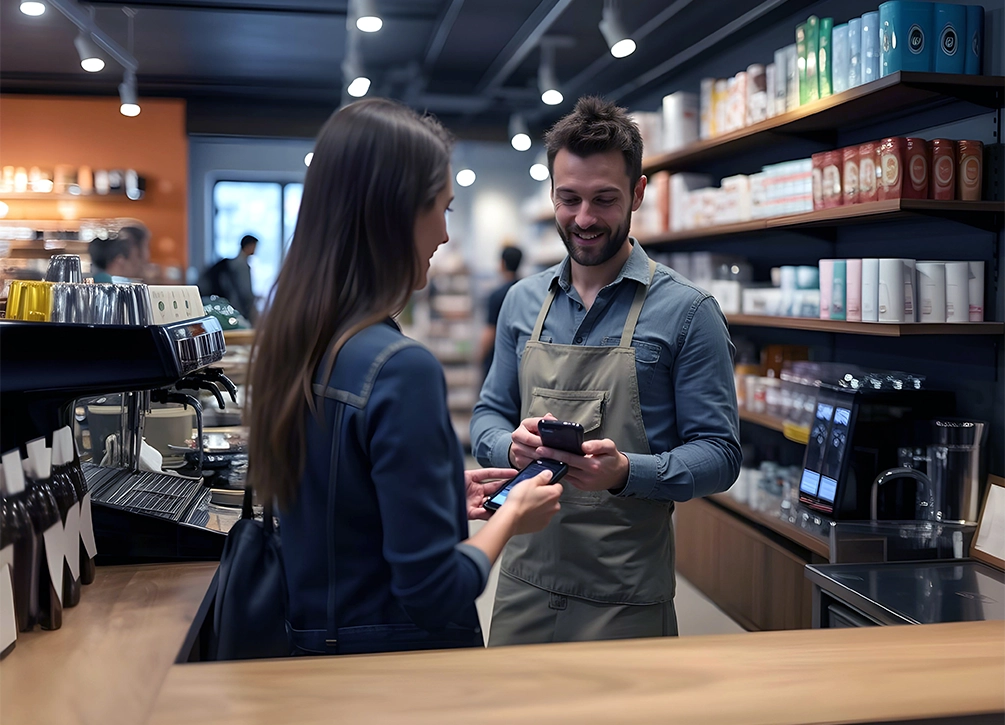
The future of SoftPOS usage in grocery store sector is 'utility-first'. Grocery stores are always in rush hours, therefore, intraditional pos systems, a bottleneck is very possible - not with the BrandPOS SoftPOS app! Grocery environments highlight both the opportunity and complexity of the future of POS systems.
High transaction volumes, peak-hour pressure, and limited floor space is the hard reality of grocery stores. Naturally, it require systems that are fast, reliable, self-fixing and flexible. With zero hardware costs and space, BrandPOS SoftPOS App gives the establishment more floor area for the customer's benefit.
The Inventory-Transaction Paradox is real. It is when your customer needs the staff that they are busy attending to the inventory and/or vice versa. BrandPOS solves it with a data-driven approach.
There is a real-time synced aisle-to-counter inventory system. The software system acts as a Mobile Inventory Node, where when a staff member is assisting a consumer, they can check stock levels and availability at their fingertips. At the same time, the transaction can be made possible too without any latency gap. A deal gets closed within a minute.
It is the ideal future pos system for many more reasons, especially as it removes the checkout barrier, keeping the store in fluid mode! Naturally, with a heightened level of promptness, there's no room left for stagnancy issues like cart abandonment. To the customer, a scan-and-go experience that feels like a natural extension of their shopping journey.
Quick grocery commerce apps like FoodPanda's Delivery Hero or the Gorilla app have dark stores. Quick commerce requires record-level agility as they are the key market players bridging the gap between physical and digital stores. BrandPOS's centralised yet customised infrastructure bestows operational segregation to grocery stores serving people offline and online.
Very Important Resources
For deeper understanding and validation:
- PCI Security Standards Council – PCI DSS & MPoC frameworks
- EMVCo – Contactless and mobile payment standards
- World Economic Forum – Digital payments and commerce reports
- McKinsey & Company – Retail technology and payments research
- Deloitte – Global POS and retail innovation studies
- Intel – Edge computing and POS infrastructure insights
These resources consistently inform how the future of POS systems is being designed and deployed.
Conclusion
The future of POS systems is not about replacing checkout counters with technology. It is about rethinking how transactions, data, and customer experiences connect.
POS platforms are becoming lighter, smarter, and more adaptive. The future POS is no longer visible as a machine. It operates quietly in the background, shaping efficiency, insight, and growth.
For businesses planning beyond the next upgrade cycle, understanding this shift is not optional. It is foundational.