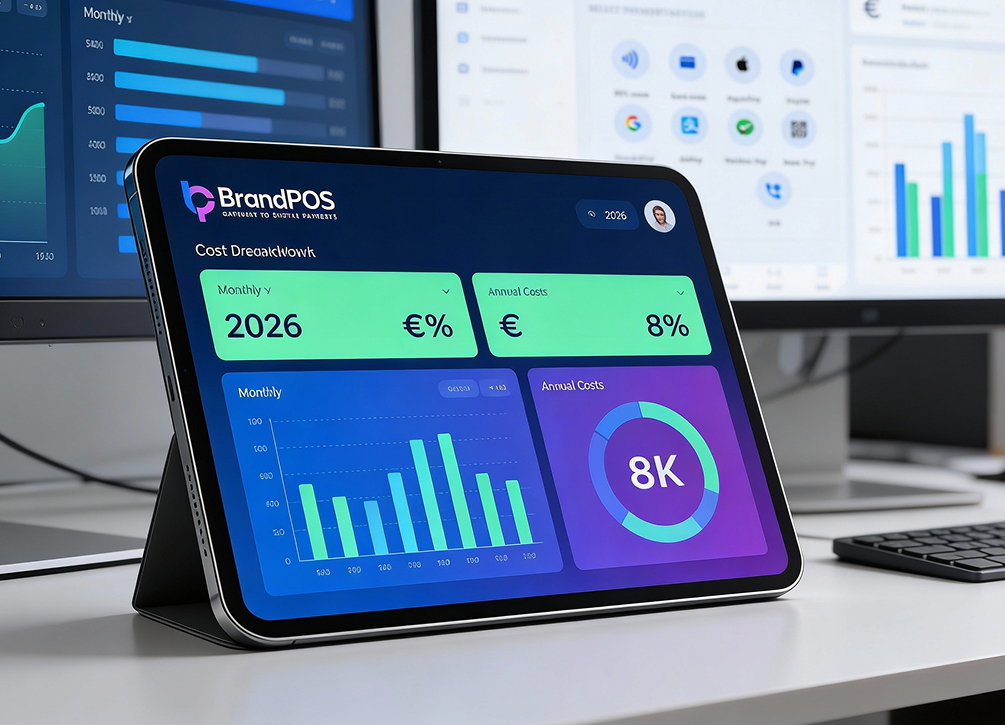
Knowing how much does POS software costs is the first step towards making a business investment decision. A POS software can help you irrespective of what your business is - it can be a retail store, a restaurant, a pop-up venture, an IT firm, or literally anything.
There are specific payment regulations in various parts of the world. The correct POS software adheres to them and lives up to being an ideal investment.
Let us understand crucial questions like - how much does POS software cost, what drives POS System Cost, what the POS System Price comprises, and the estimated POS System Cost Per Month.
What is a POS system?
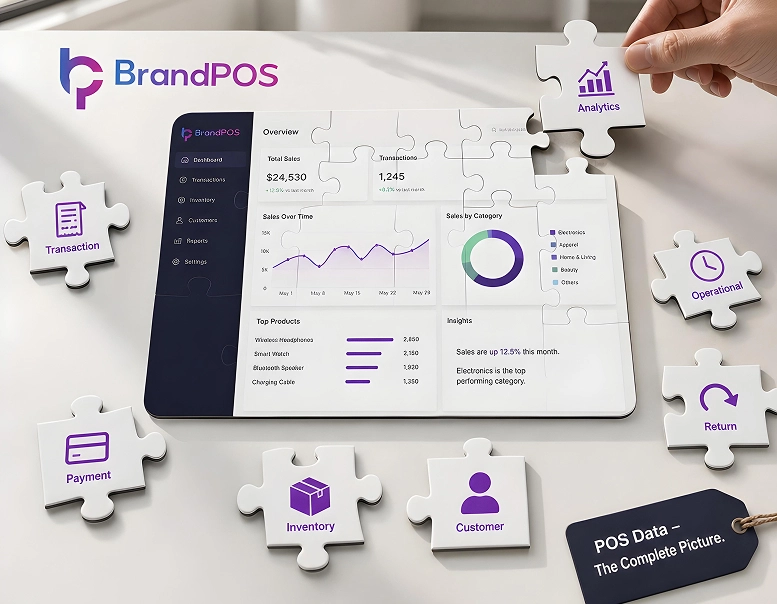
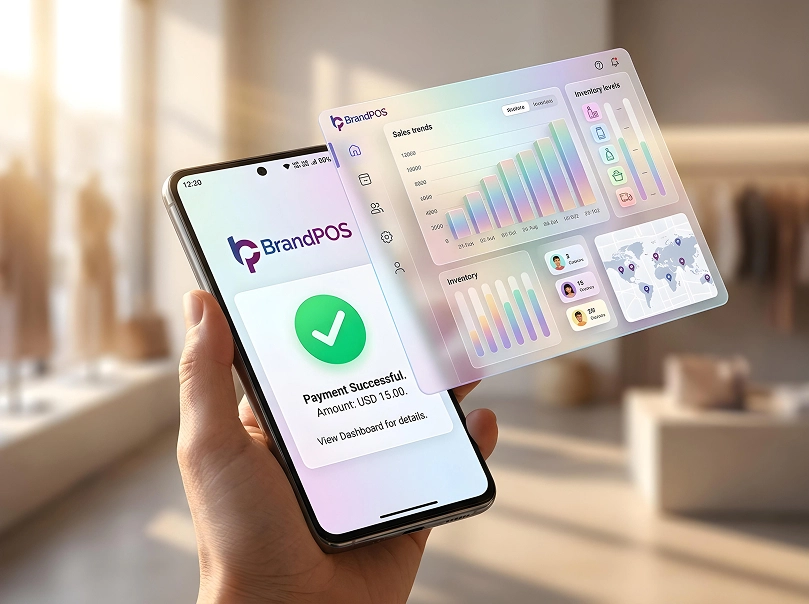
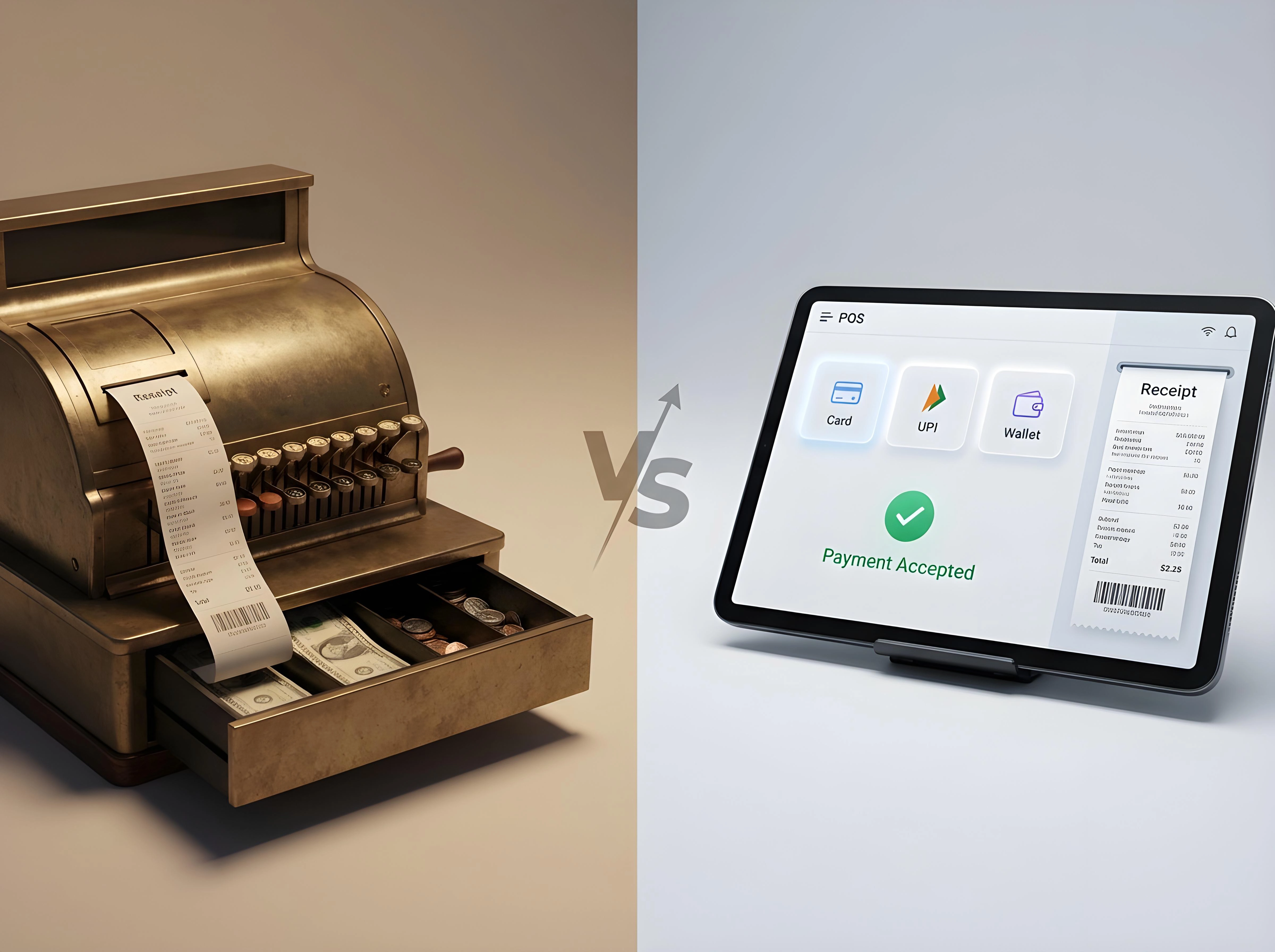
A POS (point-of-sale system) is the crux of modern business as it single-handedly incorporates everything - from inventory management to e-payment-led touchless checkouts. The dashboard comes with clean and minute reports on every business operation.
After understanding all this, one can understand the value behind "How much does POS software cost?" The answer is a minimal subscription that makes you pay only for the features that you require. With further add-ons, the cost increases.
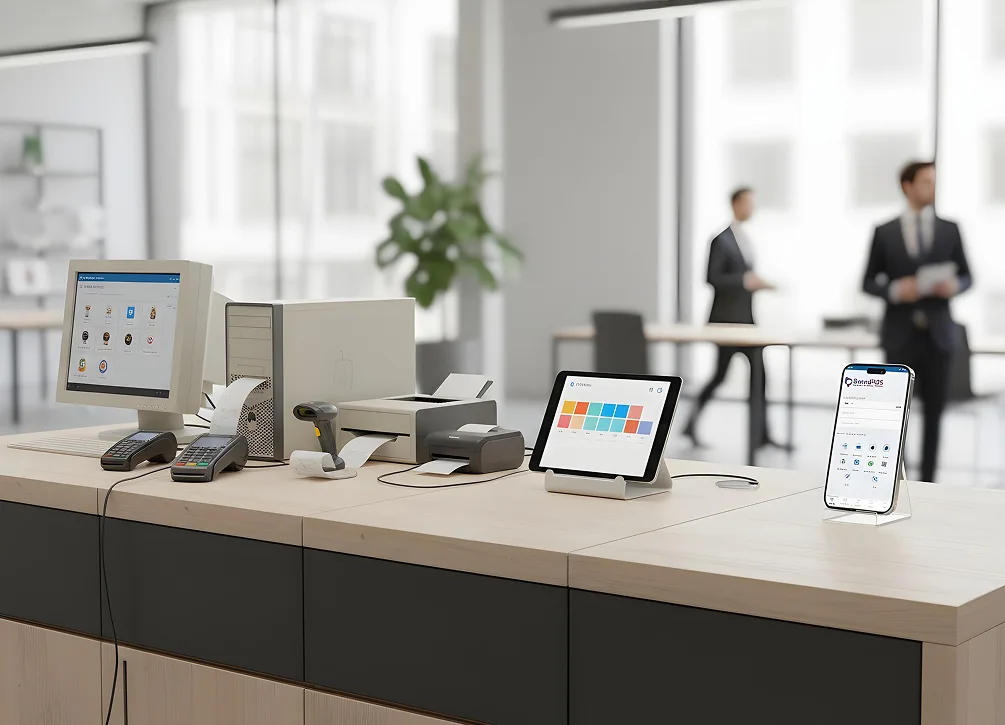
Ready to ditch the card machine?
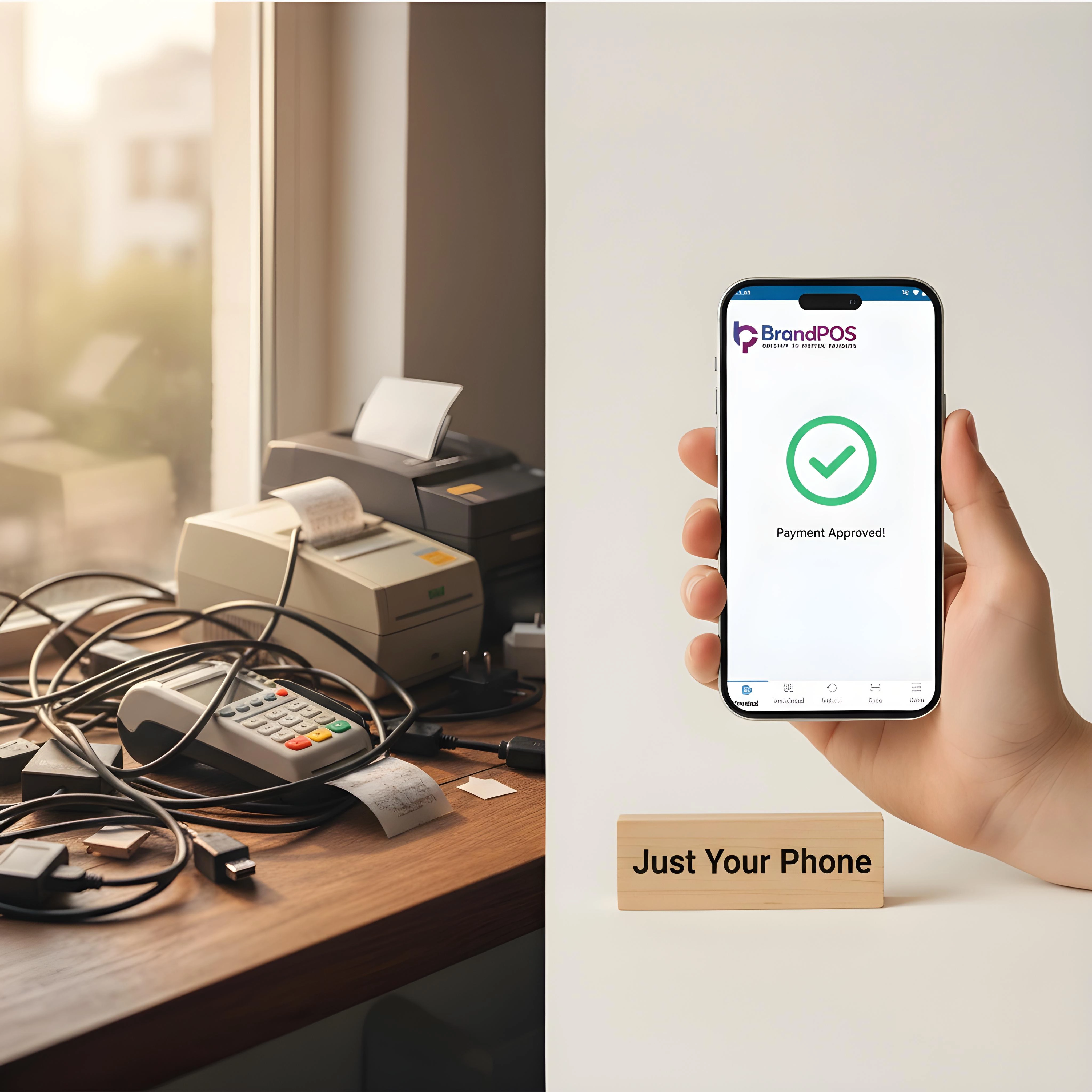
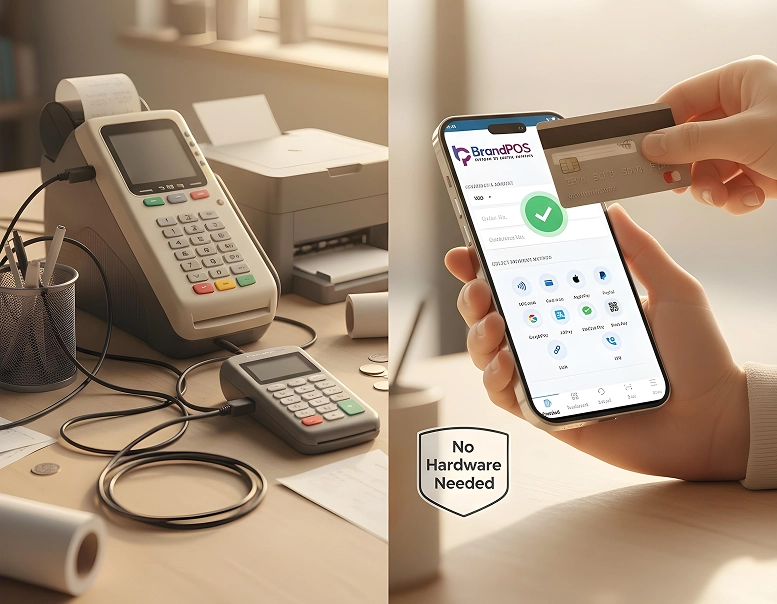
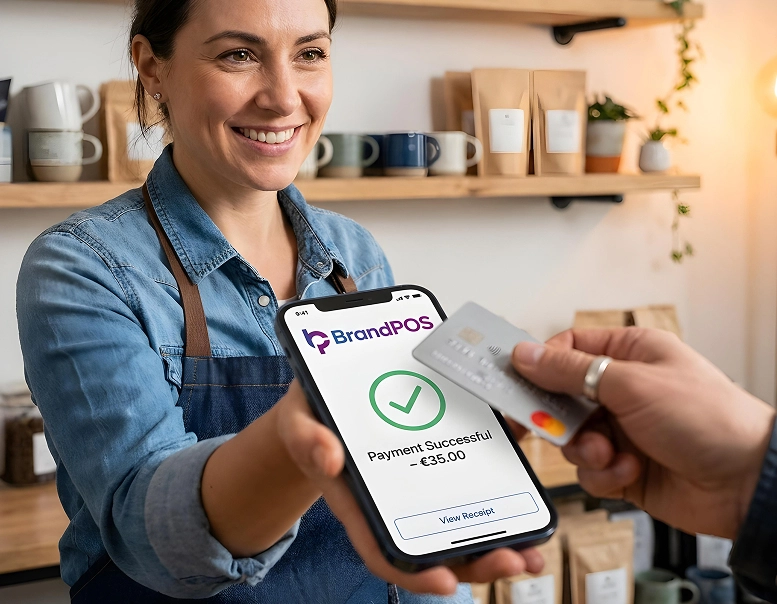
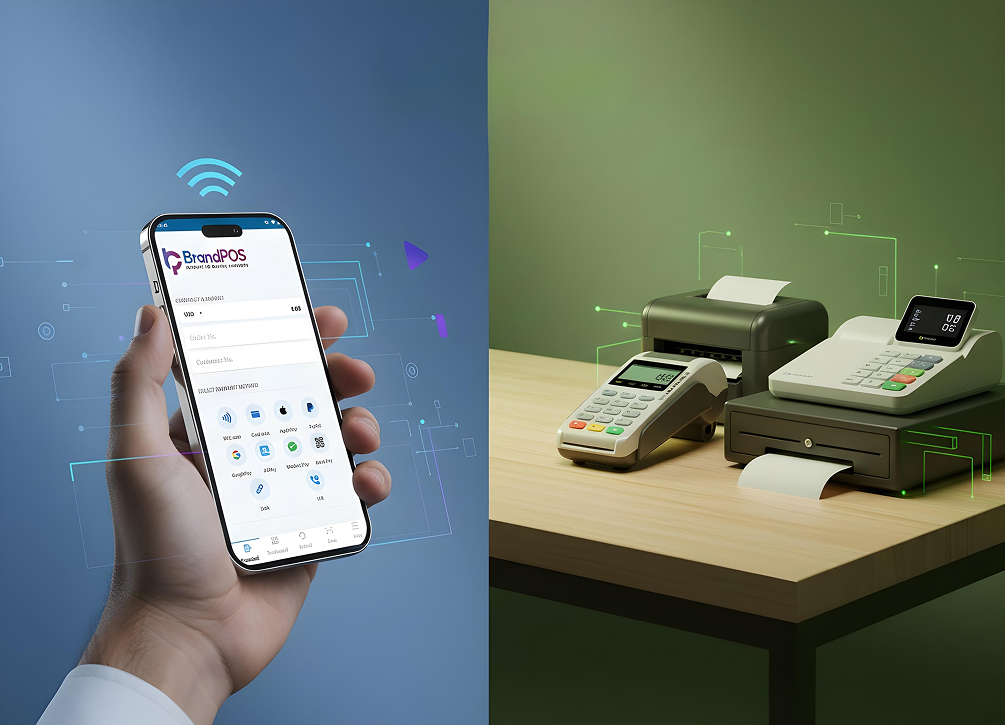
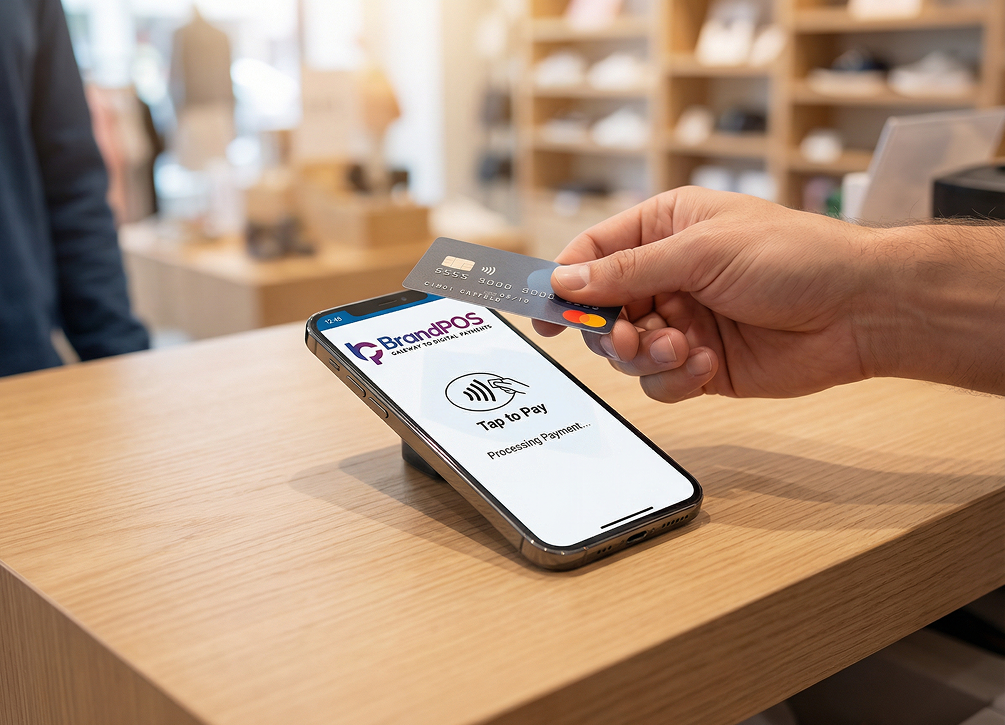
BrandPOS turns any Mobile phone into a certified POS terminal - no cables, no setup headaches.
Get Started for FreeTypes of POS Systems
Businesses evaluating How Much Does A POS System Cost in 2025, as for what type to pick? In 2025, most businesses fall into two main camps.
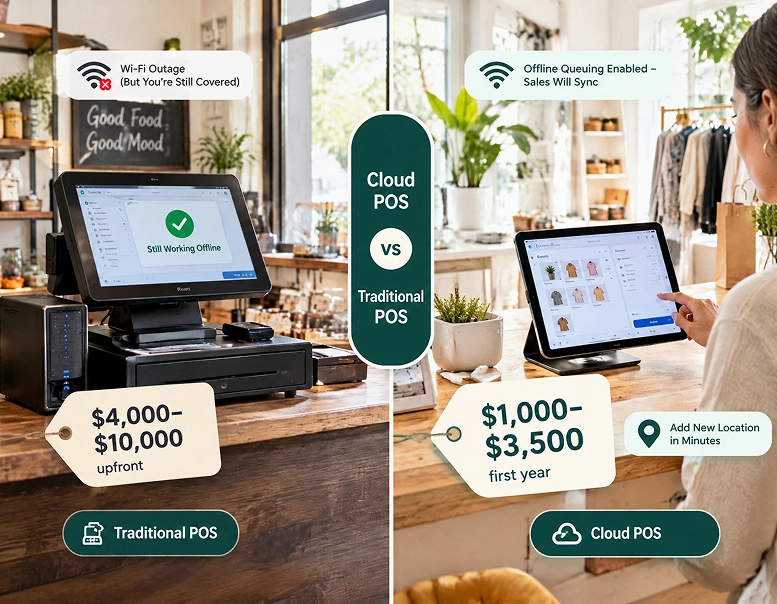
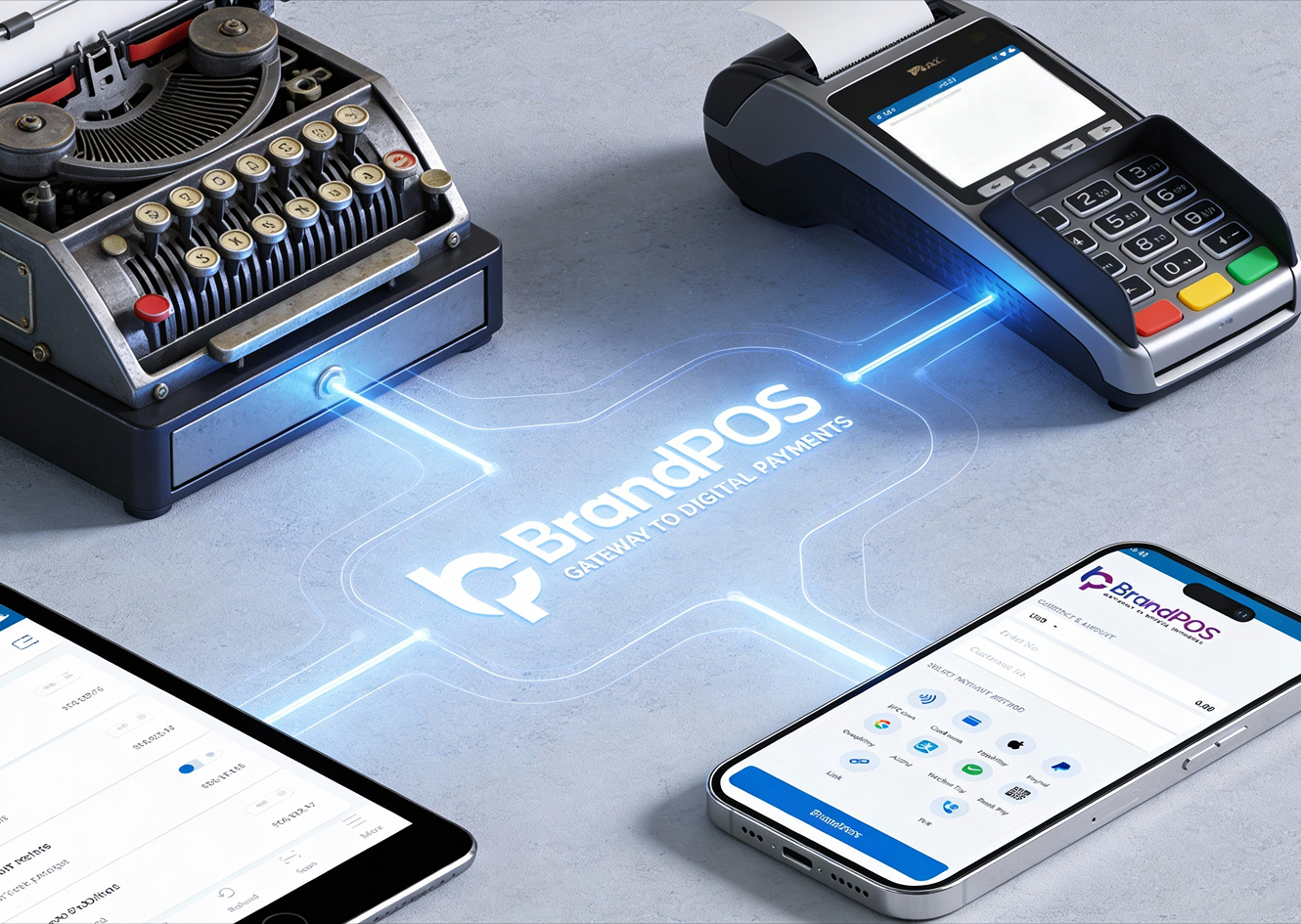
- Cloud-based systems run on subscription models. You pay monthly or yearly, get updates automatically, and can access everything remotely. The upside: small upfront cost. The trade-off: you'll keep paying as long as you use it.
- Then there's the on-premises option, the traditional setup. You buy a license, install the software locally, maybe even own the hardware outright. It's more expensive at first, but the ongoing costs may be lighter. You're in charge of your data, your updates, your security. It's a bit more work, but some businesses prefer having that control.
- Hybrid: Combines local and cloud components - e.g., local terminals with cloud-sync. Many vendors offer hybrid models to balance offline capability and cloud features.
- By industry: The cost also varies by vertical:
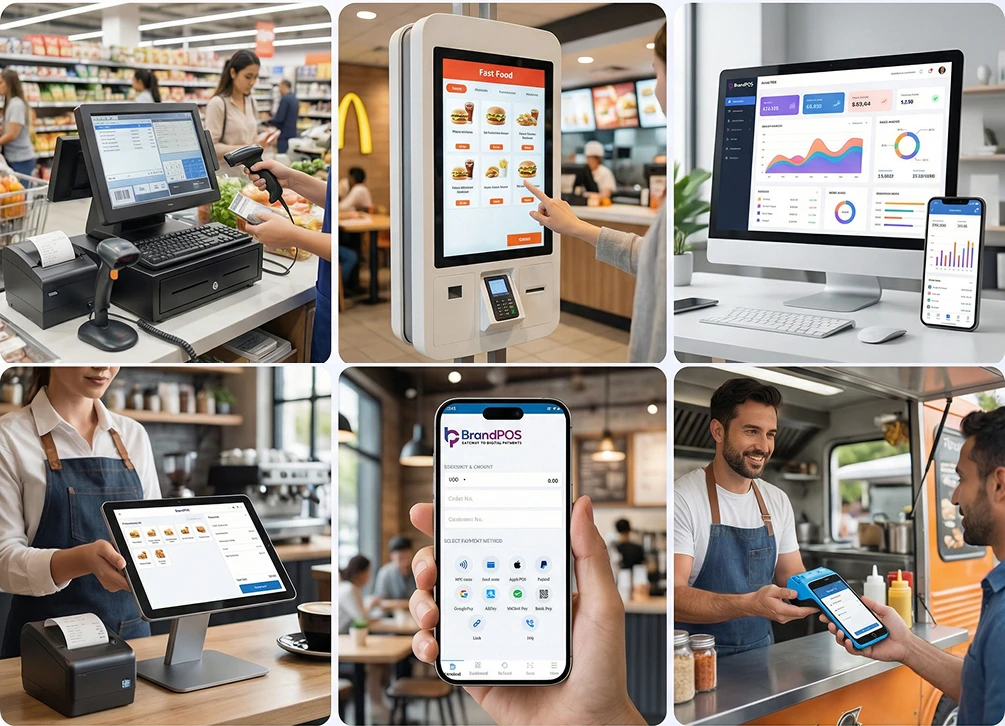
- Retail - inventory tracking, barcode scanners, multi-channel sales.
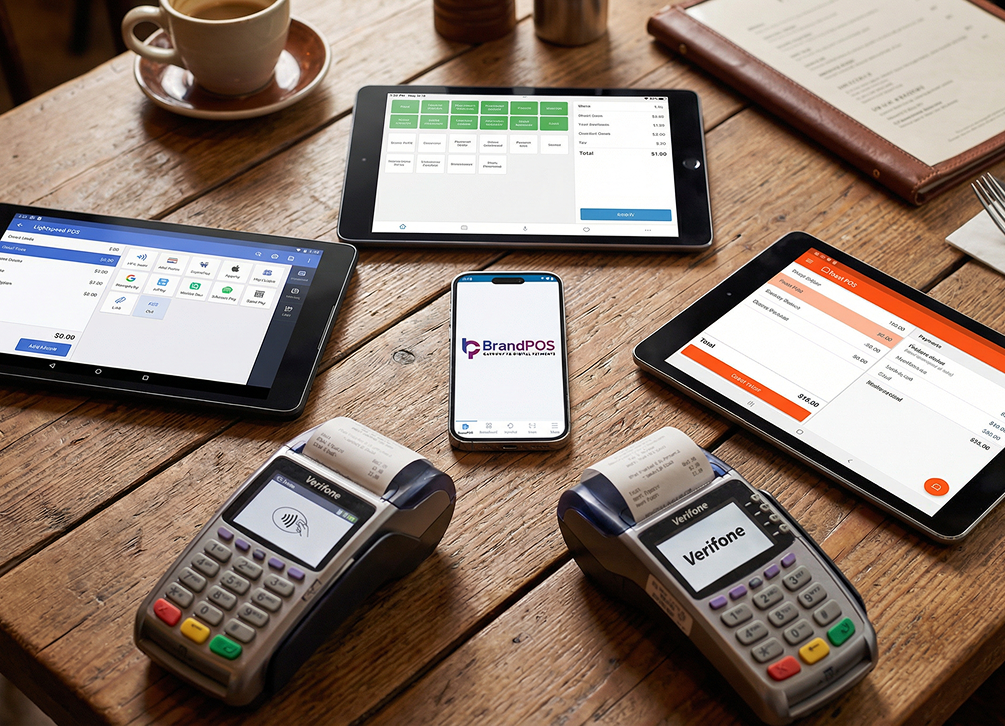
- Restaurant - table/take-away management, kitchen display systems (KDS), menu customisation.
- Hospitality - accommodation billing, guest folios, integration with property management.
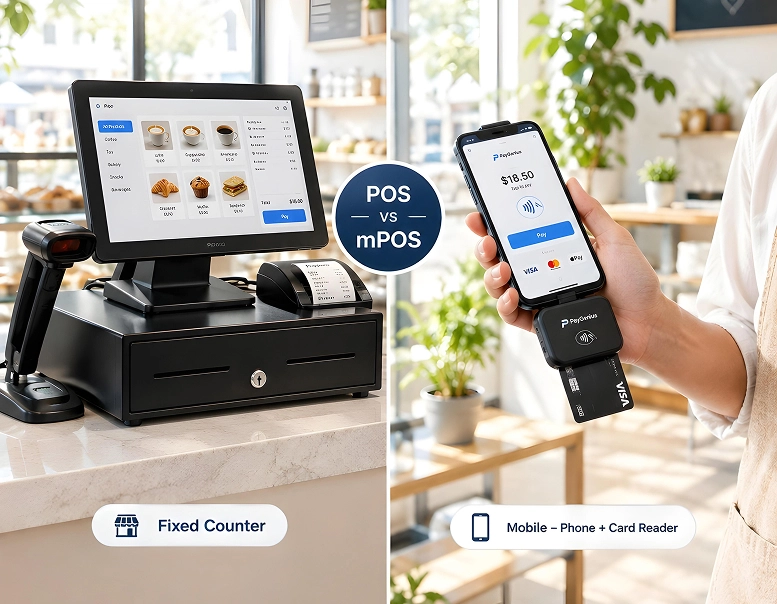
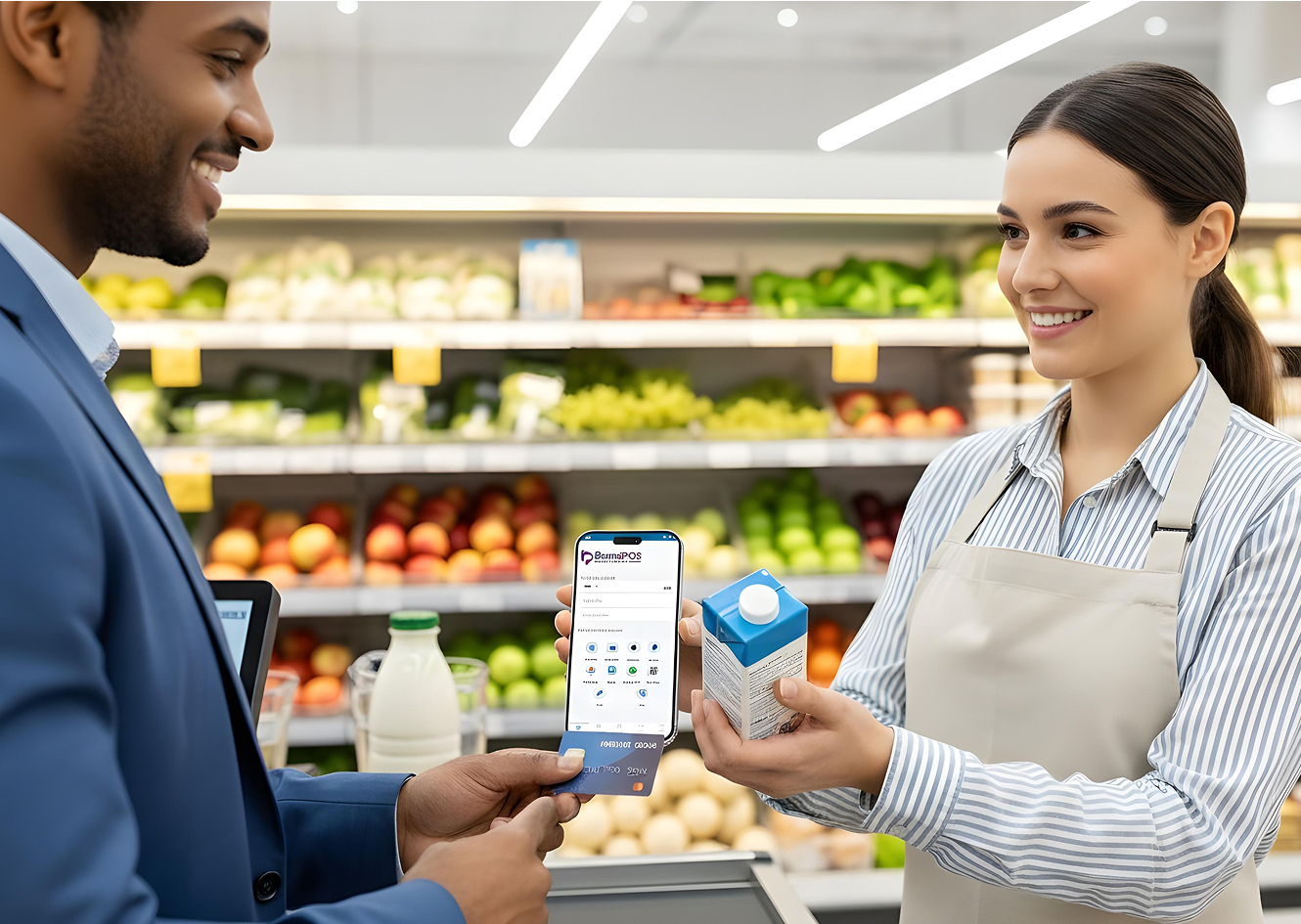
- Mobile/Pop-Up - minimal hardware, mobility, often smartphone-based.
Each type influences the ultimate POS System Cost differently: cloud lowers upfront capital, on-premises may mean a larger investment but less monthly cost, and hybrid sits between. Industry requirements (e.g., many tables, multiple stations) also raise cost.
POS System Cost Breakdown: What to Expect in 2025
Of course, there are key components that affect the cost. The major ones are TSE compliance, the one-time cost related to hardware (in traditional POS systems), and the monthly/yearly subscription when using Software-based POS systems. One can incorporate both traditional and modern POS systems in a hybrid ecosystem. Transaction fees range somewhere between 1.5% to 3.5% per card payment.
Below is a full breakdown of how much does POS software cost, keeping in mind the costs related to hardware, processing, and setup factors that influence your total POS System Price in 2025.
1. POS Software Costs
The cost of POS software will change depending on what your business operations need.
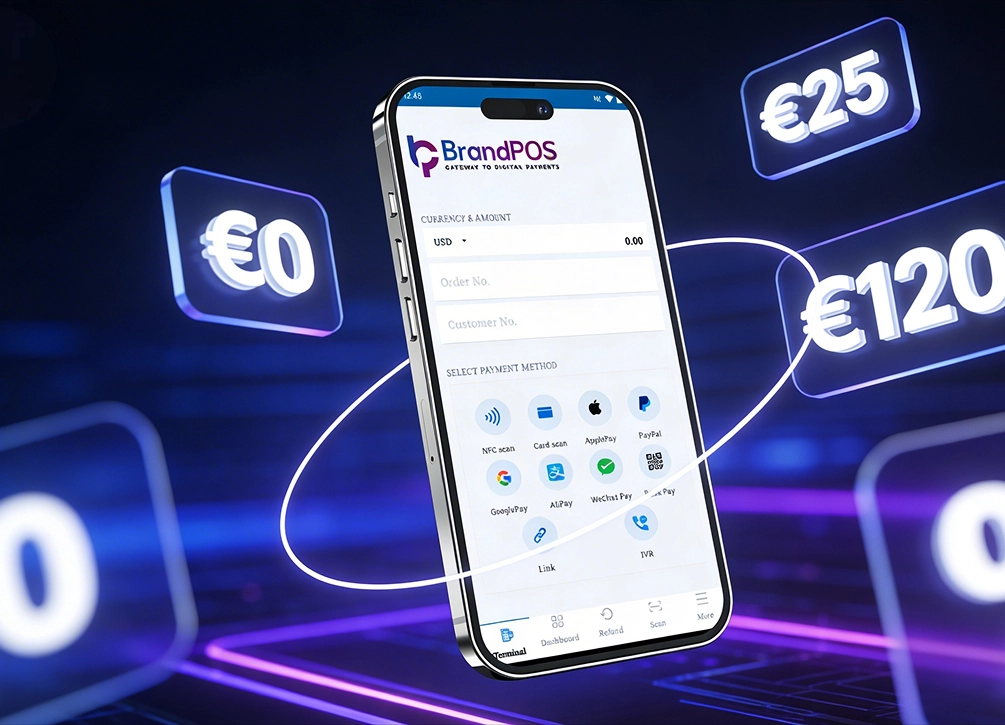
Basic POS software is where most small retailers, salons, or early-stage startups begin. The Cloud-based/Mobile POS Cloud-based/Mobile POS (e.g., Shopify, Lightspeed, SumUp) are best for retail enterprises of all sorts. They range from €0 to around €30 per month.
A few providers even have a free plan with the basic features like billing, stock tracking, and simple reports - such free services are primarily focused on micro-businesses and startups. In such software with a free tier, like BrandPOS, no PSP is required too.
Advanced: Once your business grows, it needs more structure, which brings in the professional tier. The software associated with POS will have to give real analytics, loyalty systems, or online store integration. All of these (and way more) are possible with a tier upgrade to a subscription model.
The advance softwares range between €50 and €150 per month, but with BrandPOS it is @ Flat 1.29%! In the advanced upgrade, companies can access customer data insights with marketing tool add-ons like MailChimp, etc.
Some brands let you save by paying yearly. The payment systems are flexible, but in some cases, the merchant needs to take care of the fine print and save themselves from hidden costs like professional training. Thus, it is beneficial to go for POS software that is easy to use and train.
The enterprise level softwares are built for large retail chains, restaurant groups, or operations that span multiple branches. Pricing is usually around €200 to €400+ per month. These systems can manage several locations at once, sync with ERP systems, and come with dedicated support teams.
When comparing POS System Price, consider a provider like BrandPOS that incorporates all levels at minimal costs and offers useful features.
Your Phone Is Already a POS Terminal
Stop paying for hardware you don't need. Download BrandPOS and start accepting payments in minutes.
Download the App Free2. POS Hardware Costs
If someone is opting for the traditional hardware, then the cost ranges from €3,000 - €5,000.
Retail and hospitality setups often need more peripherals than mobile or pop-up businesses.
Mobile POS Hardware:
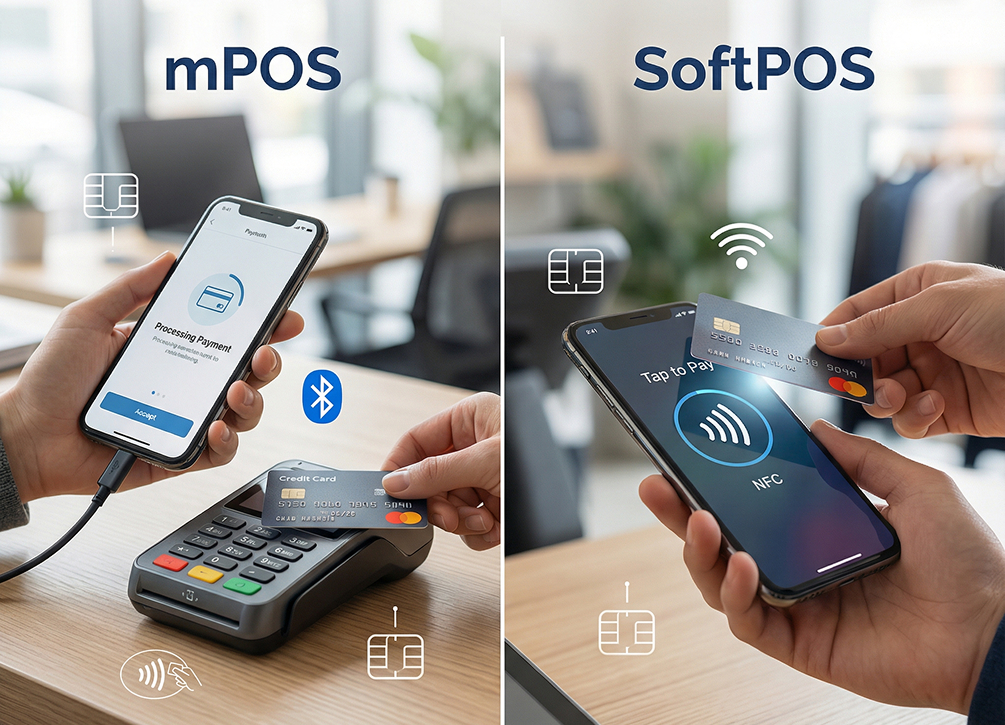
If you already own a smartphone or tablet, you can begin with €0. Opt for the SoftPOS systems that have integrated ways to take contactless card payments and save money by not buying a dedicated card reader.
Countertop Kits:
Countertop kits are often famous around cafés and boutiques. The whole kit costs around €500 and €2,000. It includes the whole terminal along with a receipt printer, a barcode scanner, and a card reader. The better the built quality, the higher the price.
High-quality hardware determines the final POS System Cost. It lasts longer and processes hundreds of transactions a day.
Specialized Hardware:
When you need a bigger setup - in restaurant kitchens, supermarket chains, self-checkout counters, and high-volume retail places, the POS system cost can increase. Specialized hardware comes in the form of - kitchen display systems, touchscreen stations, self-ordering kiosks, network equipment, customer display, kitchen display or printer, label printer, tablet stand or mounting hardware, etc and more! It can cost around €2,000 per unit.
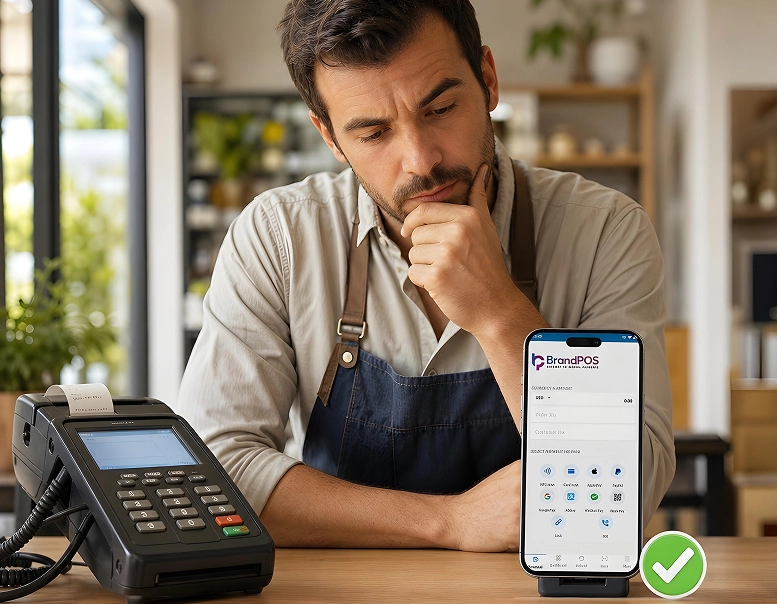
Too much of a hectic? Switch to SoftPOS, with transparent pricing and zero hardware (except your phone)
| Cost Component | One-Time Cost | Time Spread | Effective Monthly Cost |
|---|---|---|---|
| POS Hardware (tablet, printer, accessories) | €1,200 | 24 months | ~€50 / month |
3. Payment Processing Fees
Before asking 'How Much Does A Pos System Cost', know that, with traditional POS, every transaction has a cost.
In-Person Sales:
For face-to-face transactions, expect around 1.5% to 2.9% per transaction in Germany. Debit cards are cheaper; they can be a budget option. Premium markups and business cards are a bit higher.
Online or Keyed-In Transactions:
Processing fees for remote or e-commerce payments are usually around 2.9% and 3.5% per transaction. Some sectors, like grocery, fuel, or service industries, have higher transaction volume, and the rates are a bit better there - that's the hack - the silver lining.
Industry-Specific Rates:
| Industry / Scenario | In-Person Rates (POS) | Online / E-commerce Rates |
|---|---|---|
| Retail (General) | ~1.5% to 2.9% | ~2.3% to 3.5% |
| Restaurants | Around 2% | Higher than in-person |
| Grocery Stores | ~0.68% - 0.83% (commercial cards) | Depends on the provider |
| Fuel Stations | ~0.68% (commercial cards) | Not applicable |
| Service Industries | Depends on the provider | Depends on the provider |
4. Installation, Maintenance, and Add-Ons
For software-based POS systems, there is no price attached to installation or maintenance. However, for add-ons, there is a subscription tier, and the rest of the cost depends on the third-party add-on.
5. Hidden or Optional Costs
| Fee Category | Estimated Cost Range (2026) | Billing Frequency |
|---|---|---|
| TSE Compliance | €10 - €50+ per terminal | Monthly / Annual |
| PCI Compliance | €70 - €120 | Annual |
| TSE Hardware | €250 - €550 | One-time |
| Early Termination | ~10% of remaining contract value | One-time |
| API / ERP Integration | €3,000 - €10,000+ | One-time |
| Staff Training | €100 - €500 | Per session / per employee |
| Non-Compliance Fines | Up to €25,000 | Per violation |
Transparency ensures your real POS System Cost Per Month stays predictable.
What is the Average POS System Cost per Month?
Here's a tabular representation of How Much Does Pos Software Cost
| Provider | Software Cost | Hardware Cost | Transaction Fees | Pricing Model / Notes |
|---|---|---|---|---|
| BrandPOS SoftPOS | Free (Standard) / Flat 1.29% (Professional) TRANSPARENT PRICING | No hardware cost. | Flat 1.29% per transaction (min. €20 monthly invoice) | SoftPOS app for Germany; supports A2A and PayPal; no PSP required for Standard plan; NO HARDWARE SETUP REQUIRED. |
| Square POS | Free basic plan | From $0 (mobile reader) up to $1,649 (full kit) | 2.6% + $0.10 to 3.5% + $0.15 per transaction | No monthly software cost. Hardware is sold separately. Ideal for small and mobile businesses. |
| Shopify POS | $39-$89/month | $0-$500 | 2.4%-2.9% per transaction | Subscription-based; integrates seamlessly with Shopify eCommerce; retail and restaurant add-ons available. |
| Lightspeed Retail | $207/month | Custom pricing | Depends on the payment provider | Cloud-based POS is designed for retail and hospitality businesses. It includes advanced analytics and inventory tools. |
| Clover POS | $60-$190/month | Sold separately (varies by terminal) | 2.3%-3.5% per transaction | Strong for retail and hospitality purposes. It has multiple hardware options. |
BrandPOS: A SoftPOS App for Your Business
BrandPOS simplifies everything when you ask How Much Does POS Software Cost for a business in Germany.
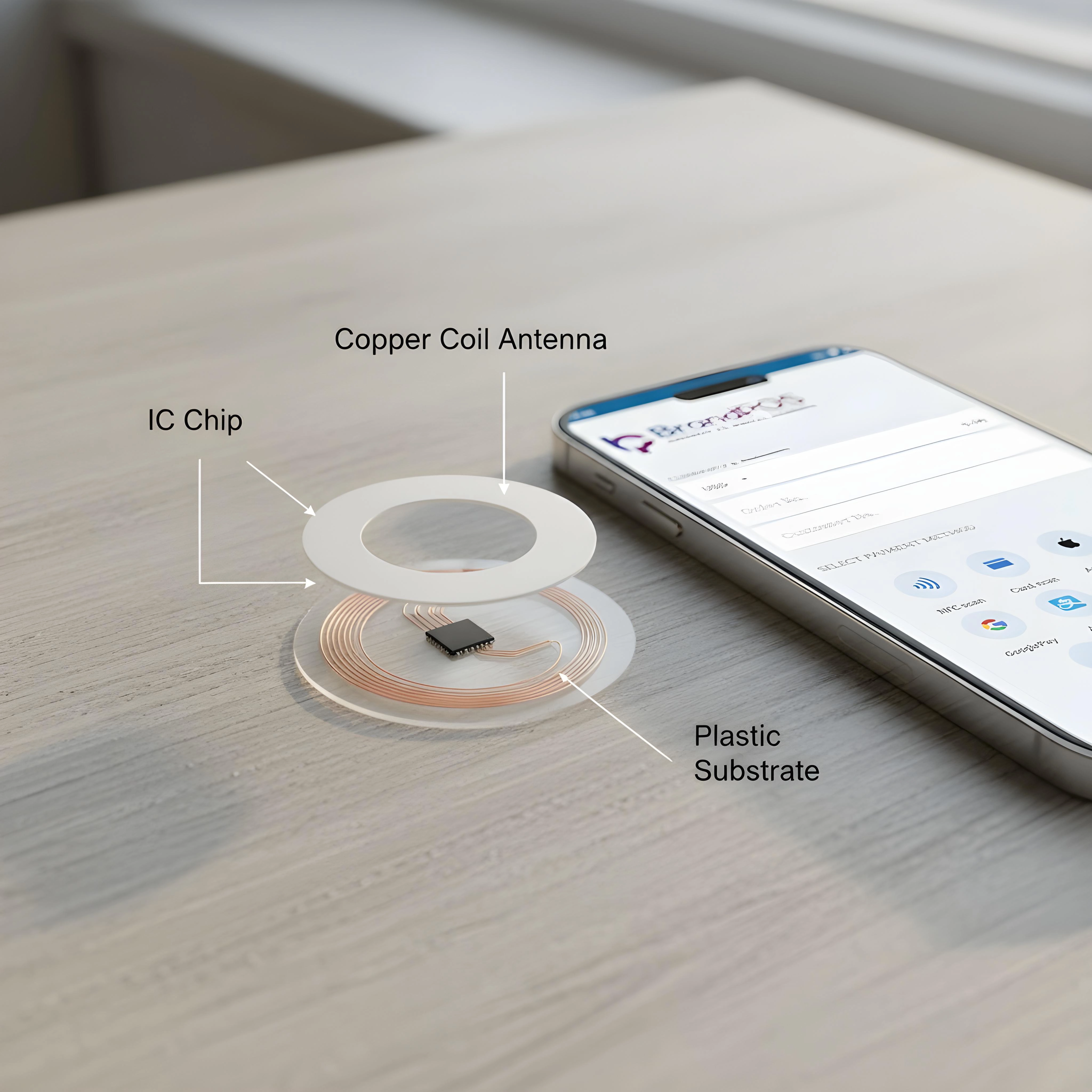
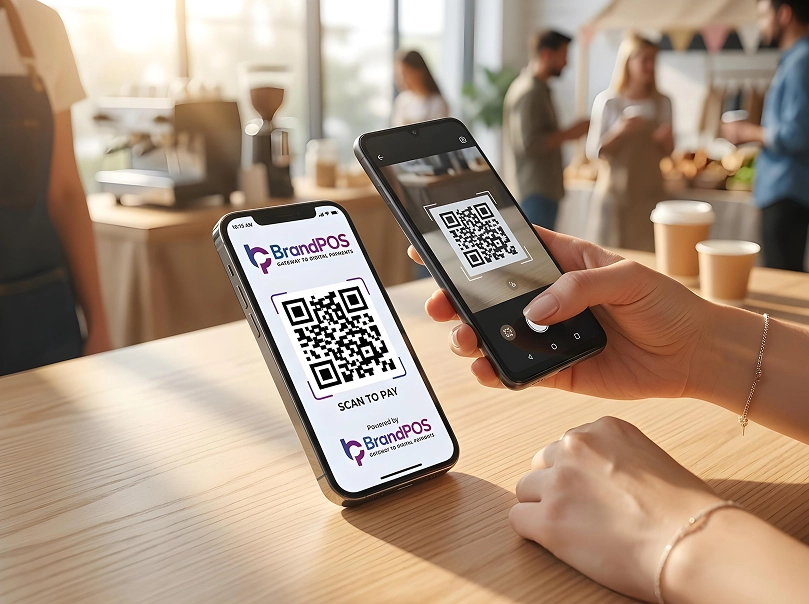
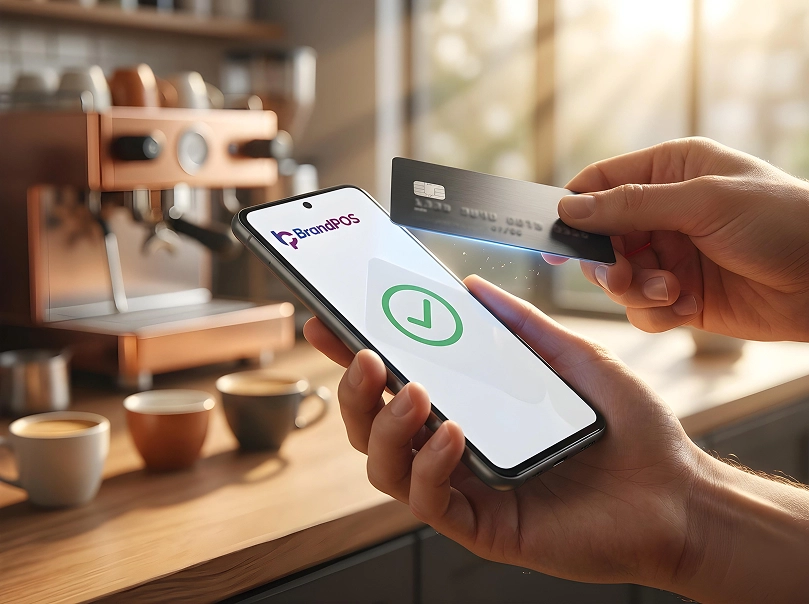
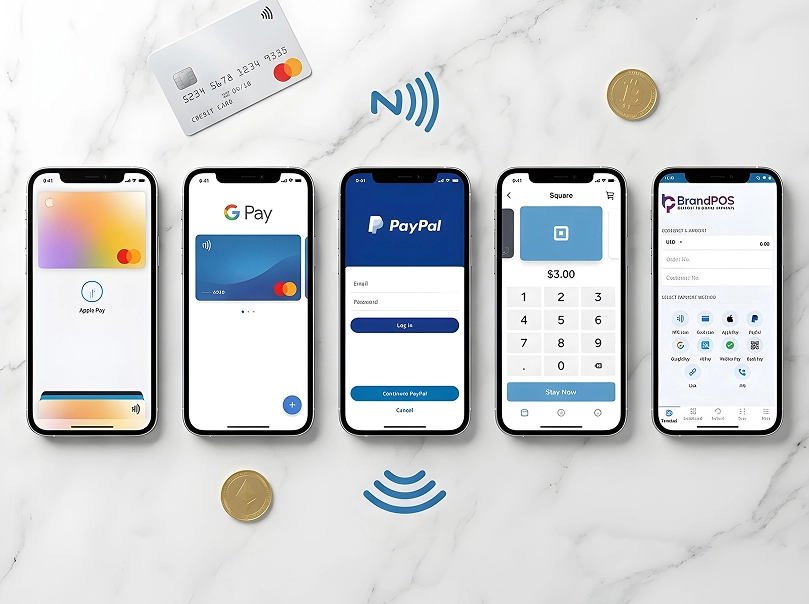
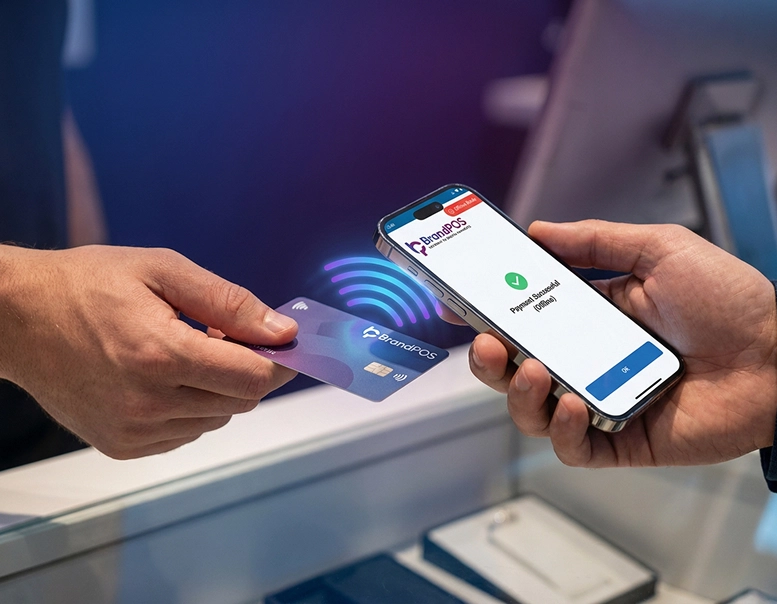
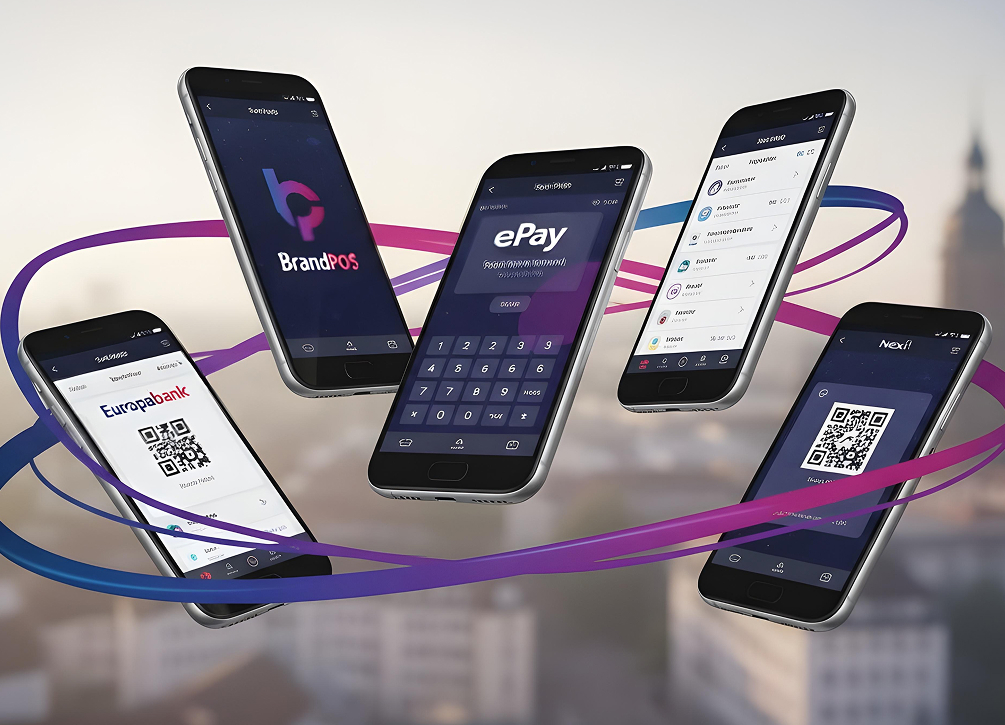
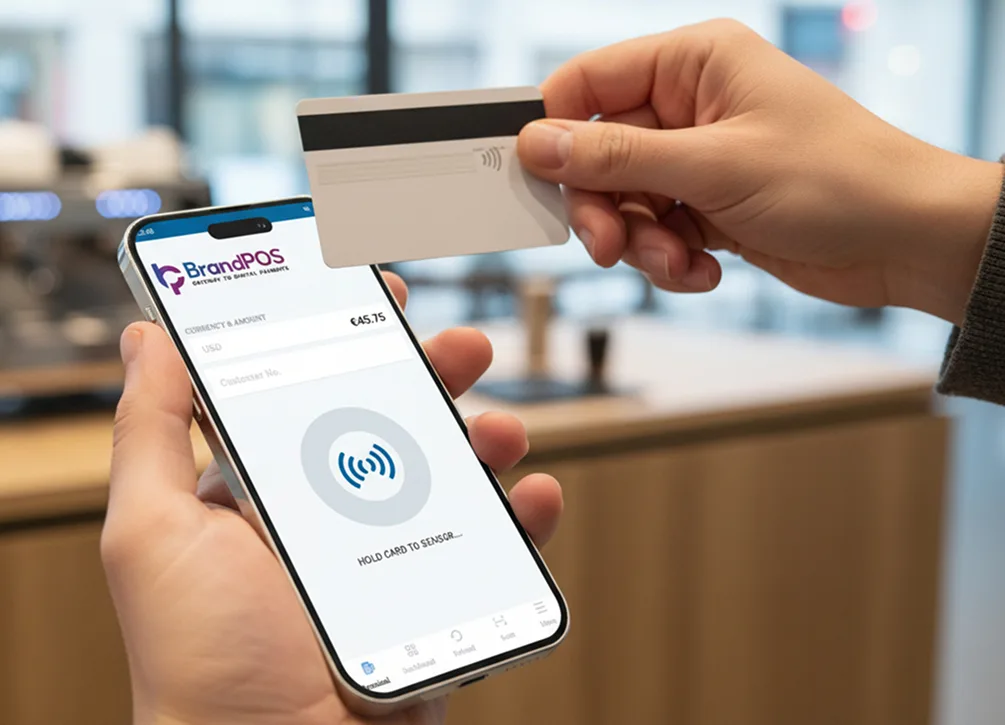
BrandPOS is a SoftPOS solution application that a merchant can download on their smartphone/tablet to make it a payment terminal. It takes payments in terms of mobile wallets, QRs, cards, and has contactless e-payment options.
BrandPOS Pricing Overview
Standard plan - Free: One month free (excluding third-party fees). BrandPOS SoftPOS accepts account-to-account (A2A) payments and has no requirement for PSPs.
Professional plan - Flat 1.29% transaction fee: Minimum monthly invoice of €20. A2A + PayPal support; PSP required, like PayPal and Novalnet.
When the cost is compared with "traditional" POS systems (with €50-€150/month software + €500+ hardware + 2%+ processing), BrandPOS offers excellent all-rounder service at very basic costs.
Who it's best for
Small Businesses [Start-ups or retail shops]
Mid-size Businesses [with low hardware budget but wanting to accept card payments quickly]
High-end businesses.
If your business grows significantly (many terminals, complex inventory, and varied staff), BrandPOS will handle it with simplicity and low cost, making it very attractive.
Therefore, with BrandPOS, the question of "How Much Does POS Software Cost?" is minimal and constant.