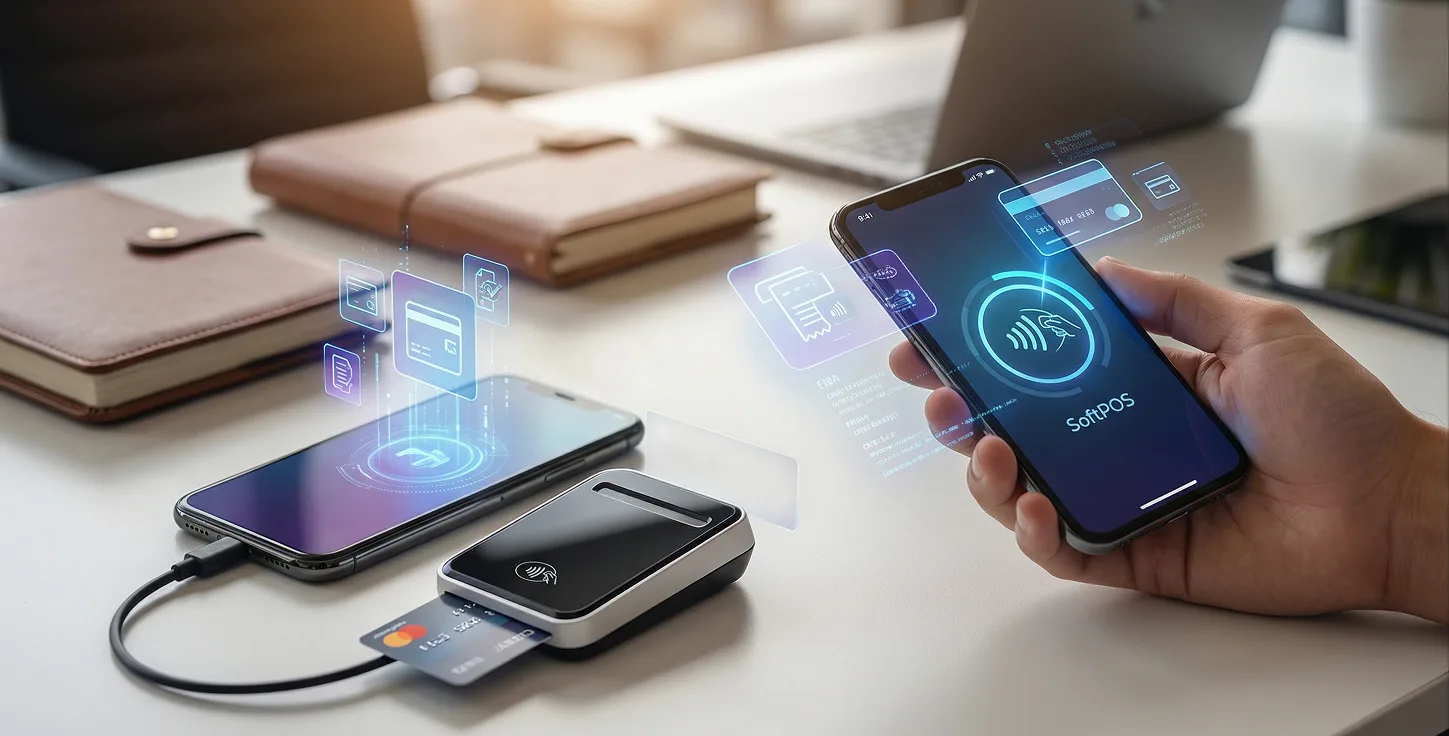
In the evolving world of digital payments, Mpos Vs. Softpos is becoming a central comparison for merchants, fintechs, and payment solution providers.
As businesses look for leaner, more mobile-friendly ways to accept payments, the question arises: softpos vs mpos — which is more suitable?
In this article, we explore what is mpos, what is softpos, how they differ, their strengths and weaknesses (softpos vs mpos), and how BrandPOS can help you harness their power.
What is MPOS?
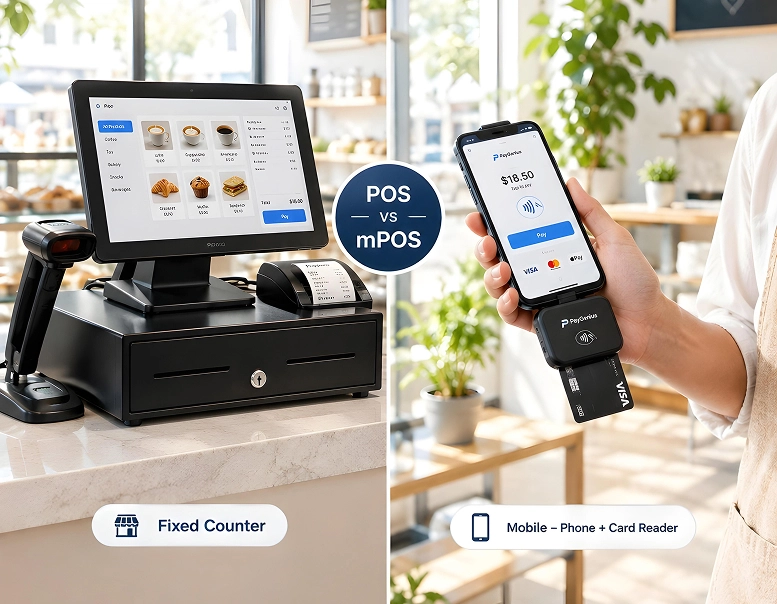
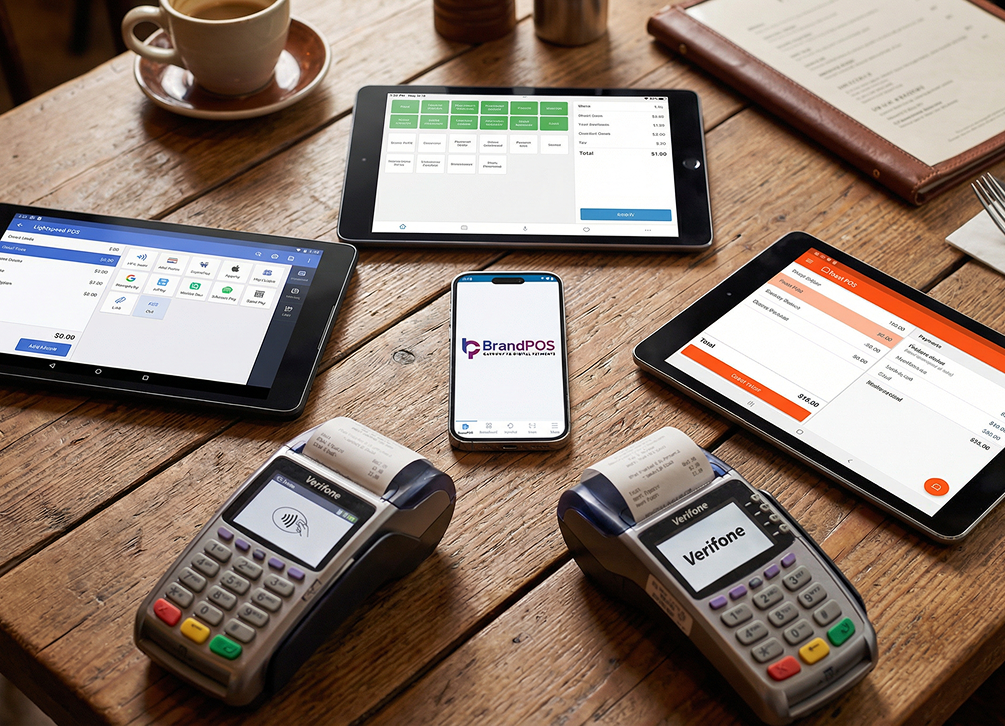
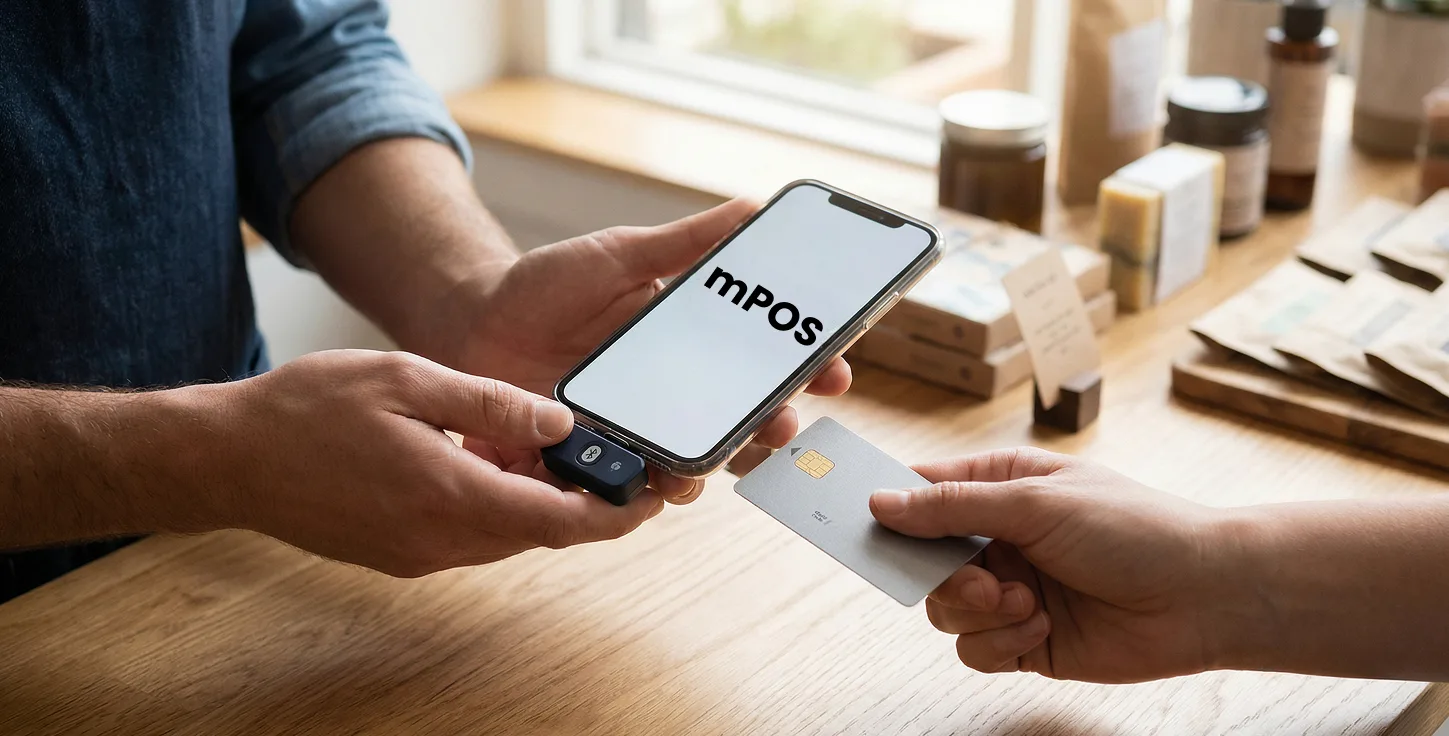
When you think about what an mPOS really is, it's simpler than it sounds. The name gives most of it away — mobile Point of Sale. In practice, it's just your phone or tablet doing some of the heavy lifting while a small card reader handles the rest. You'll often see that reader connected over Bluetooth or, sometimes, a wire.
The app on your device takes care of what you'd expect, connecting, displaying prices, confirming payments, while the reader manages the physical bit, reading the chip or magnetic stripe and asking for a PIN when it's needed. It's a system that works because the two parts speak to each other quietly in the background.
mPOS systems have gained popularity among small and medium enterprises, food trucks, pop-ups, and mobile businesses because they reduce the need for bulky terminals and make payment acceptance more flexible.
Many mPOS solutions are PCI-certified, and support a wide range of payment methods, including EMV chip, swipe, and NFC tap. Even if the phone doesn't have NFC, the software will run smoothly. Below we will learn about softpos vs mpos for further understanding.
Ready to ditch the card machine?
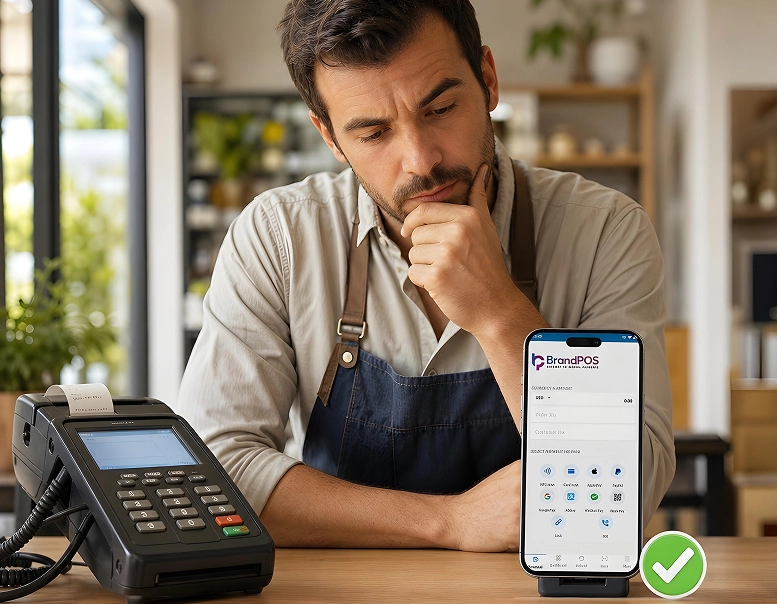
BrandPOS turns any Mobile phone into a certified POS terminal - no cables, no setup headaches.
Get Started for FreeWhat is SoftPOS?
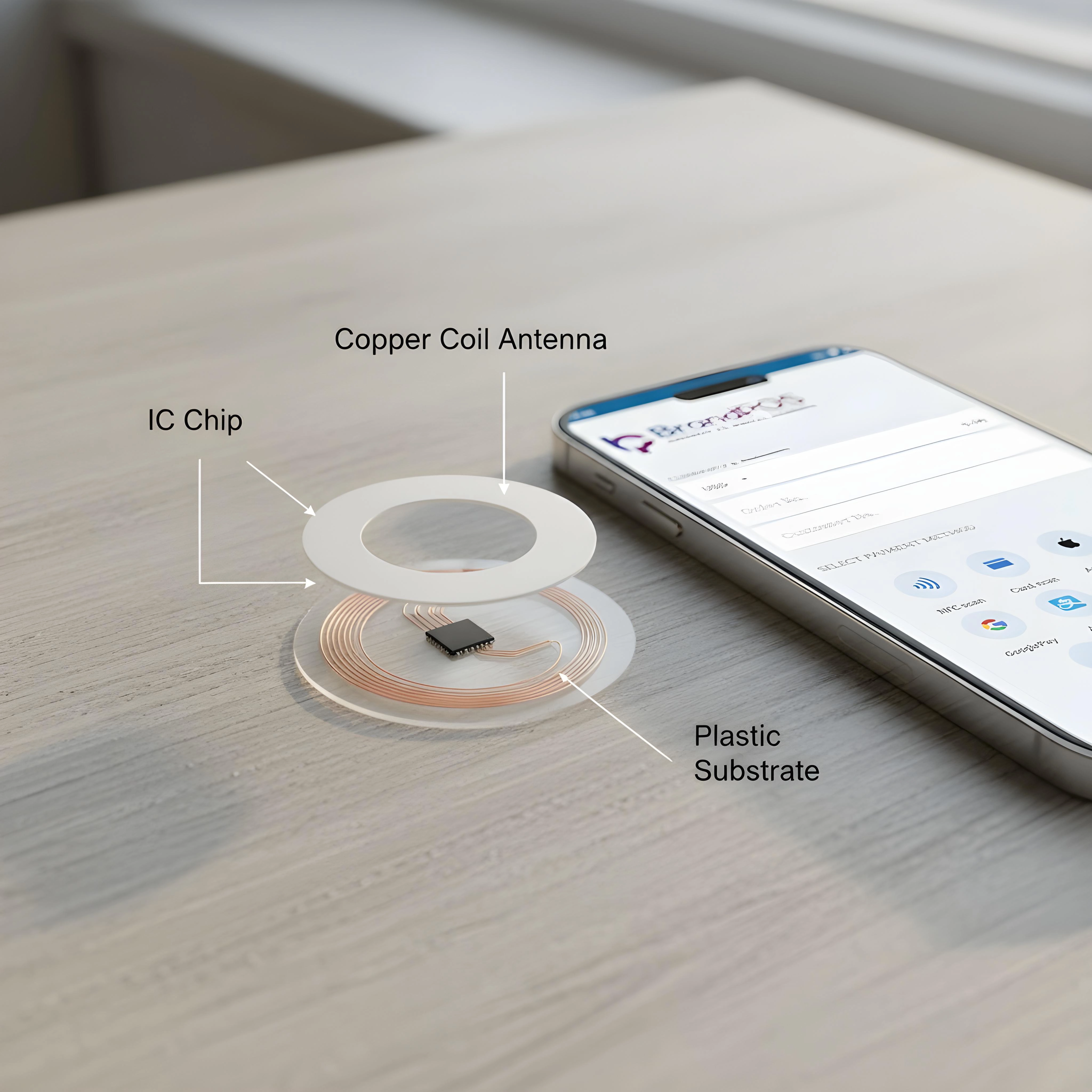
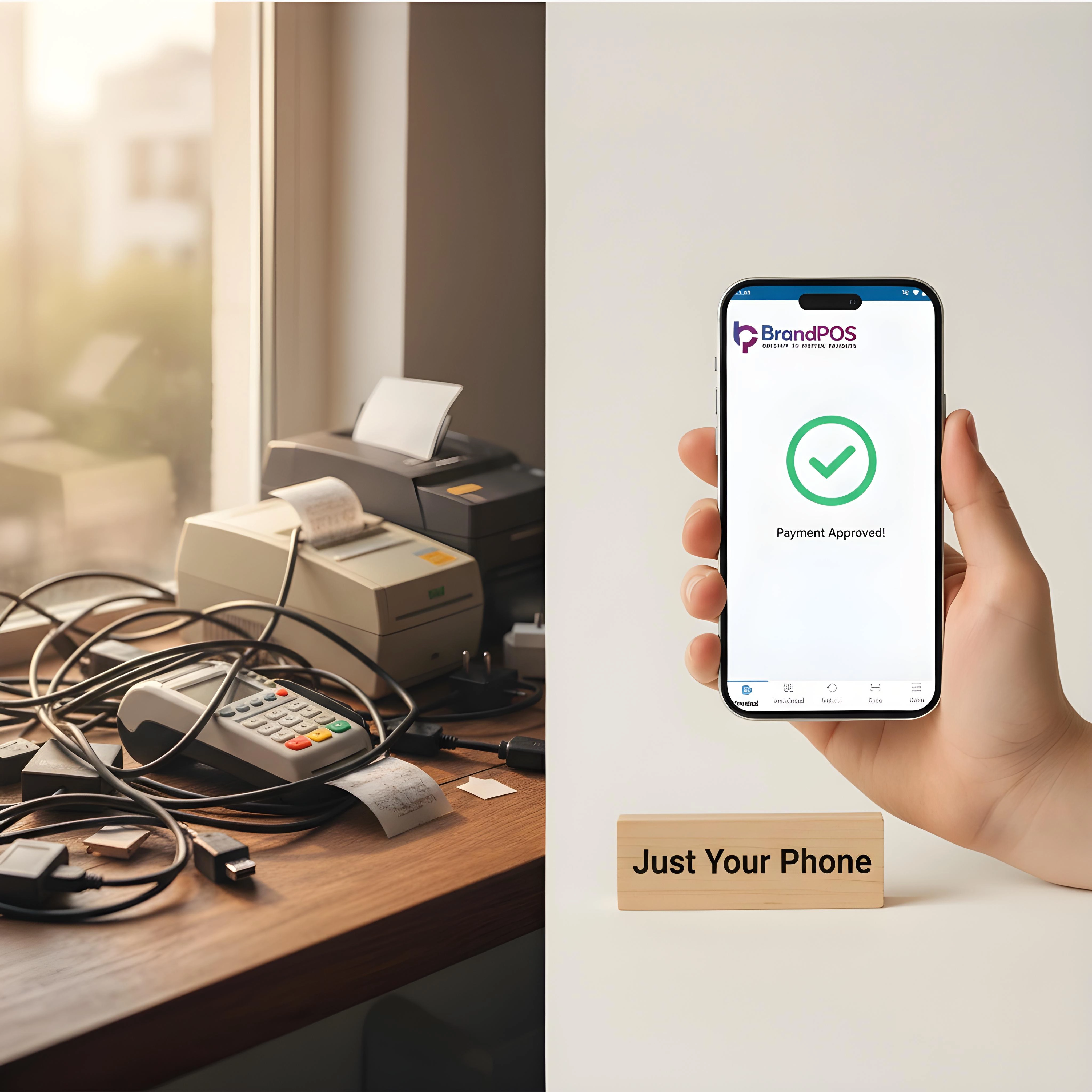
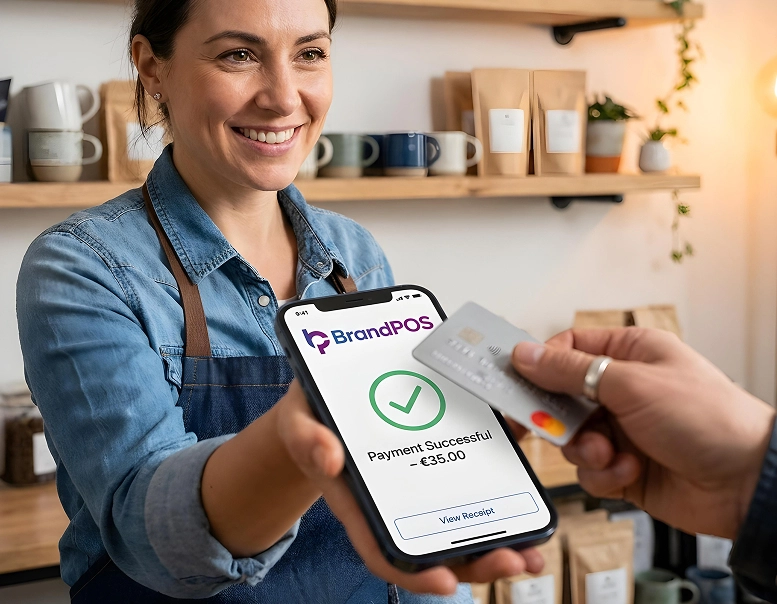
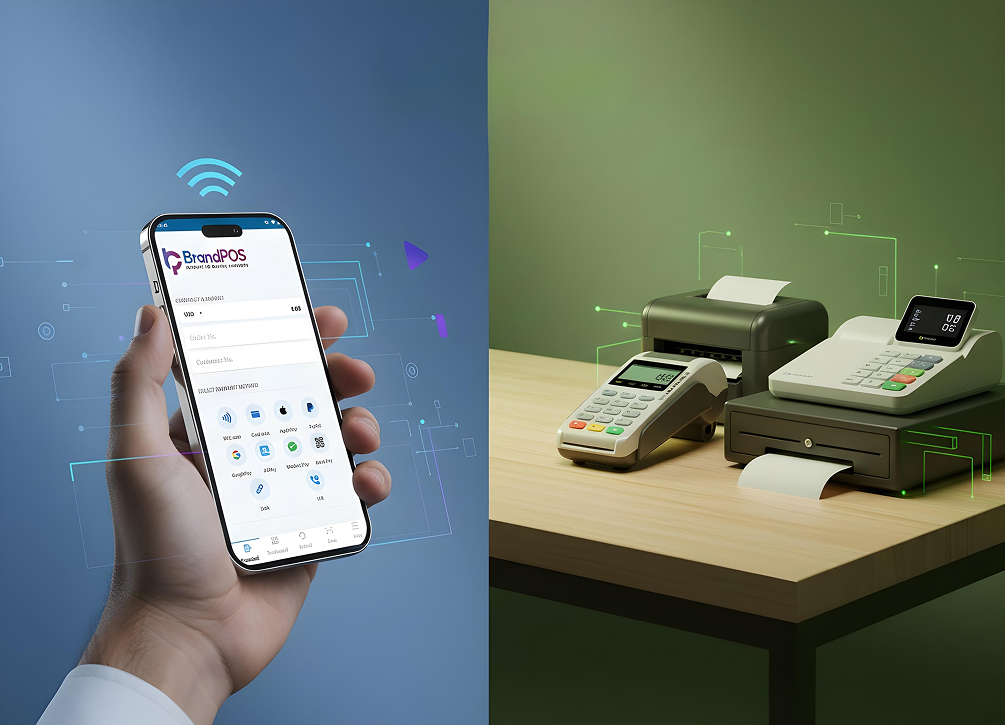
Now, SoftPOS moves that conversation somewhere else. You could say it takes the same concept and strips away the extra hardware. The phone itself becomes the terminal.
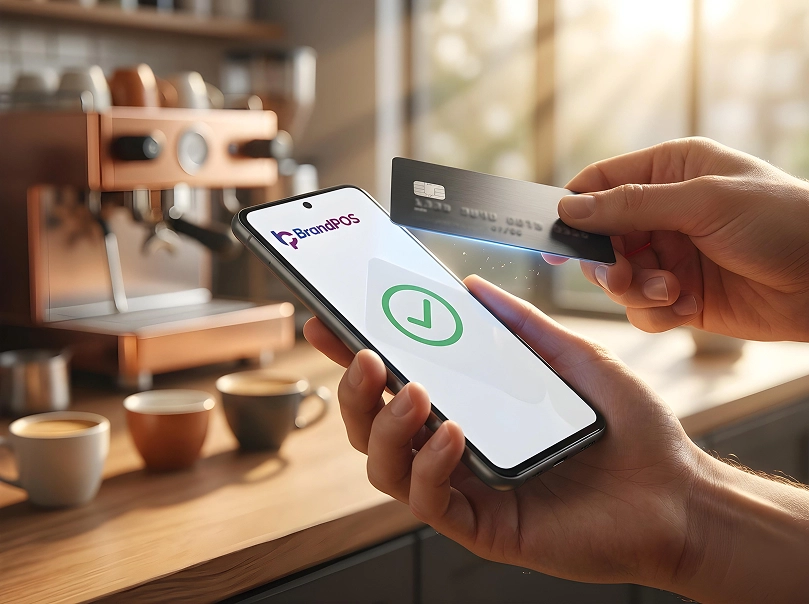
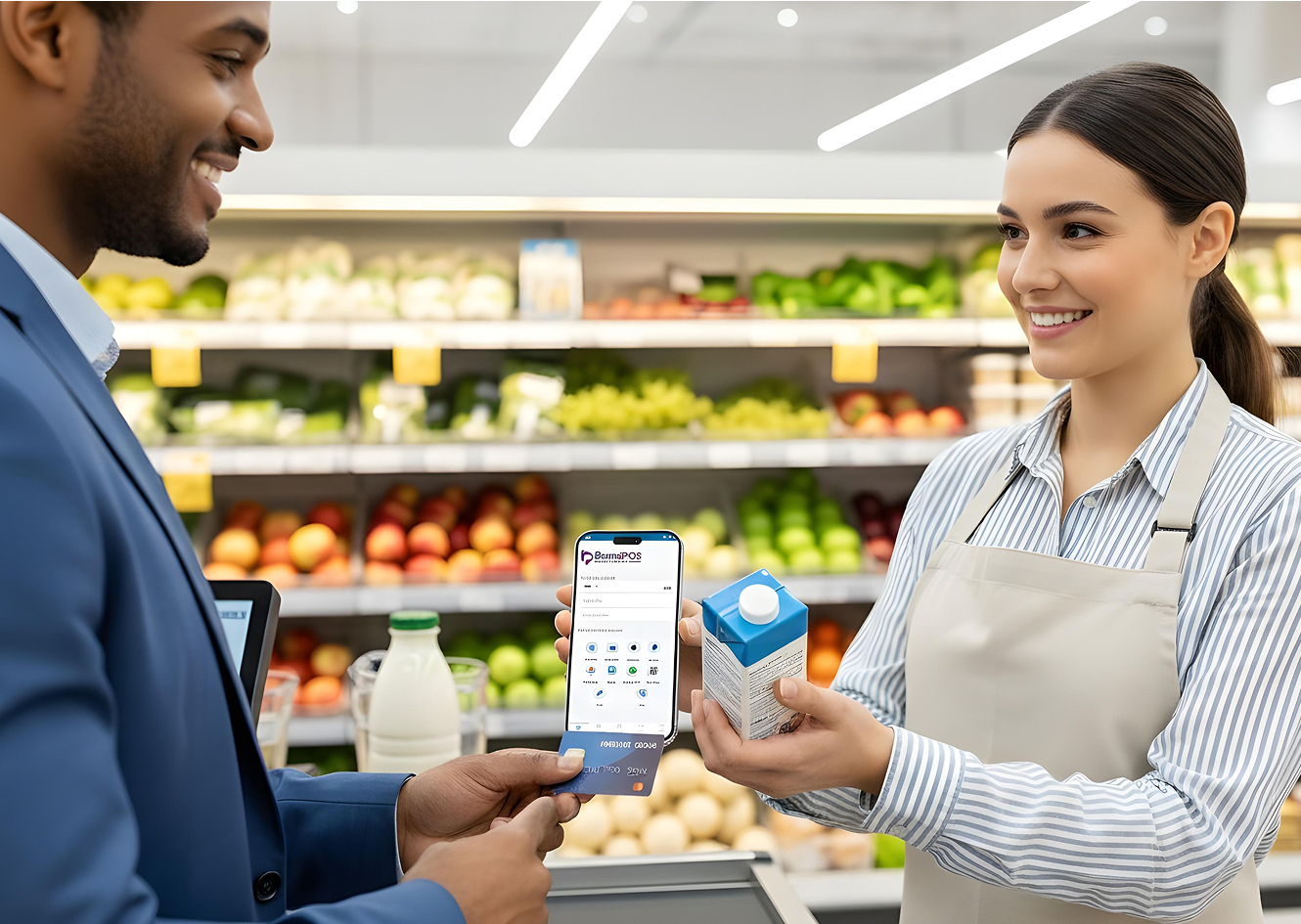
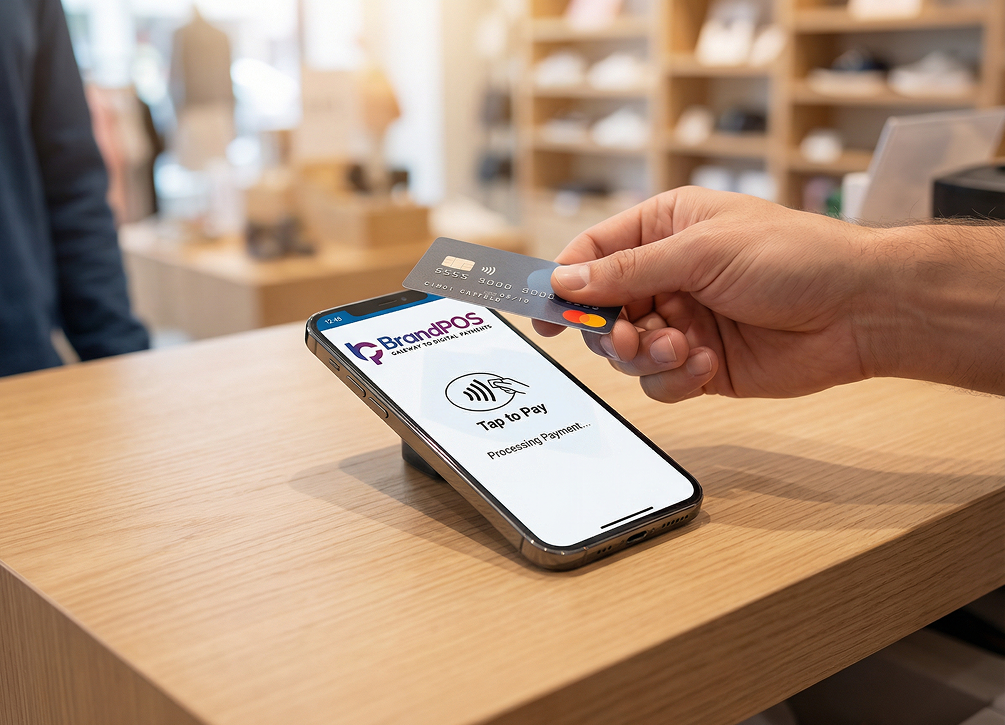
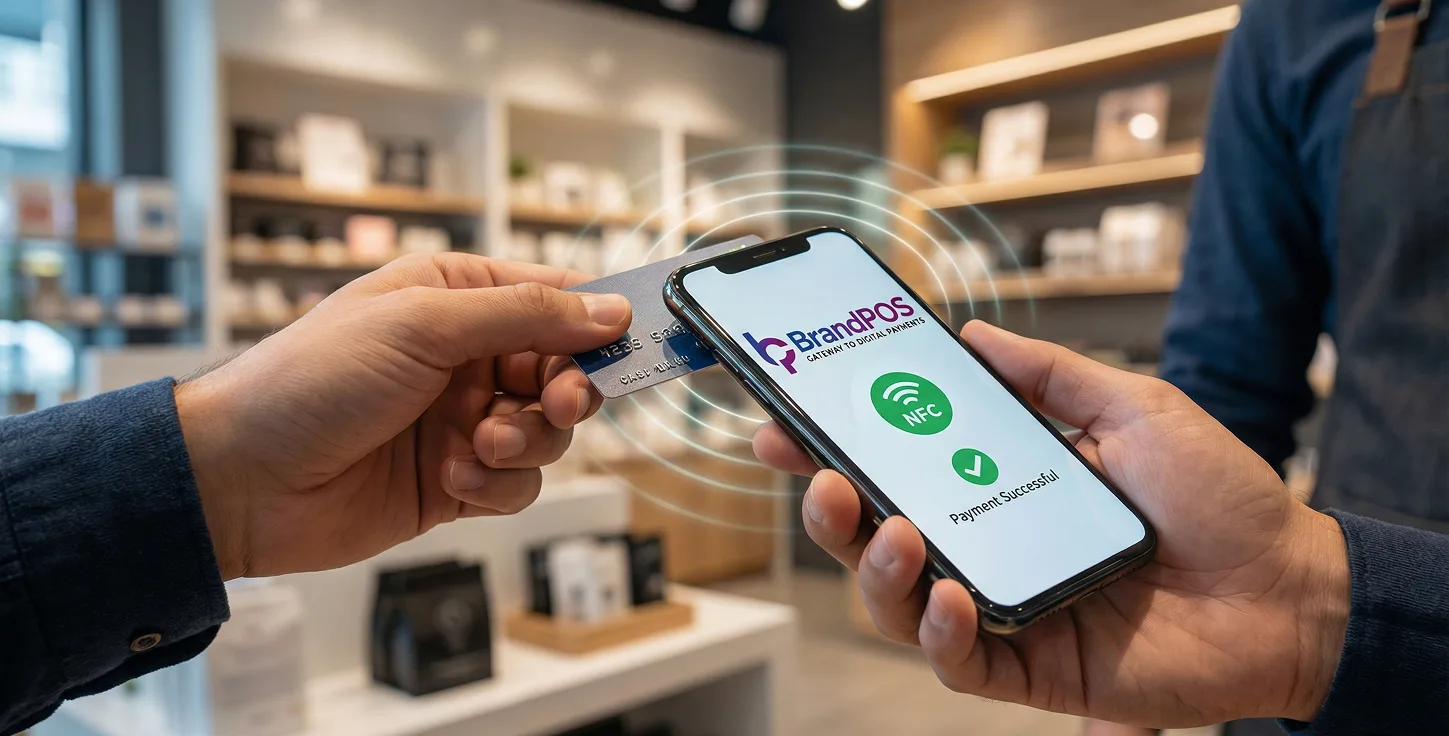
You open the SoftPOS app, hold the customer's card near the screen, and the payment goes through as if you were using a regular contactless reader. It's still secure, still convenient, just less clutter.
The trade-off, of course, is that it usually only supports tap-to-pay or digital wallets, not chips or swipes. But for small vendors or on-the-go services, that can be enough.
SoftPOS is sometimes dubbed 'Tap on Phone' or 'Tap to Pay' in the fintech and payment industry lingo. But unlike mPOS (which still relies on hardware), SoftPOS depends solely on software, plus the mobile device's (NFC or not – both work).
Some SoftPOS applications also support PIN entry on the phone's screen or via virtual PIN pads under certain security certifications (e.g., PCI CPoC or MPoC).
mPOS vs SoftPOS – What are the Key Differences
Let's break down mPOS vs SoftPOS across critical dimensions to understand which may suit your business best.
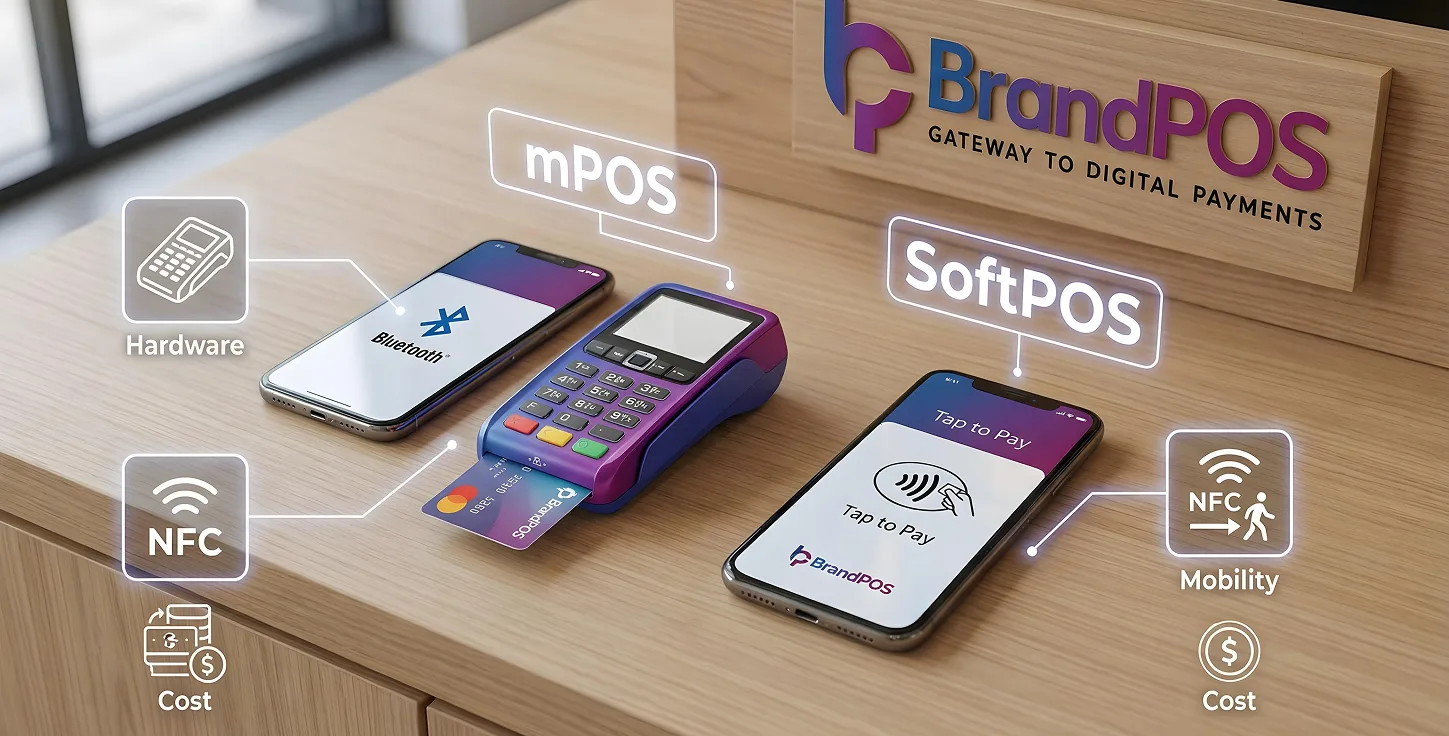
Hardware Requirements
- mPOS: Requires a separate card reader or dongle connected to a smartphone or tablet.
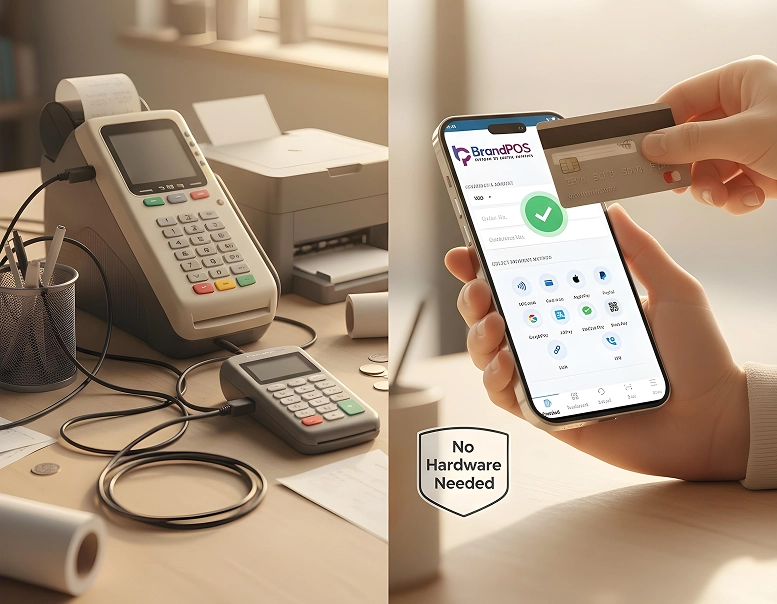
- SoftPOS: No external hardware; the mobile device suffices. This is the most fundamental distinction in the softpos vs mpos debate.
Your Phone Is Already a POS Terminal
Stop paying for hardware you don't need. Download BrandPOS and start accepting payments in minutes.
Download the App FreeCost and Setup
- mPOS: You must purchase or rent card readers, which increases costs and maintenance.
- SoftPOS: Lower upfront cost because you leverage existing devices; no additional hardware purchases.
- Setup time is often faster with SoftPOS — just install an app and onboard — whereas mPOS may require pairing and reader configuration.
- Thus, here in Mpos Vs. Softpos, SoftPOS wins.
Security Standards and Compliance
- mPOS: Many solutions follow PCI SPoC / PCI MPoC protocols, ensuring safety of card data through encryption and tamper resistance. It stands the chance to win the Mpos Vs. Softpos battle.
- SoftPOS: Needs to comply with newer standards such as PCI CPoC or MPoC for 'consumer off the shelf' devices. Ensuring secure execution, tokenization, attestation, and key management is crucial.
- Because SoftPOS runs on ordinary mobile devices, other installed apps or OS vulnerabilities pose additional risk.
Supported Payment Methods
- mPOS: Can support chip (EMV), magnetic stripe, and contactless payments.
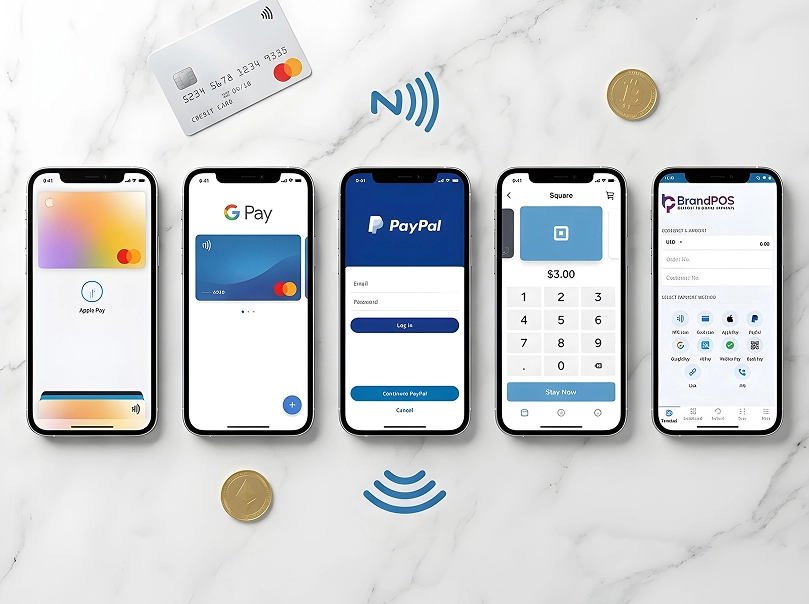
- SoftPOS: Primarily designed for contactless/NFC or non-NFC or mobile wallet/QR scan payments are enabled under certification.
- A clear win for both in Mpos Vs. Softpos.
Device Compatibility and Ease of Use
- mPOS: You must ensure compatibility between the reader and the host device (iOS, Android, firmware versions).
- SoftPOS: Requires NFC capabilities and OS support; older phones without NFC or weak hardware may struggle.
Mobility and Flexibility
- mPOS: More flexible than fixed terminals but still requires carrying a reader.
- SoftPOS: Maximum mobility — your smartphone is the terminal, ideal for on-the-go scenarios like delivery, field service, or pop-ups.
- Because there is no hardware to maintain or lose, SoftPOS is more subtlefor many mobile use cases.
Pros and Cons of mPOS
In the battle of Mpos Vs. Softpos, Mpos stands like this -
Pros
- Supports a wider range of payment types (chip, swipe, tap).
- Well-established, mature ecosystem of providers and hardware.
- Better control over hardware behavior and often strong security built into the reader.
Cons
- Requires carrying and maintaining extra hardware (reader).
- Hardware failure or pairing issues may disrupt transactions.
- Additional cost of reader devices and logistics.
- Slightly bulkier and less streamlined than soft-only setups.
Benefits of SoftPOS
In the battle of Mpos Vs. Softpos, SoftPOS stands like this -
Pros
- No hardware. Just your mobile phone.
- Lower upfront cost.
- Instant deployment via app download.
- Great for mobile, delivery, pop-ups, and field sales.
- Simplifies operations and reduces hardware lifecycle overhead.
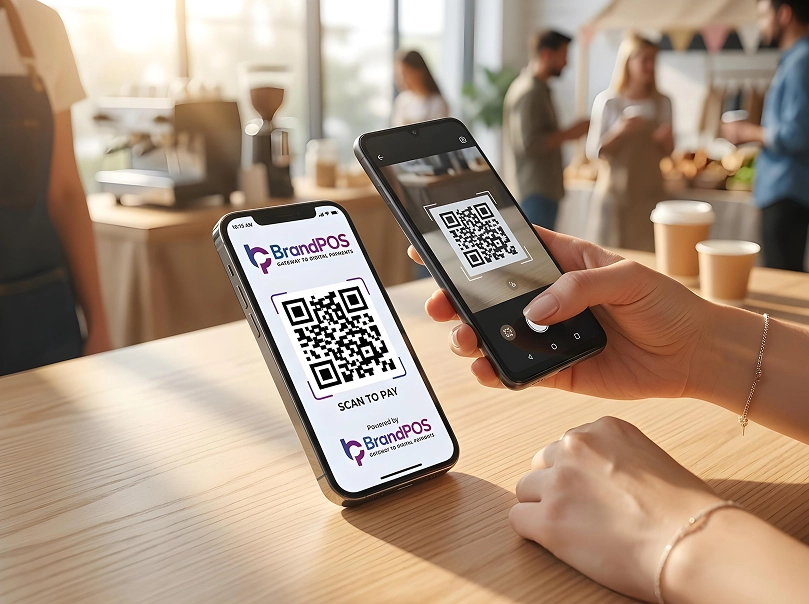
- Enables Scan to Pay directly on a merchant's own phone.
Note that, in softpos vs mpos, SoftPOS wins for its modern practicality and ease of use.
Use Cases of mPOS and SoftPOS
When deciding between softpos vs mpos, the right choice often depends on your business context. Here are common use cases based on 'what is mpos' and 'what is softpos'.
| Scenario | Better Fit | Reason |
|---|---|---|
| Retail shop counter | mPOS (or traditional POS) | Greater range of payment options, handling higher transaction volume |
| Pop-up store or market stall | SoftPOS | Rapid deployment, no extra hardware |
| Delivery/field sales | SoftPOS | Accept payment at the customer's door using your phone |
| Events, exhibitions | SoftPOS | Mobility and flexibility with minimal gear |
| Hospitality / tableside | mPOS or SoftPOS | Both can work; SoftPOS reduces hardware lift |
| Small businesses just starting | SoftPOS | Lower investment barrier |
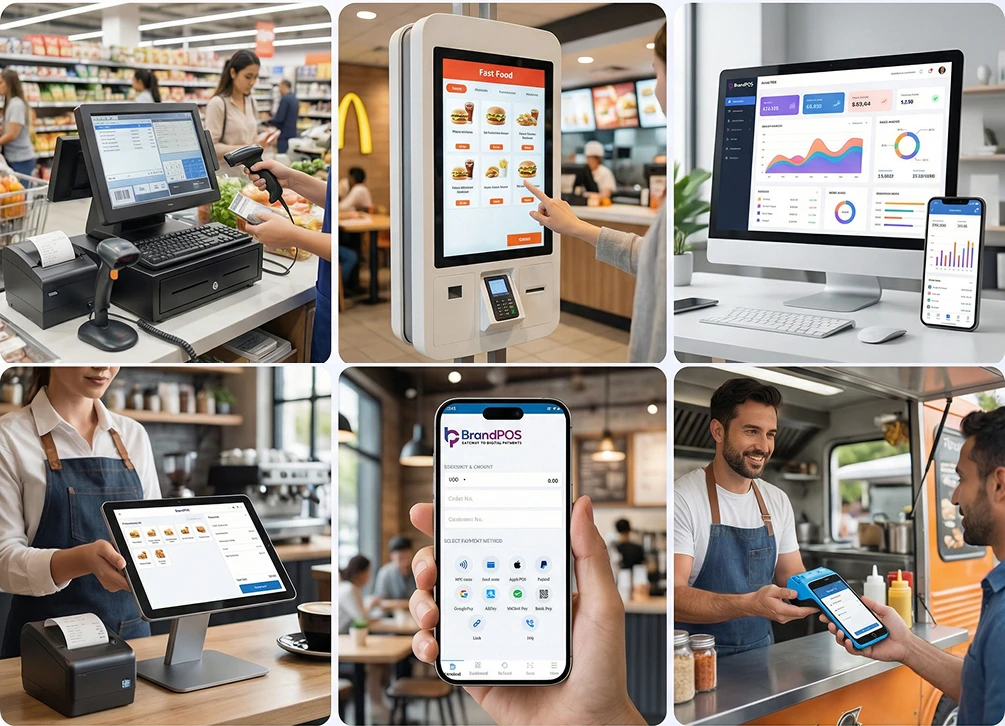
For example, a food truck may benefit from SoftPOS to take payment right beside the serving counter. A small boutique may prefer mPOS for stability and compatibility. A courier or mobile repair service would likely favor SoftPOS for doorstep acceptance. But softpos vs mpos doesn't stop at this.
BrandPOS ensures to accommodate all sizes of businesses, from mini to large.
Security and Compliance in mPOS and SoftPOS
Security is paramount in payment solutions. In the mPOS vs SoftPOS conversation, both require rigorous measures, but the challenges differ.
- mPOS: The external reader often includes hardened security and tamper detection. The smartphone app communicates encrypted data to the reader and onward to payment networks.
- SoftPOS: Because it uses consumer devices, it needs software-level protection: remote attestation, key vaults, tokenization, encryption, runtime protections, and secure containers. It must meet stringent standards such as PCI CPoC / MPoC.
Merchants must ensure the SoftPOS provider is certified and regularly audited. Additionally, device hygiene (OS updates, no malware, no rooting/jailbreak) is crucial.
BrandPOS SoftPOS App – Your All-in-One Payment Solution
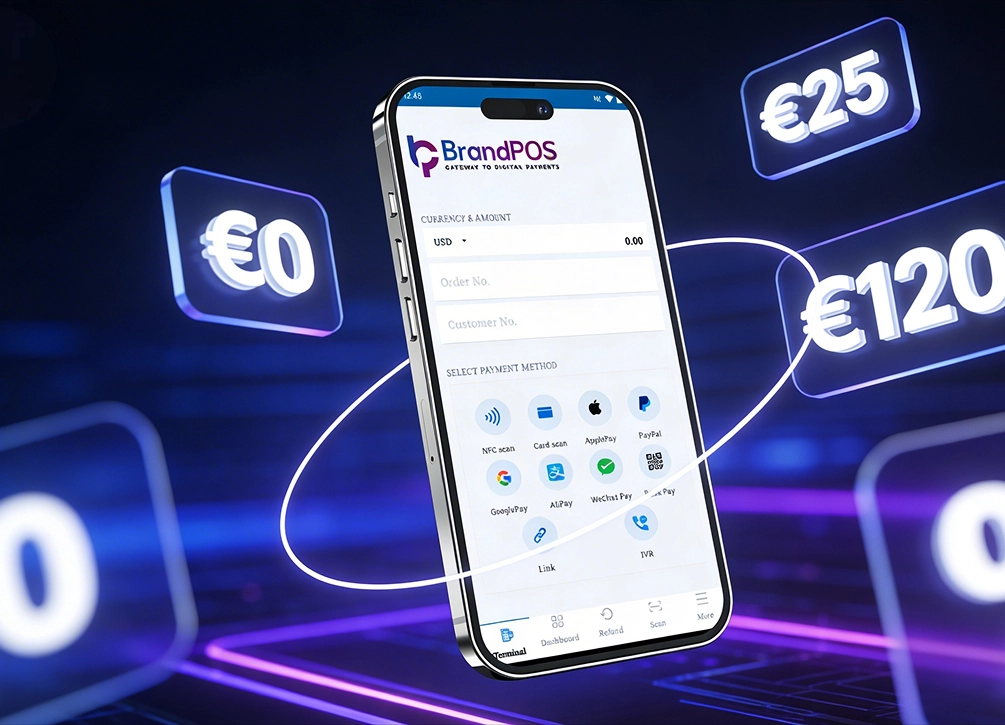
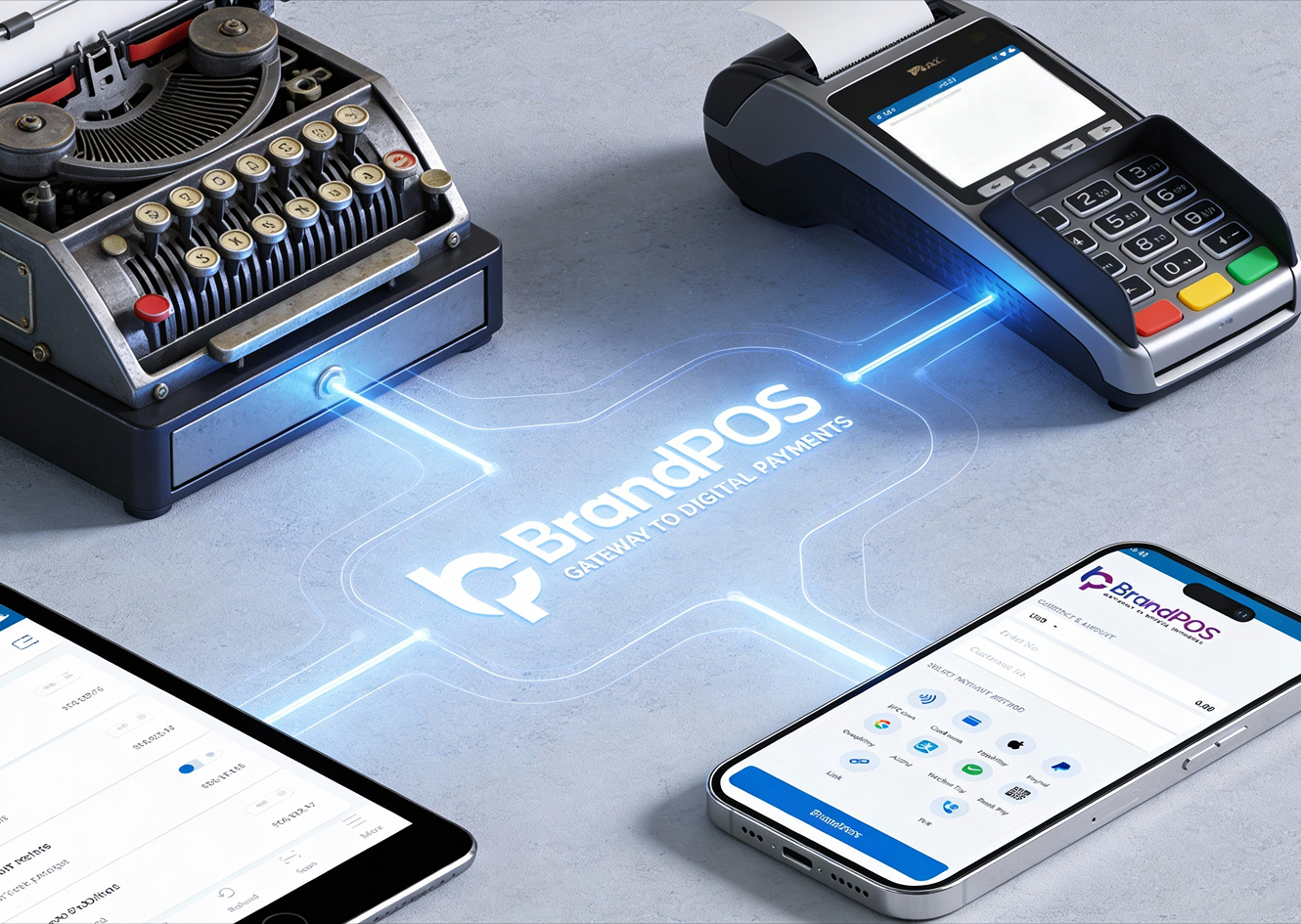
In the realm of Mpos Vs. Softpos, the BrandPOS SoftPOS App stands out by combining the best of both worlds. With our app, your NFC-enabled (or otherwise) smartphone becomes a secure payment terminal — no card reader needed. You get:
- Full SoftPOS support, powered by PCI MPoC compliance.
- Contactless transactions, mobile wallet integration, and in-app receipts.
- Option for PIN-on-glass under certified configurations.
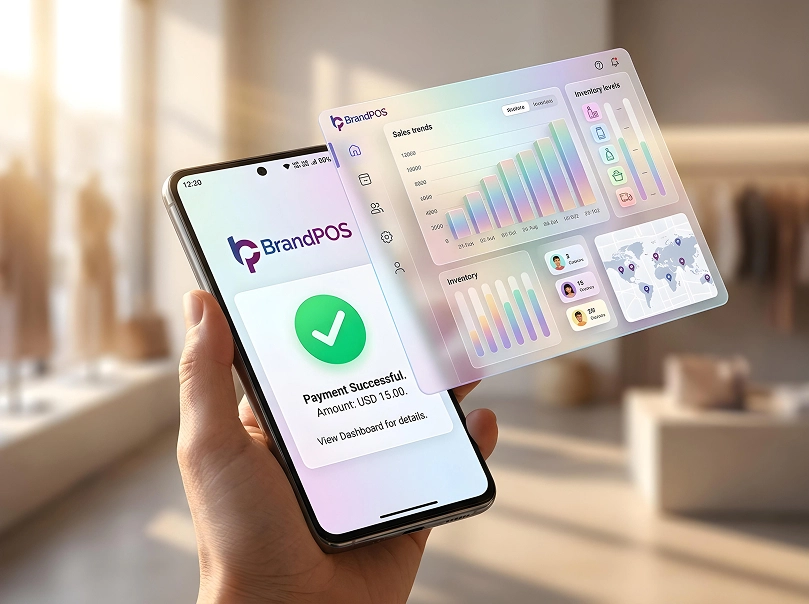
- Centralized dashboard for merchants: transaction reporting, dispute handling, settlement analytics.
- Support and updates managed by BrandPOS.
By reducing hardware dependency and maintaining robust security, BrandPOS SoftPOS helps businesses adopt the future of payments with confidence. It reinstates the superiority in ease and operation of the SoftPOS, making it win the softpos vs mpos battle.
Conclusion
By now, you should have a clear understanding of Mpos Vs. Softpos, softpos vs mpos, and the strengths and tradeoffs of each. Whether you're evaluating what is mpos or what is softpos, the best choice depends on transaction volume, cost constraints, mobility needs, and risk tolerance.