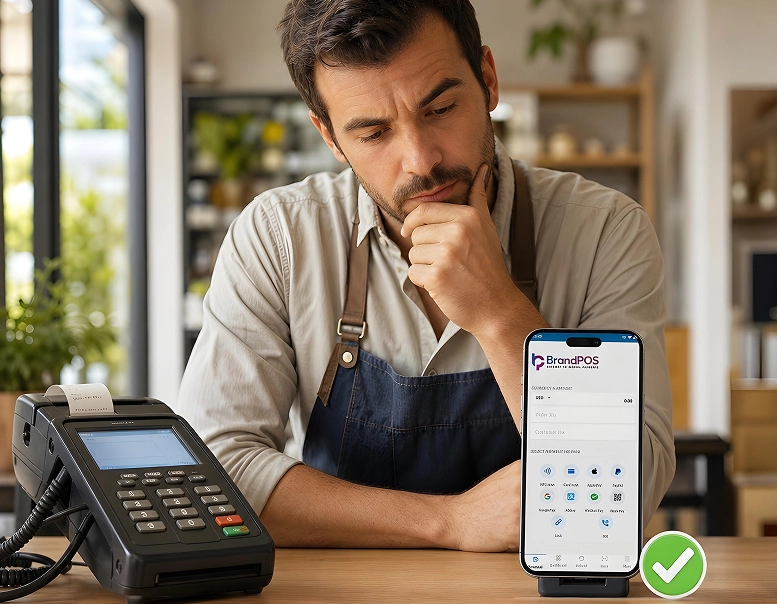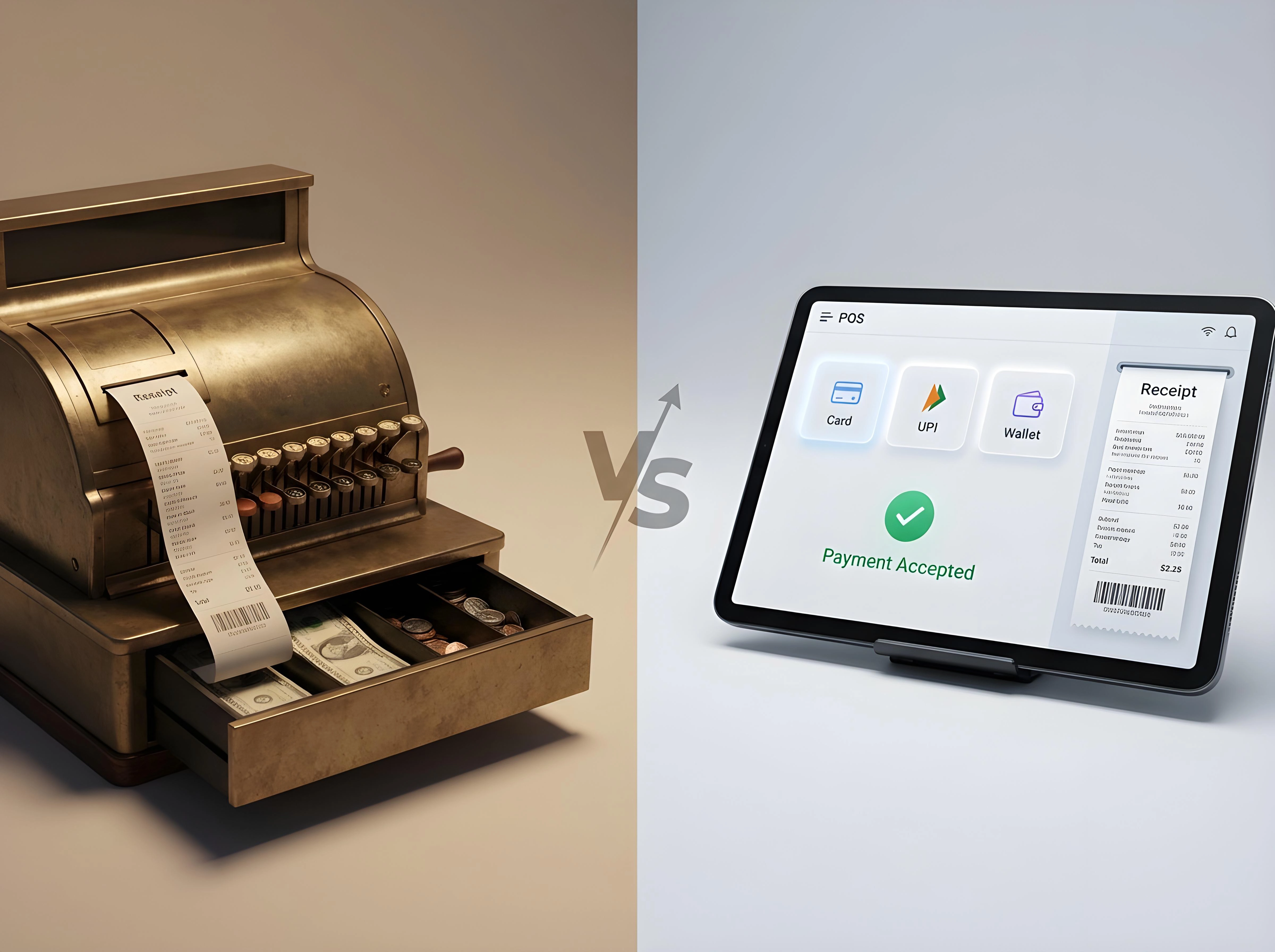
For any business owner, which payment system they should choose between POS vs. mPOS - is a crucial decision. Because it decides both the customer experience and the efficiency and scaling potential of their sales operations.
Both POS and mPOS systems have the same purpose - they enable payments. But when you choose between the two, you are not only deciding how customers pay.
Practically speaking, POS vs. mPOS shapes how fast your business can move in the real world, how much you need to spend to kick off your sales, and are you really ready for how customers prefer to pay in 2026?
Ready to ditch the card machine?
BrandPOS turns any Mobile phone into a certified POS terminal - no cables, no setup headaches.
Get Started for FreeWhat Are POS Systems?
POS (point of sale) is the literal point at which the exchange of goods/services and payment happens between the merchant and the customer.
The POS systems are a combination of hardware and software that make this exchange possible and keep a record of the same.
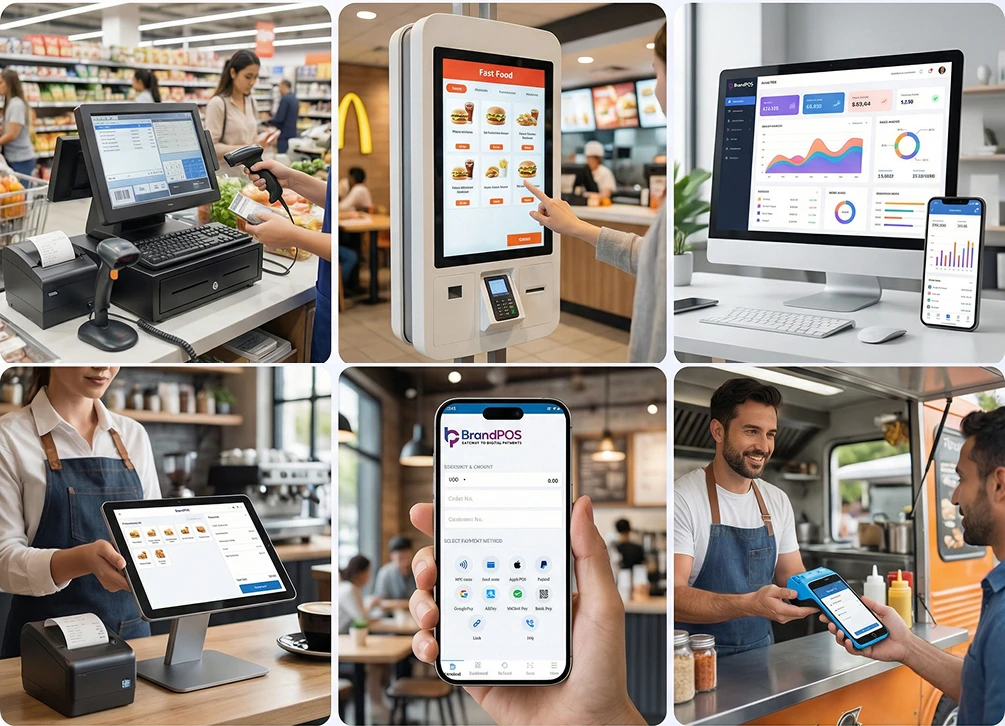
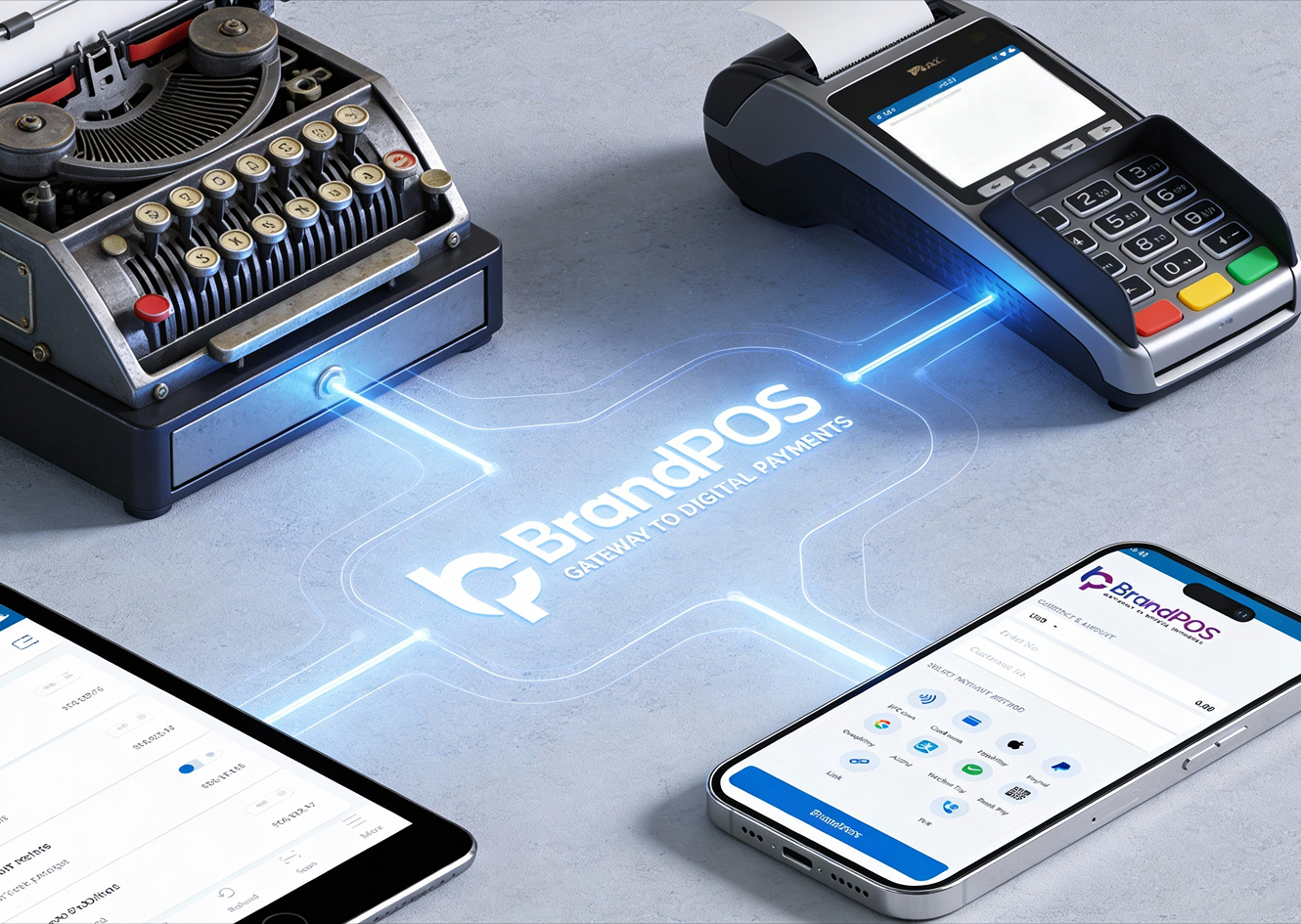
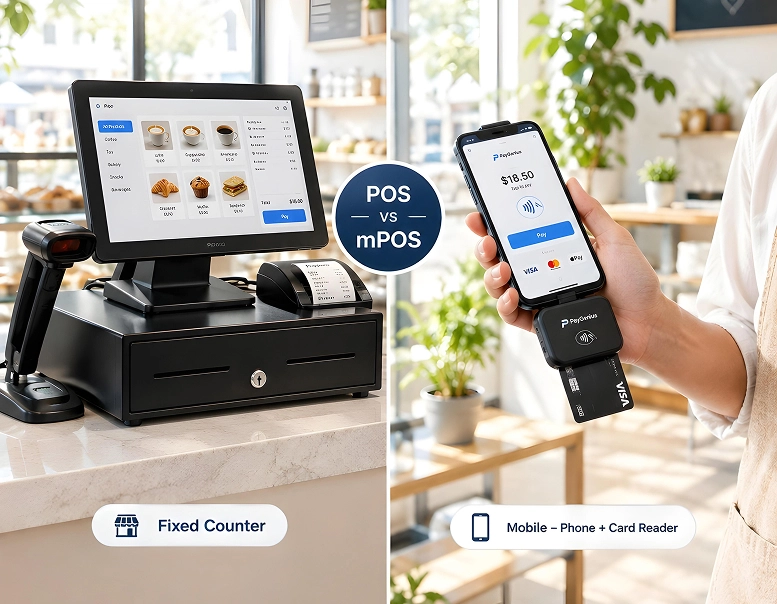
A traditional POS system often includes a countertop terminal, barcode scanner, cash drawer, receipt printer, etc. The POS provider also gives proprietary software to manage the sales processes like inventory and staff logins.
What Are MPOS Systems?
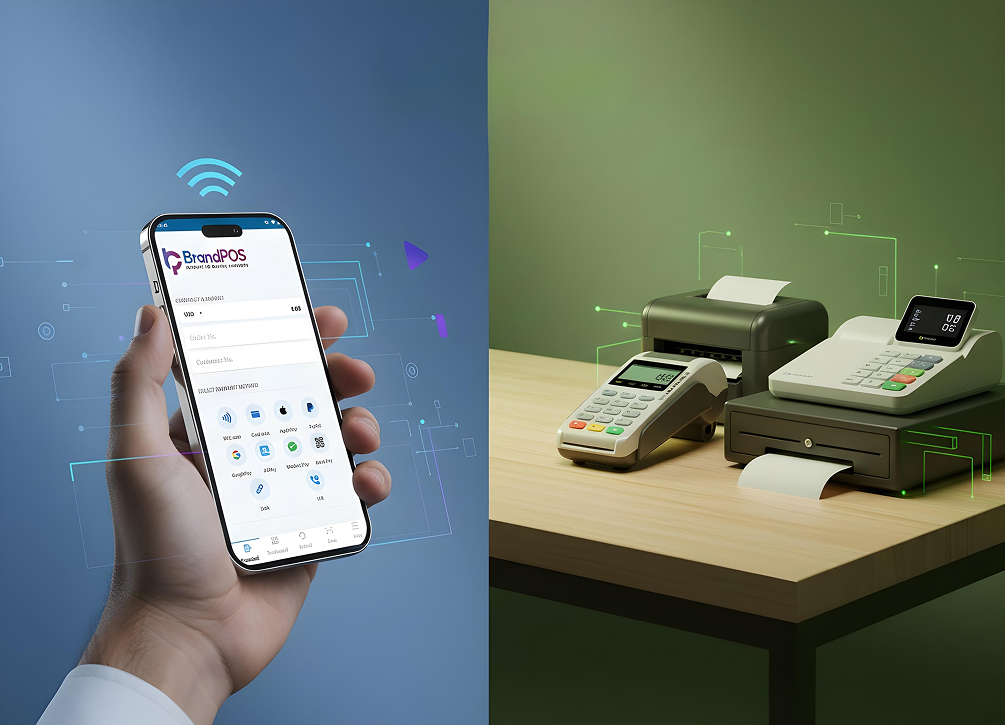
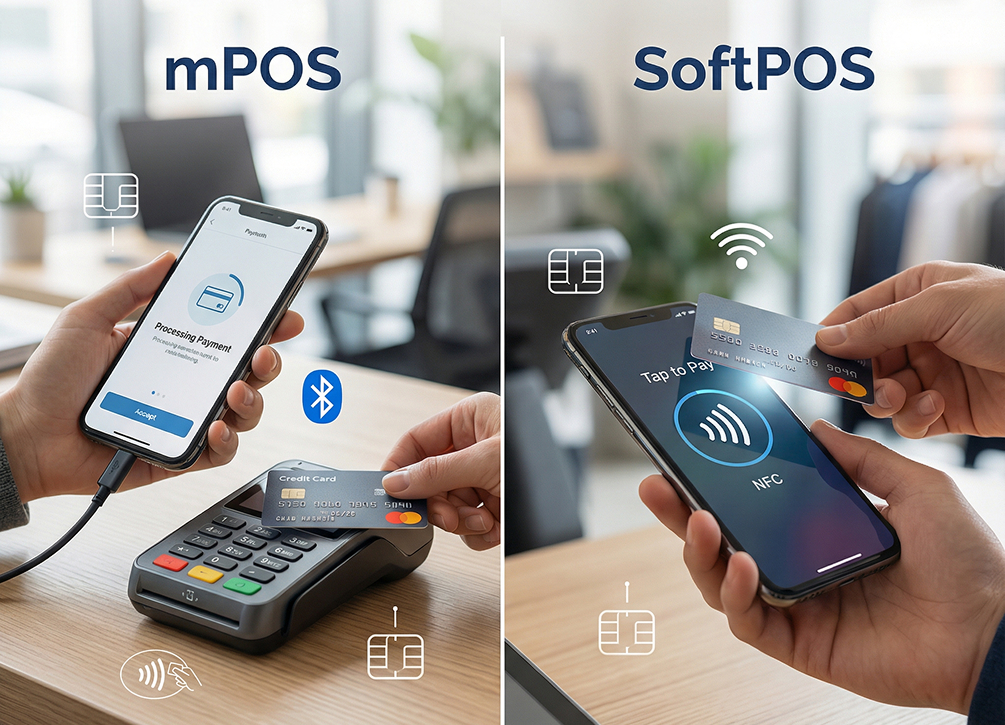
An mPOS solution stands for a mobile point of sale. Instead of dedicated hardware, mPOS uses a small companion card reader along with an app on your phone to create a highly portable payment terminal.
The mPOS technology solved a real problem for businesses that needed to accept payments on the go - whether at the customer's doorstep or at an event pop-up. It is also faster and more cost-effective because the most important component of the POS system, i.e., the phone, is already owned by the merchant.
POS vs. mPOS: Key Differences
When businesses choose POS vs. mPOS, they are aiming for the same goal - to complete a sale. But, how these two payment systems use very different approaches to get to the goal.
Installation Cost
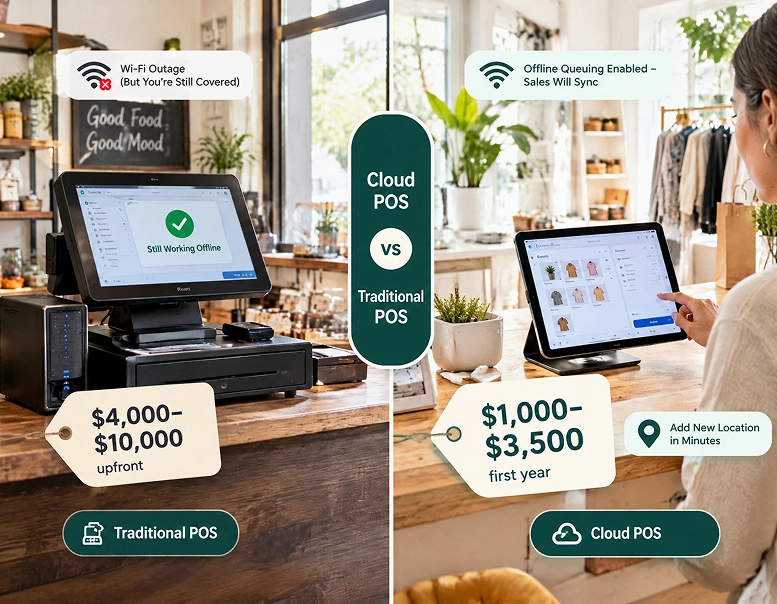
Between POS vs mPOS, you need to make more upfront investment in buying the traditional hardware POS system. It can cost anywhere between a hundred and a few thousands based on your business case.
In an mPOS solution you can use the phone that you already own along with a card reader that costs around $100.
Ease of setup and use
When we compare how easy it is to set up and use the POS vs. mPOS, setting up a POS needs more time, and the staff may also need more training to use the system.
mPOS, on the other hand, is built to be downloaded as an app on your phone and paired with a card reader, which can be done faster and more easily.
Portability
For businesses considering POS vs. mPOS, portability is the most obvious and most important distinction.
A traditional POS is anchored because it needs a reliable WiFi or hardwired connection to work.
Your staff can take the mPOS system wherever they go with their phone; they just have to carry a card reader along.
Maintenance
Between POS vs. mPOS, POS hardware needs regular maintenance and replacements compared to mPOS, where you are using your phone, which you are going to naturally maintain and upgrade.
Security
Both POS vs mPOS can be highly secure.
The POS is secured with PCI PIN Transaction Security (PCI PTS), a hardware-focused security standard for the POS device itself.
In the case of mPOS, the card reader should meet the security standard for the hardware. And the payment app uses encryption and tokenization for security.
Integration Capabilities
The POS vs. mPOS have very different integration capabilities.
The older traditional POS systems are usually built to work with their proprietary software. mPOS apps are cloud-based and can work better with your sales and inventory software.
How Do Mobile Payments Differ from POS?
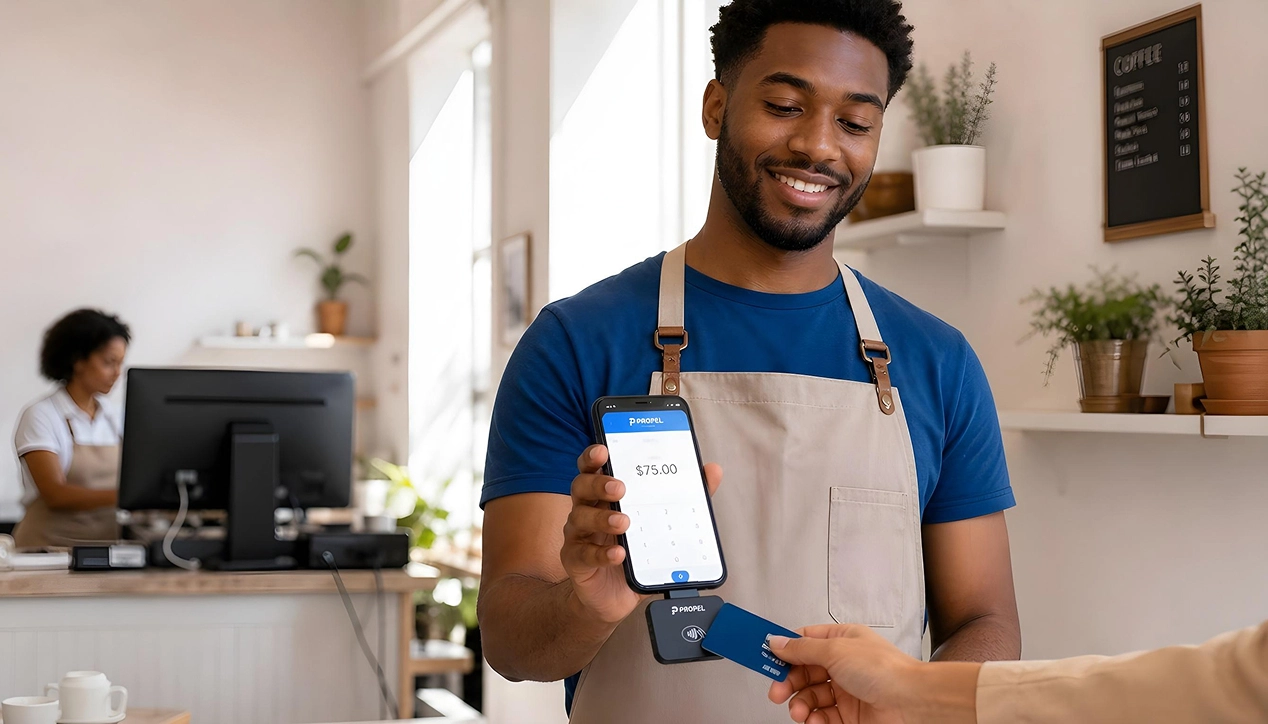
Many people often mix up mobile payments with POS and mPOS systems. This difference is quite understandable because vendors use their mobile phones as part of their mPOS and SoftPOS setups.
A POS (whether the traditional hardware setup, mPOS, or softPOS) lets the merchant accept payments from a customer.
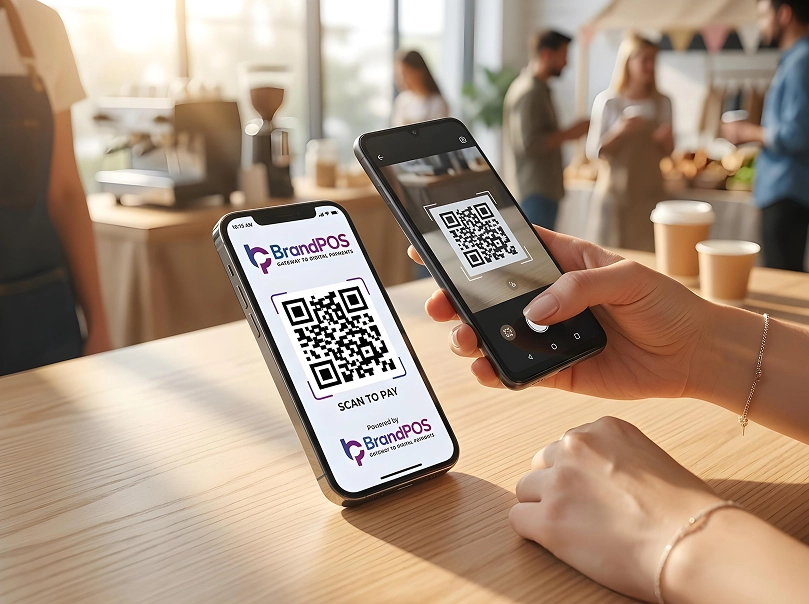
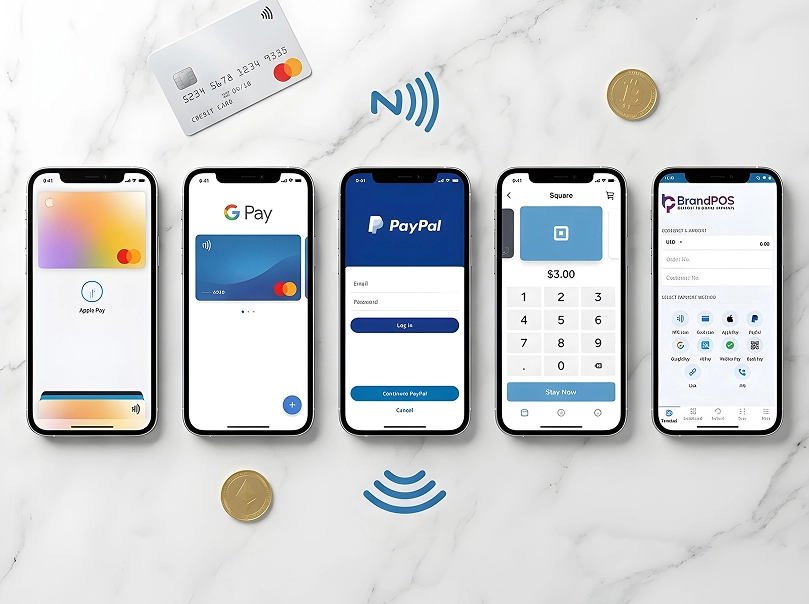
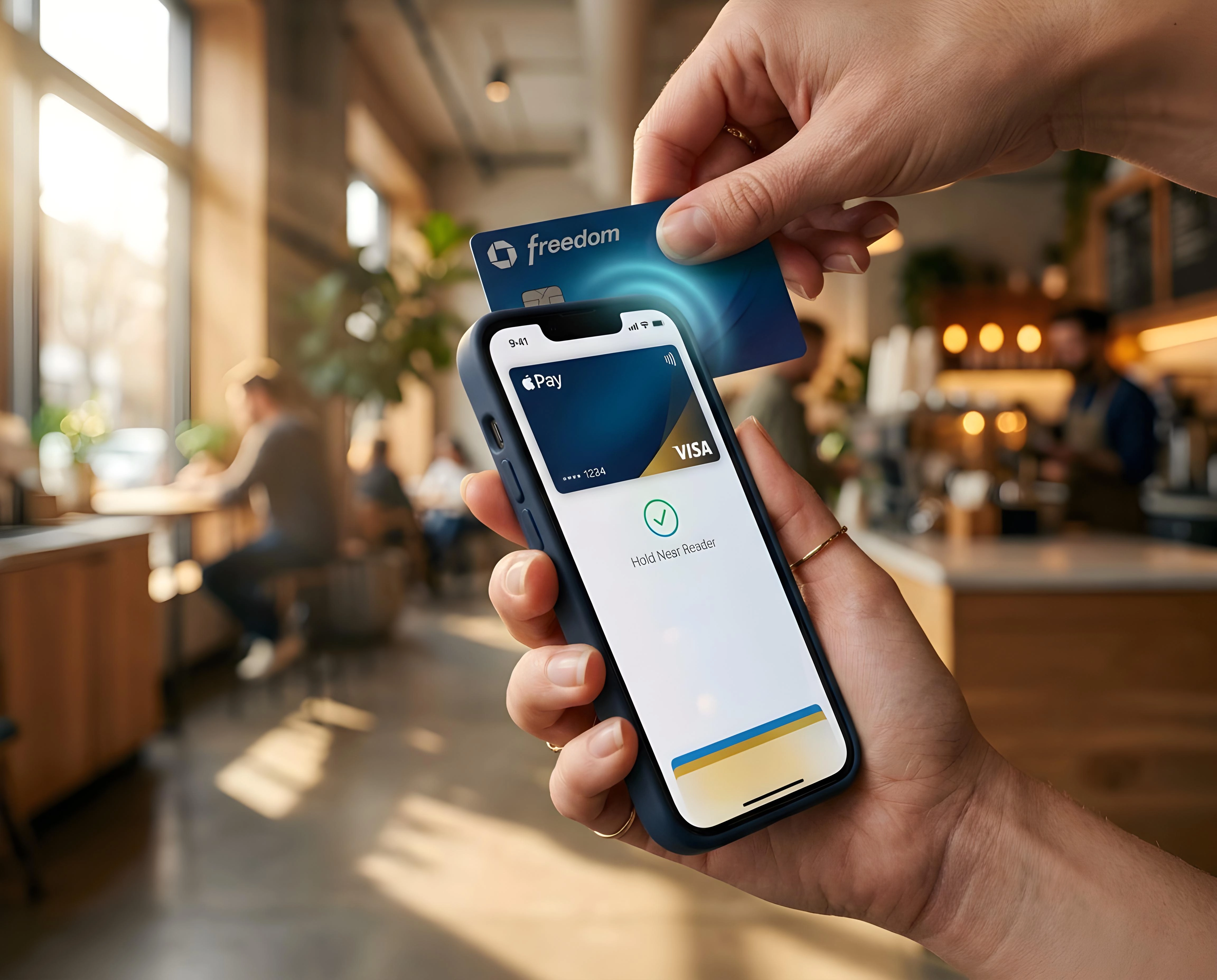
Mobile payments are how a customer chooses to pay, for example, with their Apple Pay or Google Pay Wallet or by scanning a QR code.
The practical takeaway is that businesses need to ensure that their choice of POS can support mobile payments, as it is increasingly becoming the preferred payment option for the customers.
Which System Is Best for Your Business: POS vs mPOS?
When you have to make a choice between POS and mPOS systems, your decision should think about the following:
- Do you regularly handle high transaction volume and detailed inventory management? Then a traditional POS is a better match.
- For businesses that need to set up at different locations and need to pack down at the end of the day, an mPOS solution is more convenient.
- For businesses that need to take payments at customers' doorsteps (like a freelancer or a service provider), mPOS saves you the hassle of lugging around a payment counter.
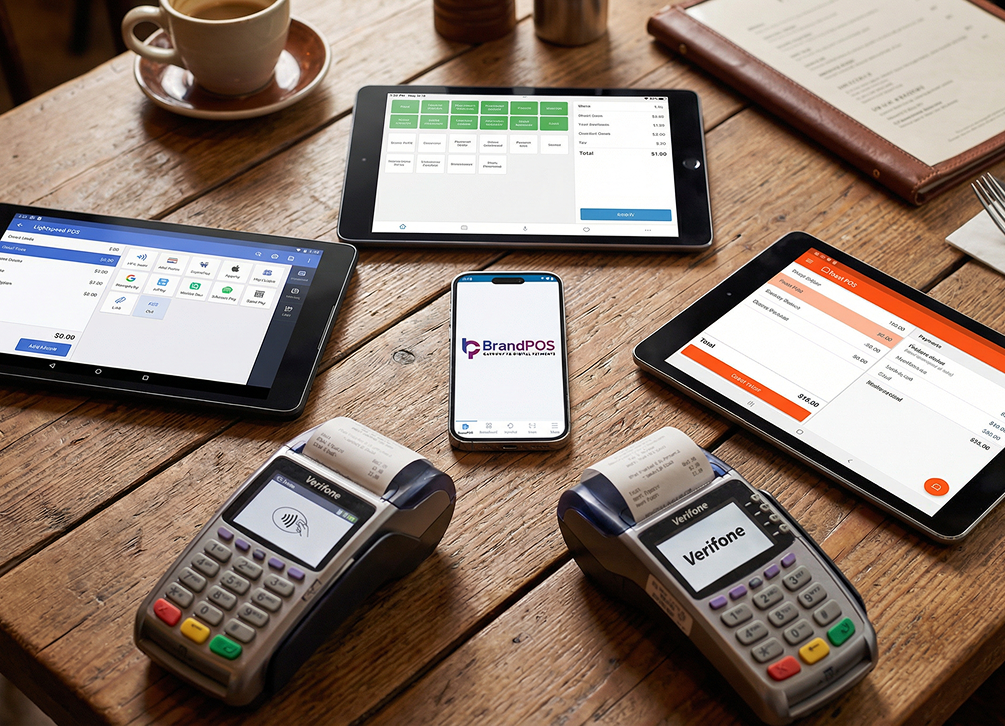
- Most businesses use a hybrid system - a fixed POS at the check-in counter along with an mPOS or SoftPOS on the shop floor or at the customer’s table.
You do not have to choose one payment system forever. You can create a more nuanced payment ecosystem based on your business context and growth.
BrandPOS SoftPOS App: A Modern Alternative to POS and MPOS Systems
Apart from POS and mPOS systems, there is an emerging payment solution, SoftPOS, that feels like the most natural next step in payment processing.
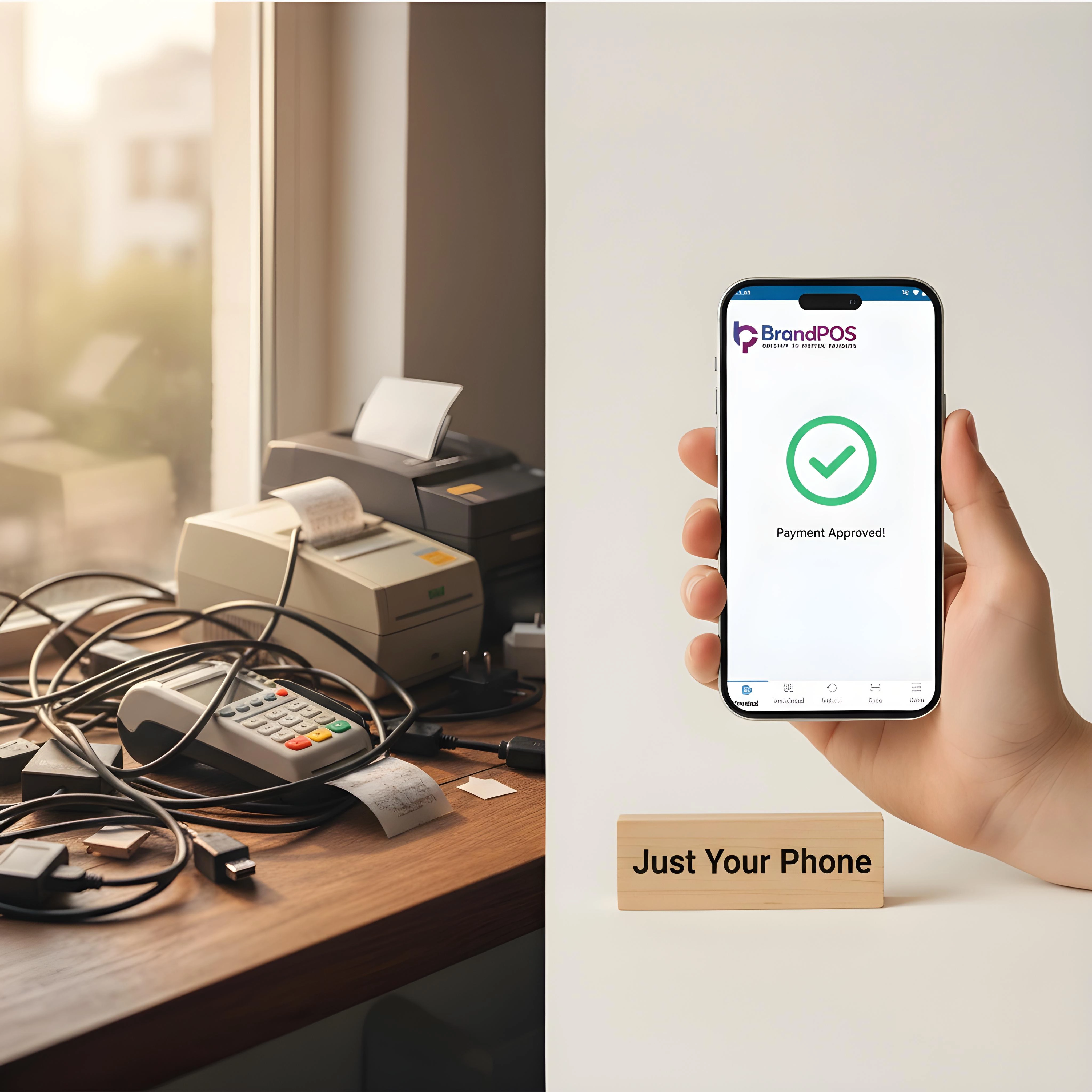
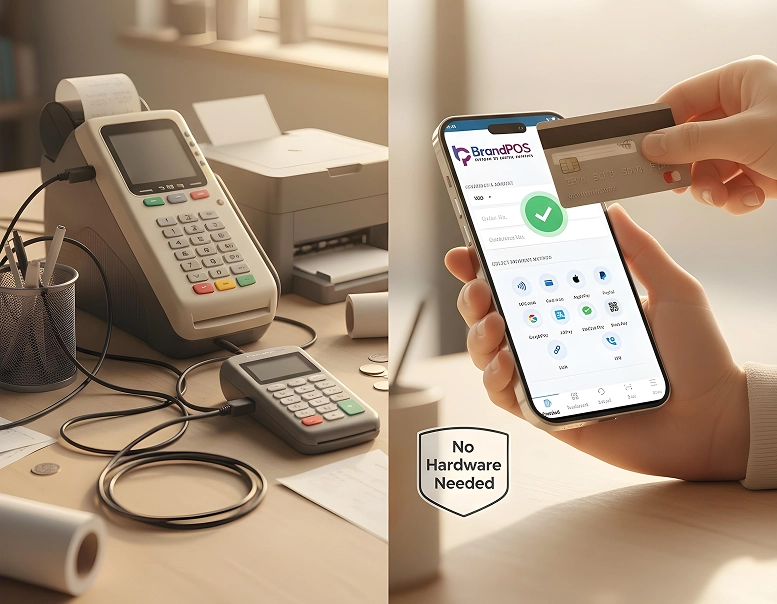
Unlike a POS, SoftPOS does not need a dedicated hardware setup.
Unlike mPOS, SoftPOS does not need an additional card reader.
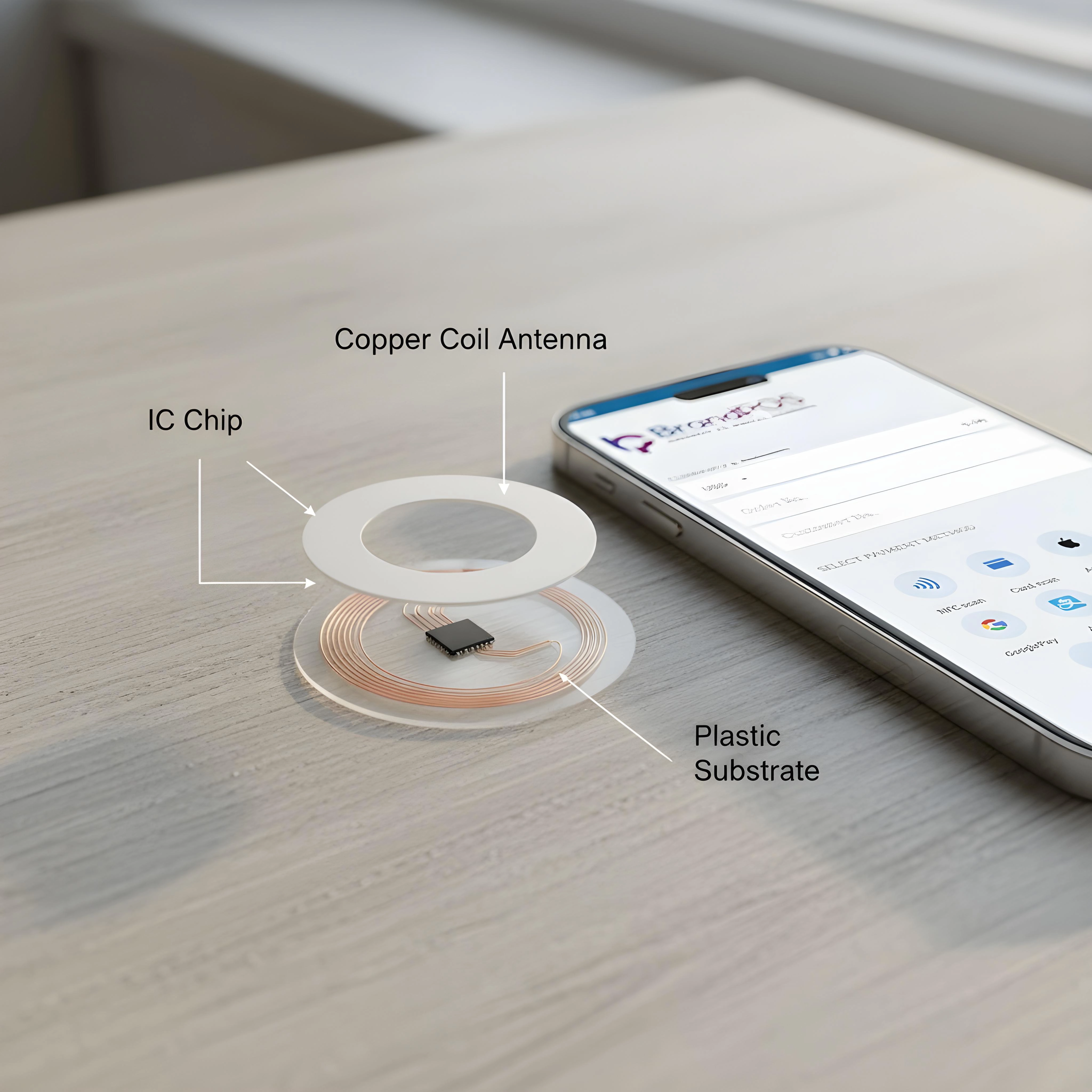
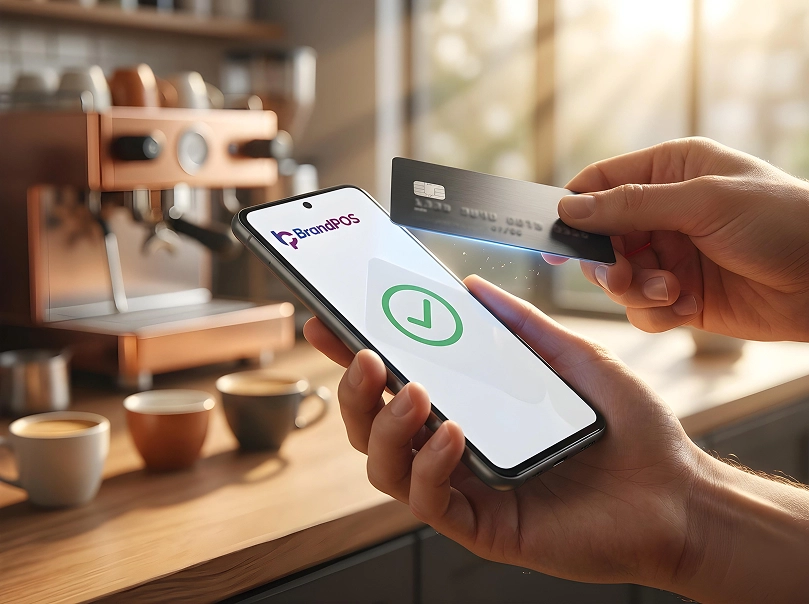
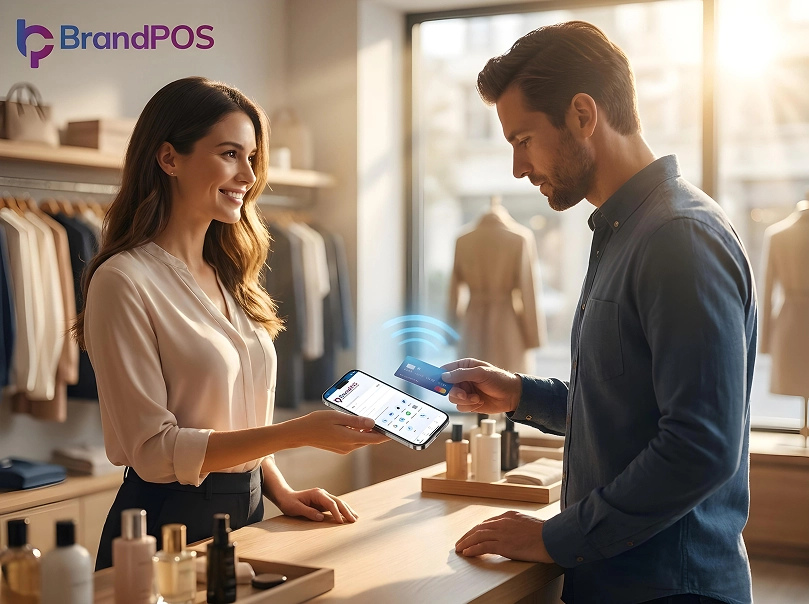
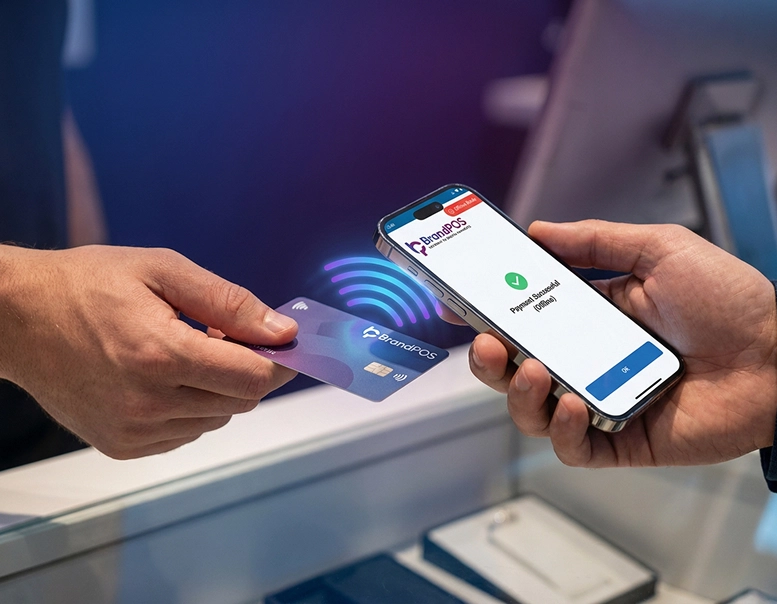
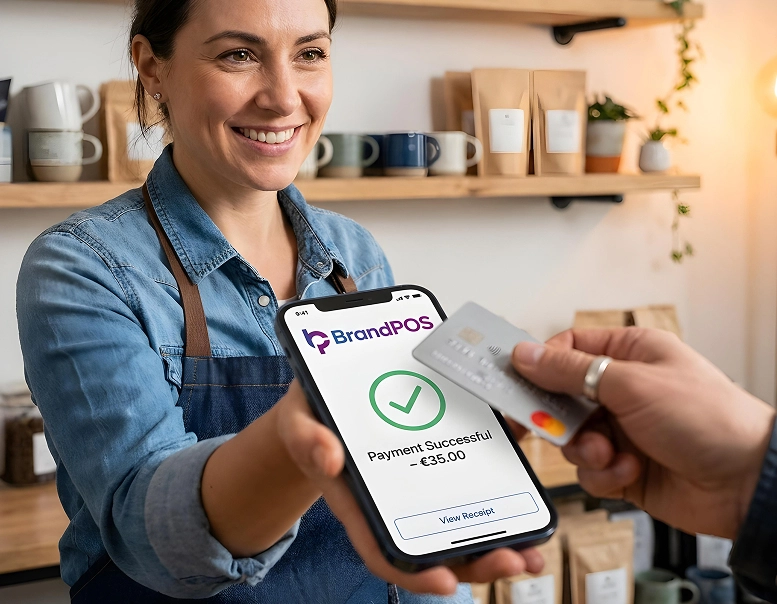
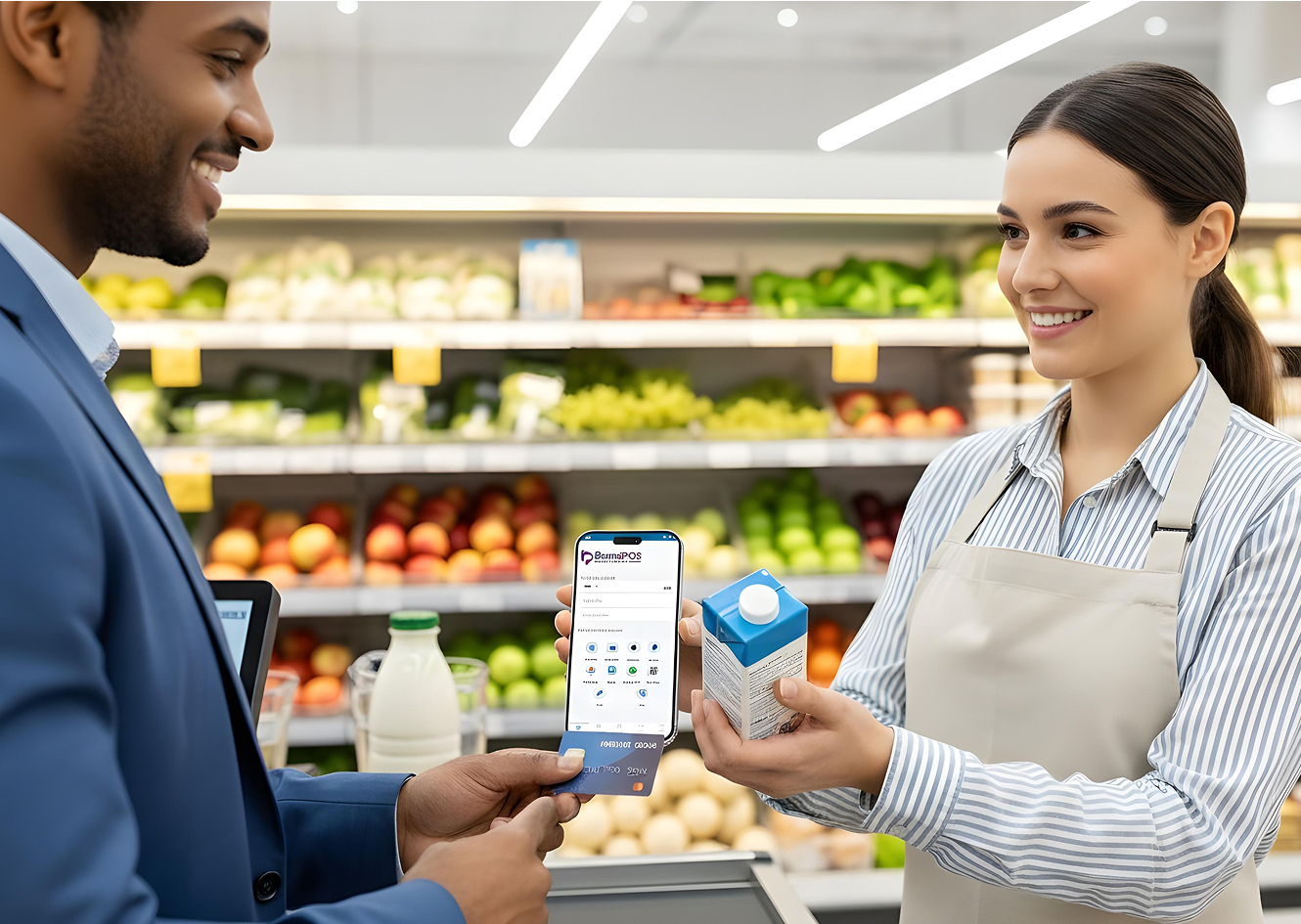
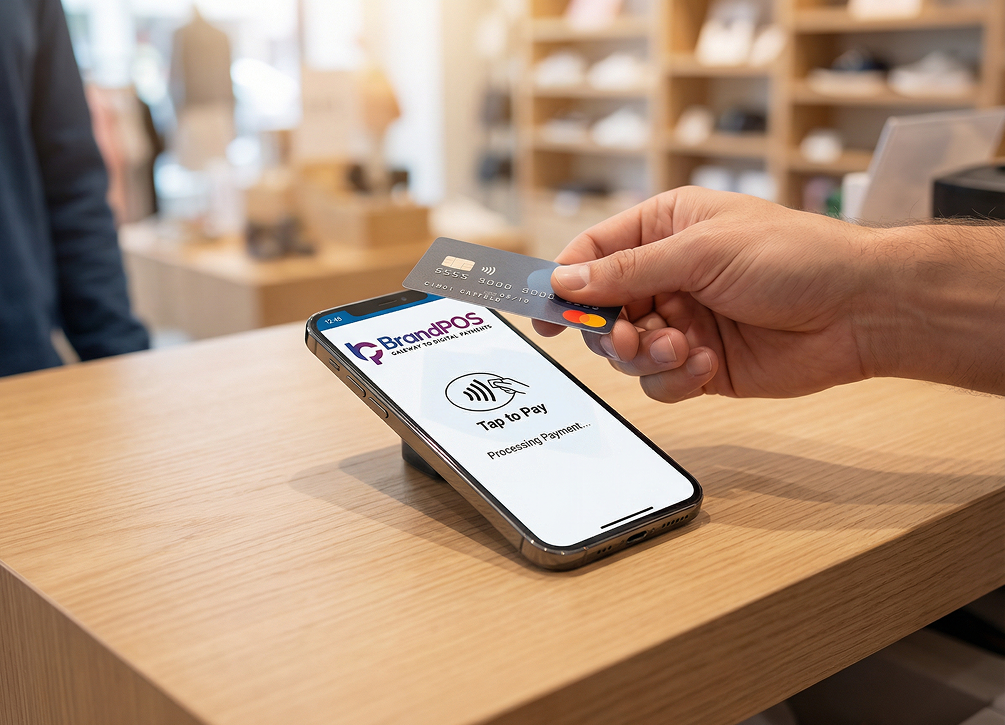
SoftPOS uses the NFC chip in our smartphones to make them into a payment terminal.
BrandPOS is a SoftPOS app built as a realistic alternative to the traditional POS and mPOS systems.
BrandPOS is a true SoftPOS app - it is not built as an add-on to an existing hardware ecosystem, so there is no multi-year contract or hardware lock-in. It is built to work with your existing sales setup.
As you will be using your smartphone, which you already have, there is no extra investment to be made in hardware. BrandPOS also gives one of the lowest per-transaction rates (0.19%).
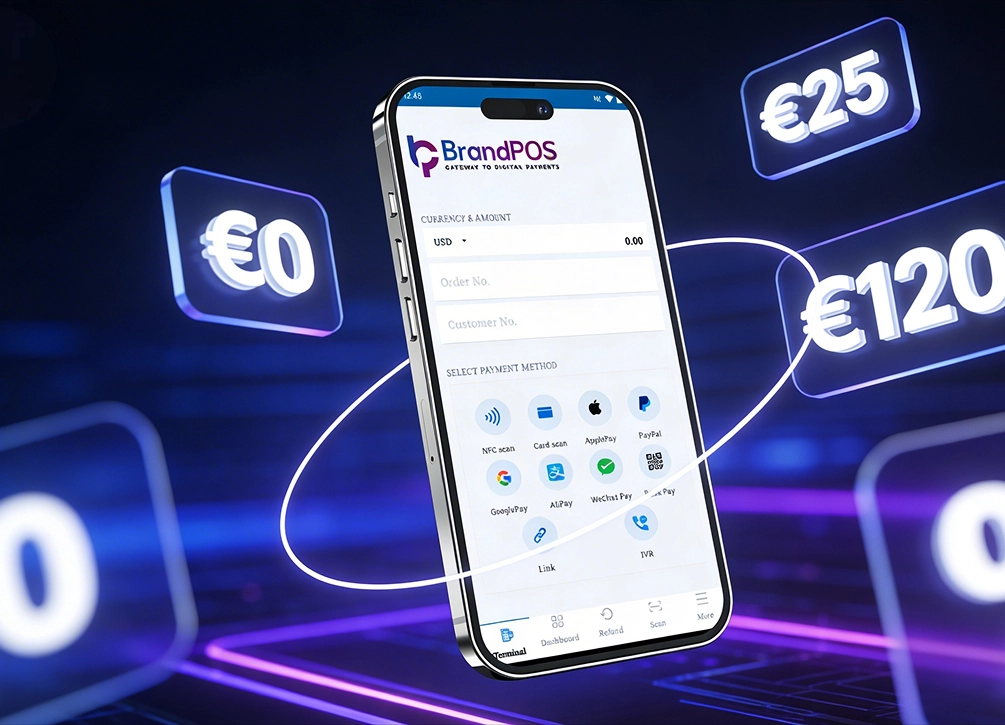
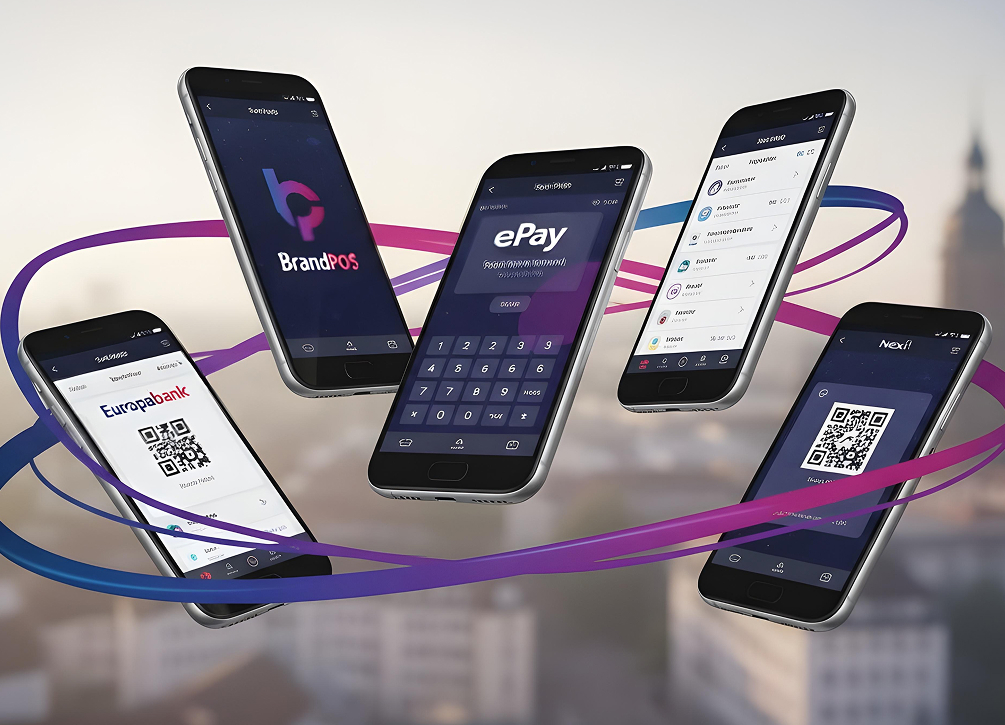
It supports all major payment modes that customers prefer, like tap-to-pay, contactless cards, account-to-account, QR codes, etc.
BrandPOS gives you the advantage of faster setup and instant scalability. Since you can use your compatible smartphone, there is no waiting for ordering the hardware and configuring it. You can easily scale the payments system by installing the BrandPOS app on more phones.
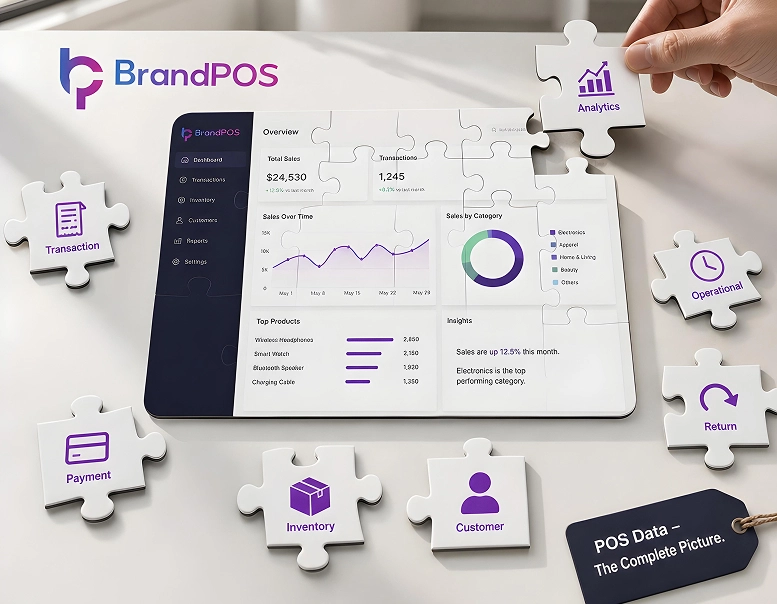
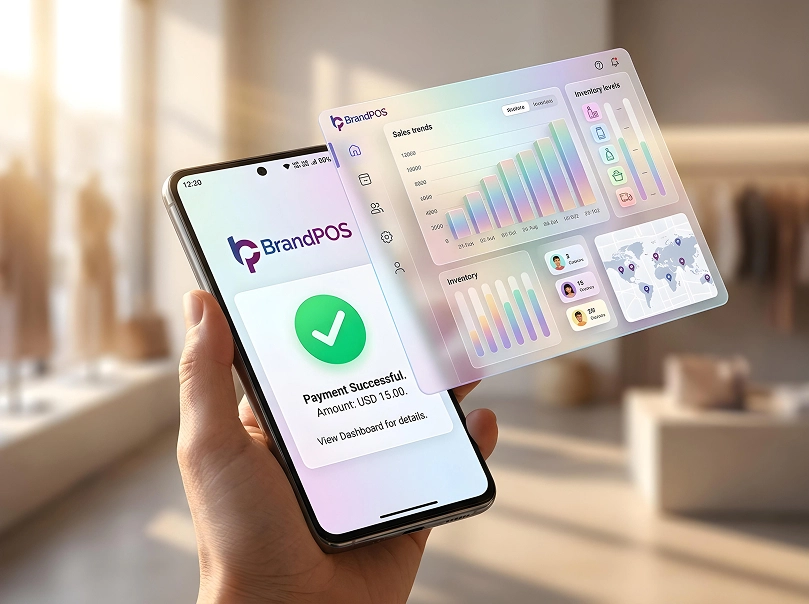
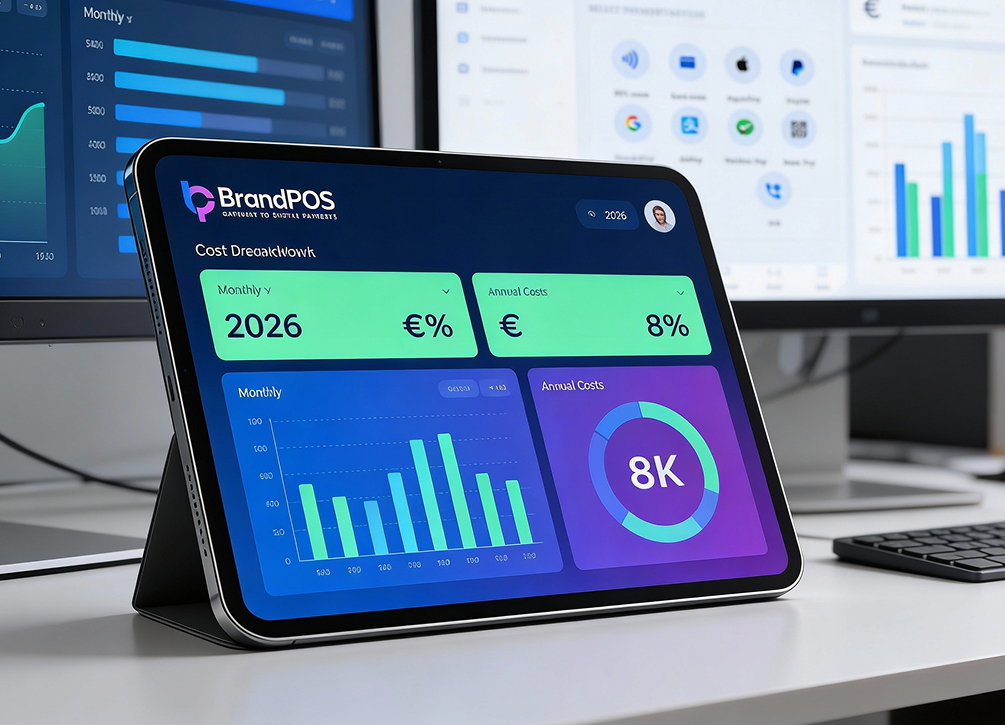
It is a cloud-based SoftPOS app with a real-time dashboard for tracking sales and staff performance.
BrandPOS secures customer data and the payment data with industry-standard security compliances.
Ready to ditch the card machine?
BrandPOS turns any Mobile phone into a certified POS terminal - no cables, no setup headaches.
Get Started for Free