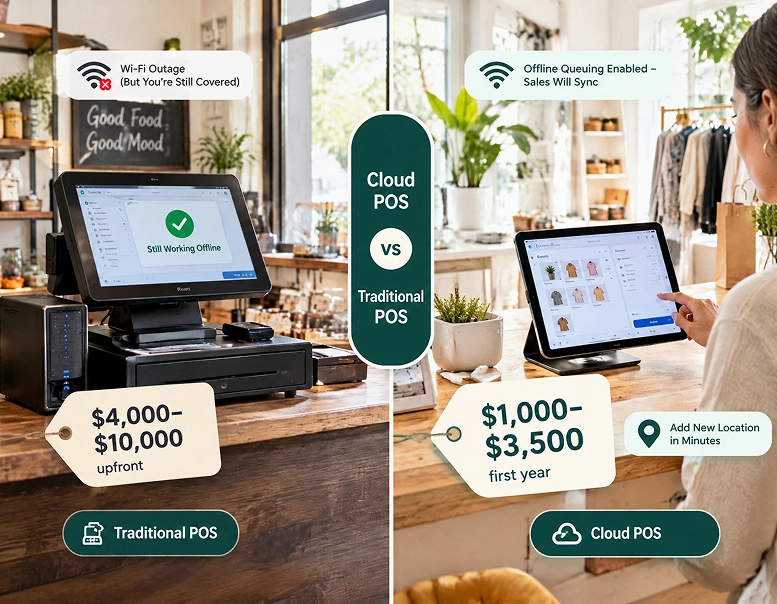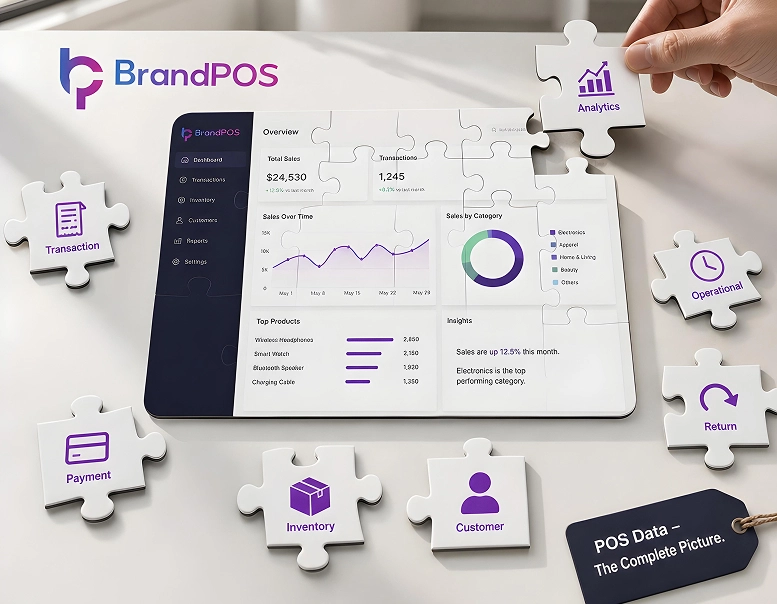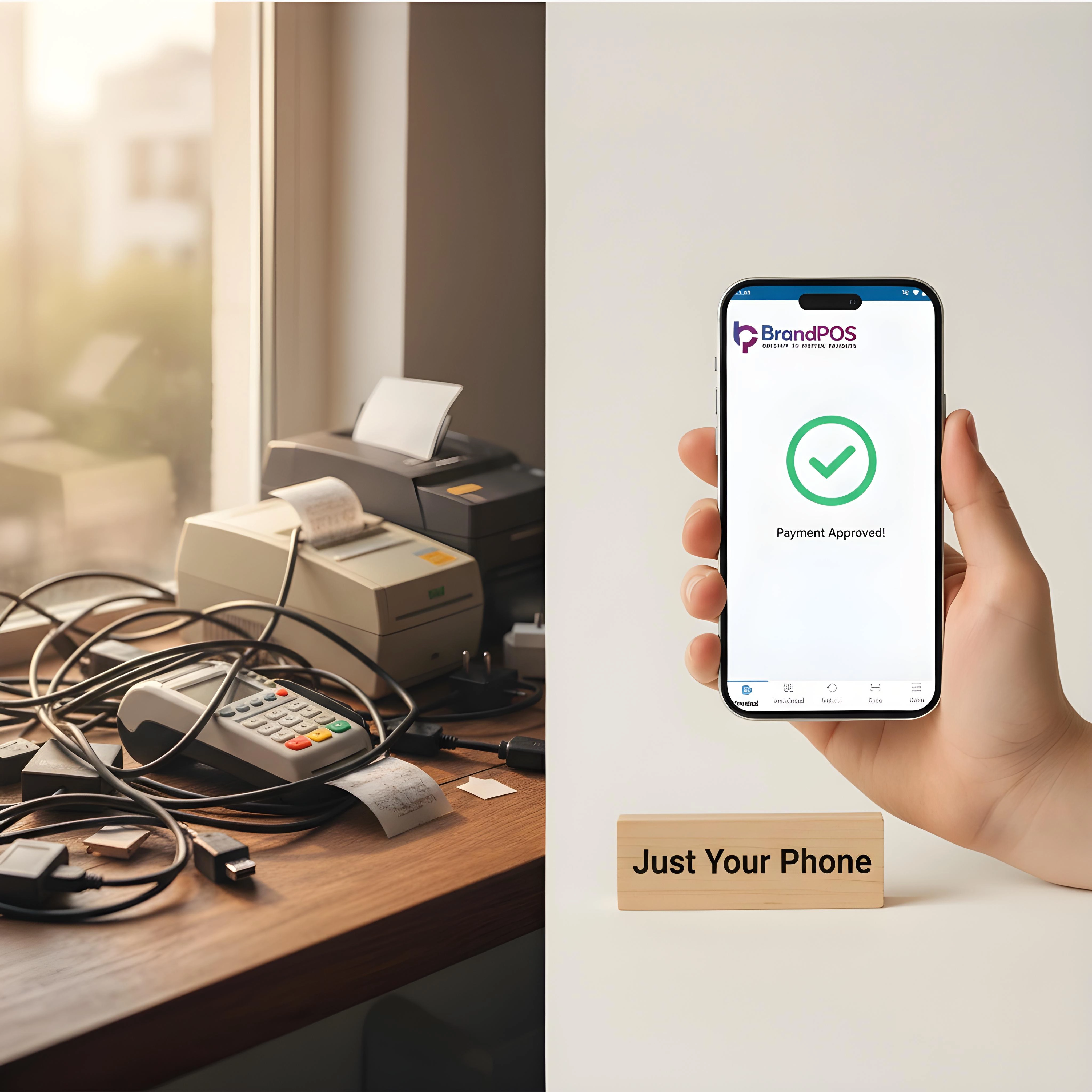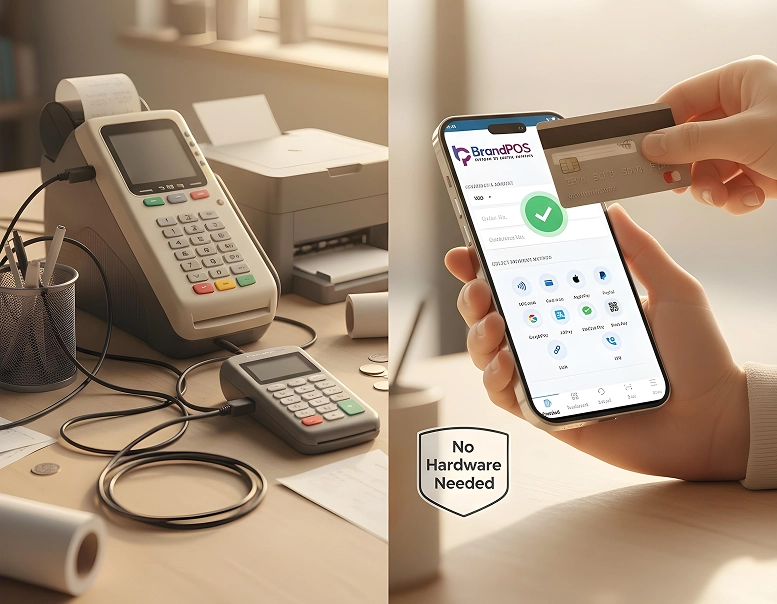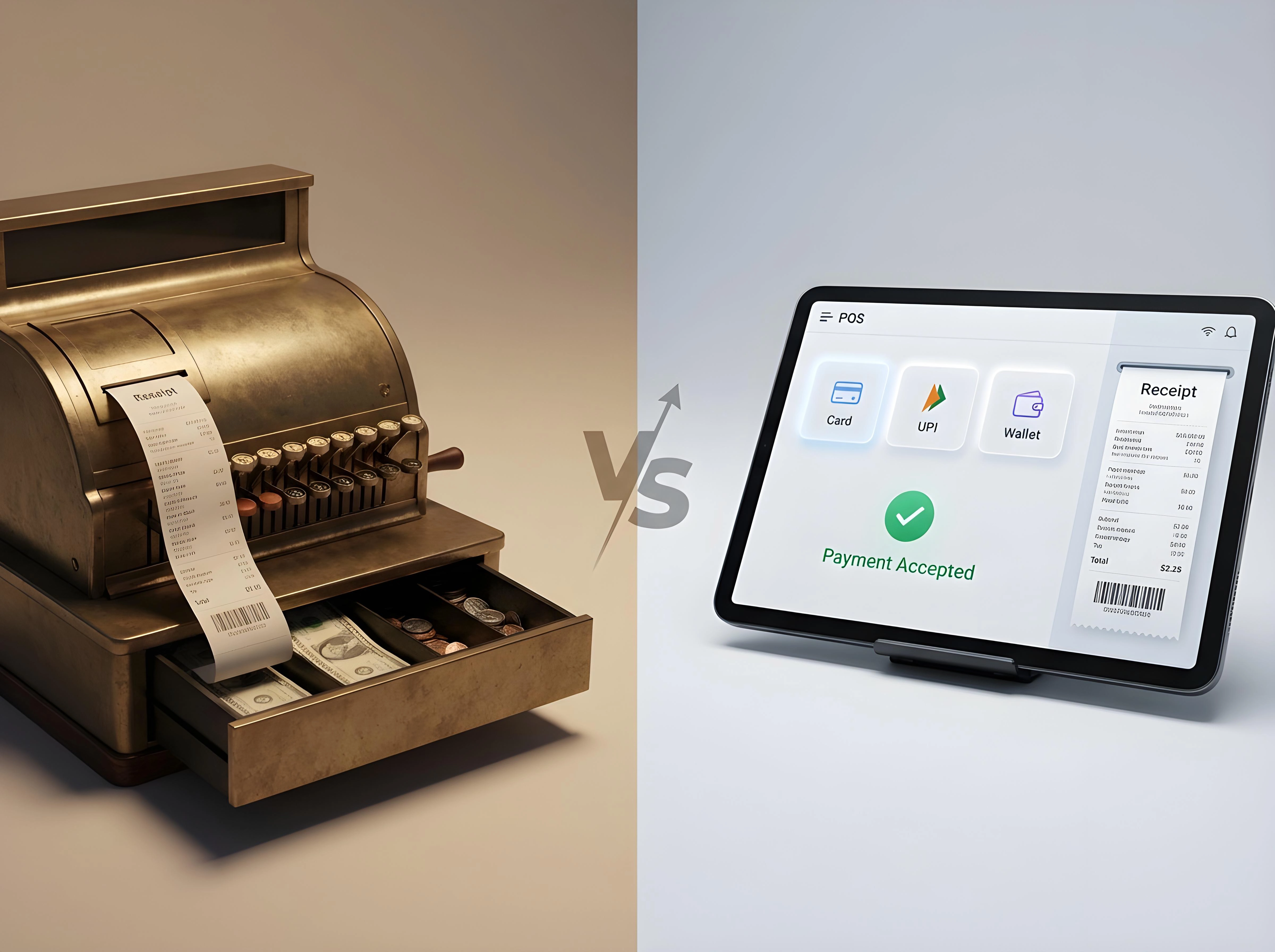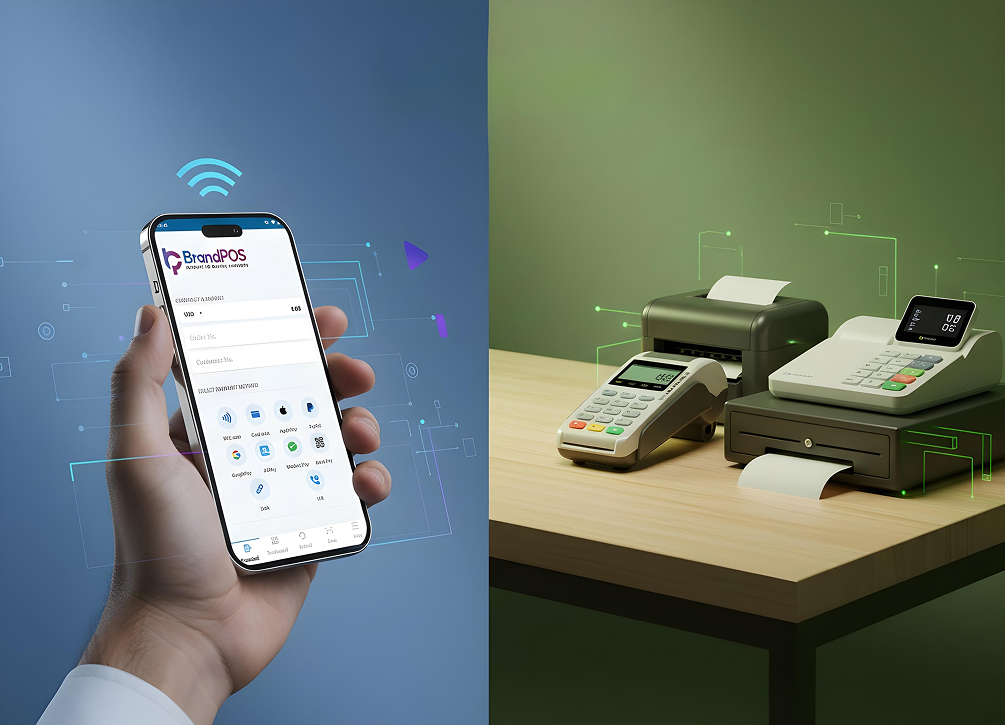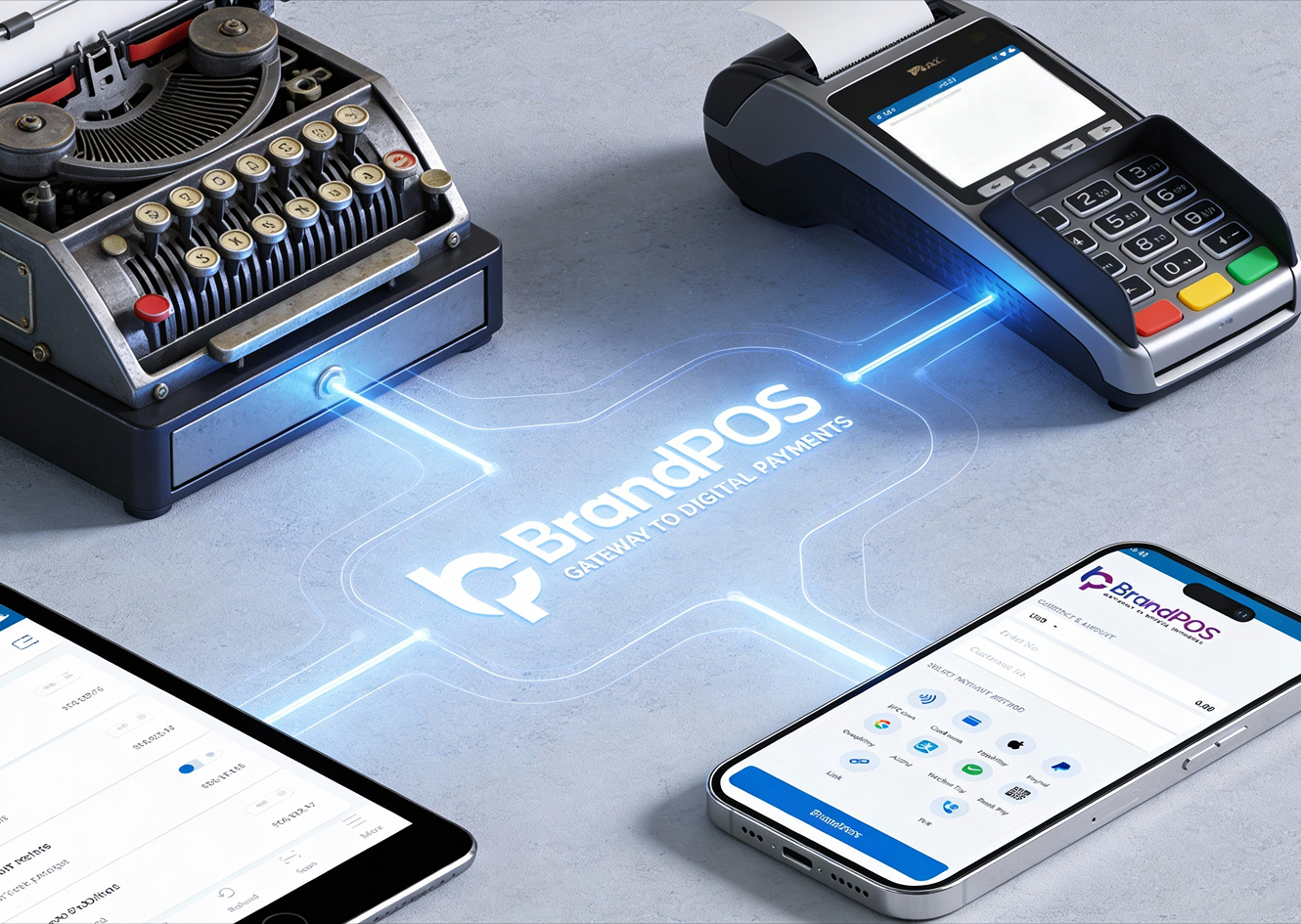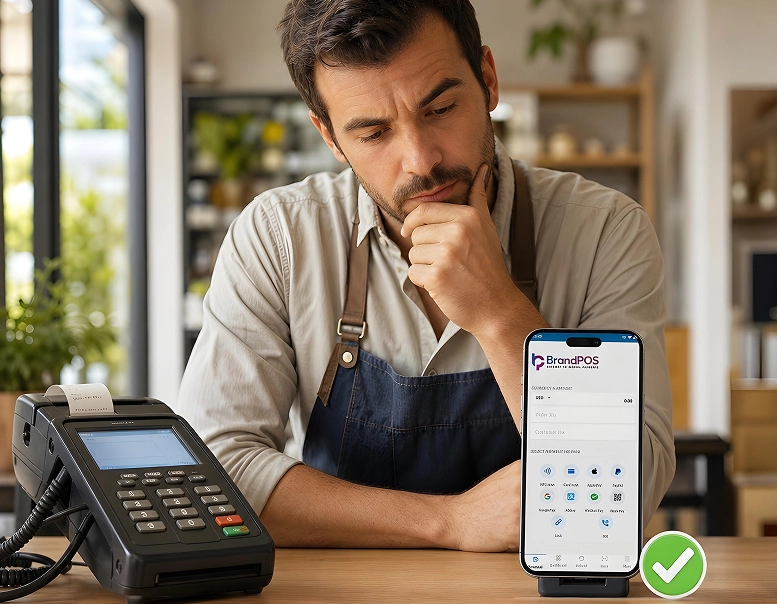
When deciding how to process transactions, choosing between a card terminal vs softpos app is one of the most critical operational decisions you will make. The right payment setup directly affects customer satisfaction, checkout speeds, security compliance, and your monthly overhead costs. Traditionally, accepting card payments meant buying or leasing dedicated hardware terminals. However, the rapid evolution of financial technology (FinTech) has introduced software-based alternatives that turn standard mobile devices into fully functional point-of-sale systems. In the debate of a card terminal vs softpos app, modern business trends indicate a strong and steady shift towards the flexible, app-based approach. Studies indicate that 71% of merchants expect software to replace traditional point-of-sale terminals entirely, with the number of SoftPOS merchants globally projected to reach 34.5 million by 2027—a massive 475% increase from previous years! This transition is changing how we view payment infrastructure. Rather than viewing the choice of a card terminal vs softpos app as a strict either/or decision, many growing businesses are now choosing to deploy a hybrid setup, combining a card terminal and softpos app to maximize coverage.
What Is a Card Terminal?
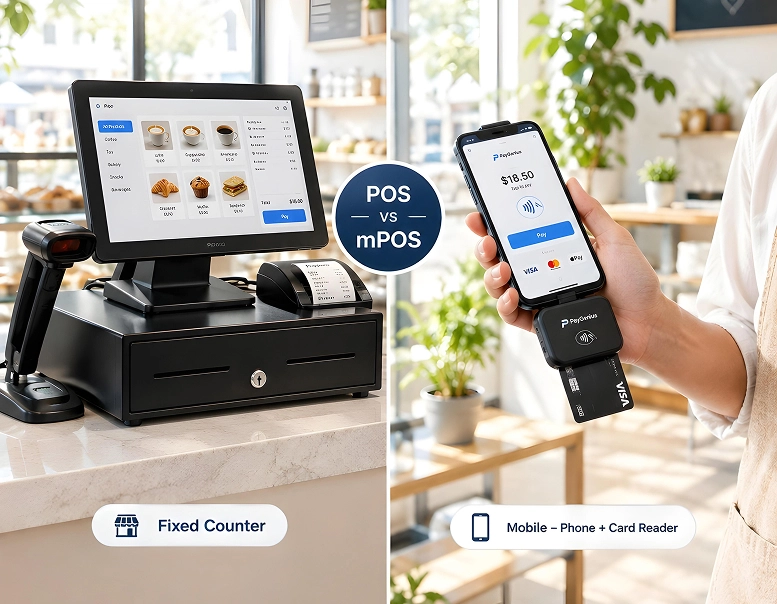
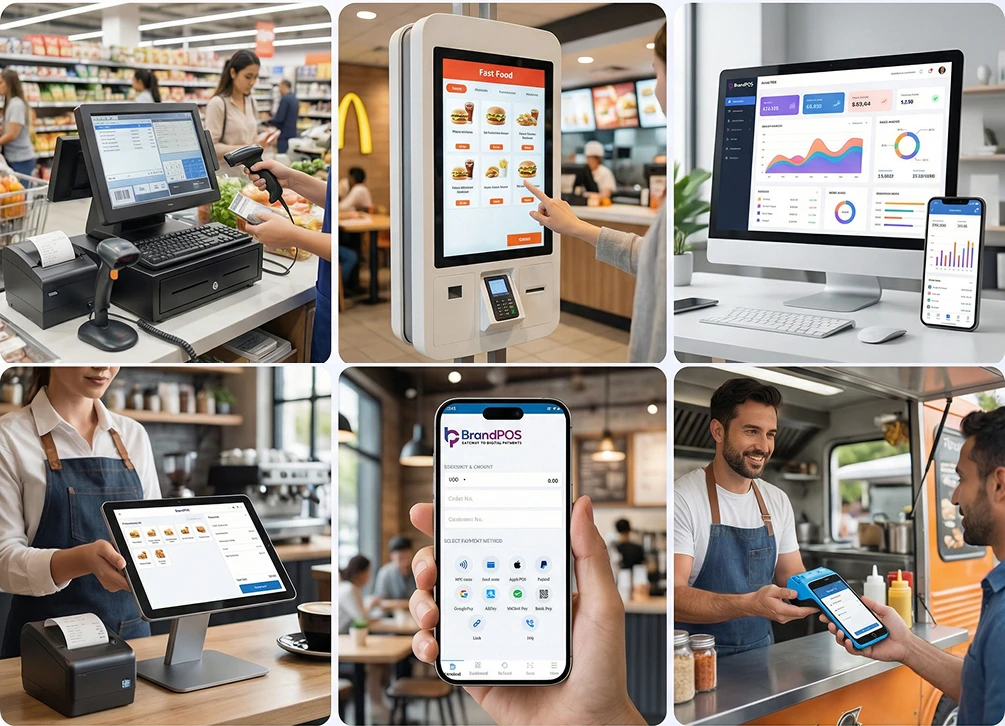
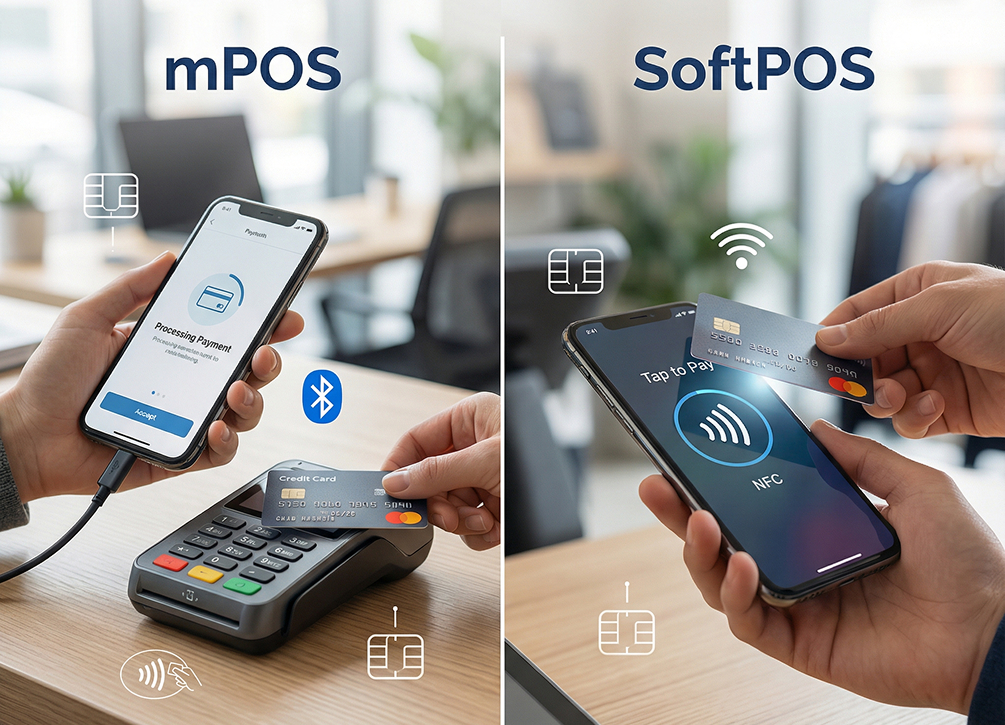
A card terminal or POS (point of sale) terminal is a dedicated, physical hardware device designed exclusively for accepting credit and debit card payments. These units are self-contained and typically feature integrated receipt printers, barcode scanners, digital displays, and physical PIN pads. You see them daily at retail checkout counters, supermarket lanes, and restaurant tables where staff bring them directly to you. They process payments in three primary ways: inserting a chip card and entering a personal identification number (PIN), tapping a contactless card or mobile wallet (using Near Field Communication - NFC), or swiping a card's magnetic stripe (a legacy method that remains supported for compatibility). Card terminals connect to payment processors using either a local Wi-Fi connection, Ethernet cable, or a built-in cellular SIM card. When evaluating a card terminal vs softpos app, understanding the hardware terminal's role is critical because its physical presence and dedicated nature provide stability, though at the expense of higher upfront costs and lower overall mobility.
Also Read: What is SoftPOS?
Ready to ditch the card machine?
BrandPOS turns any Mobile phone into a certified POS terminal - no cables, no setup headaches.
Get Started for FreeWhat Is a SoftPOS App?
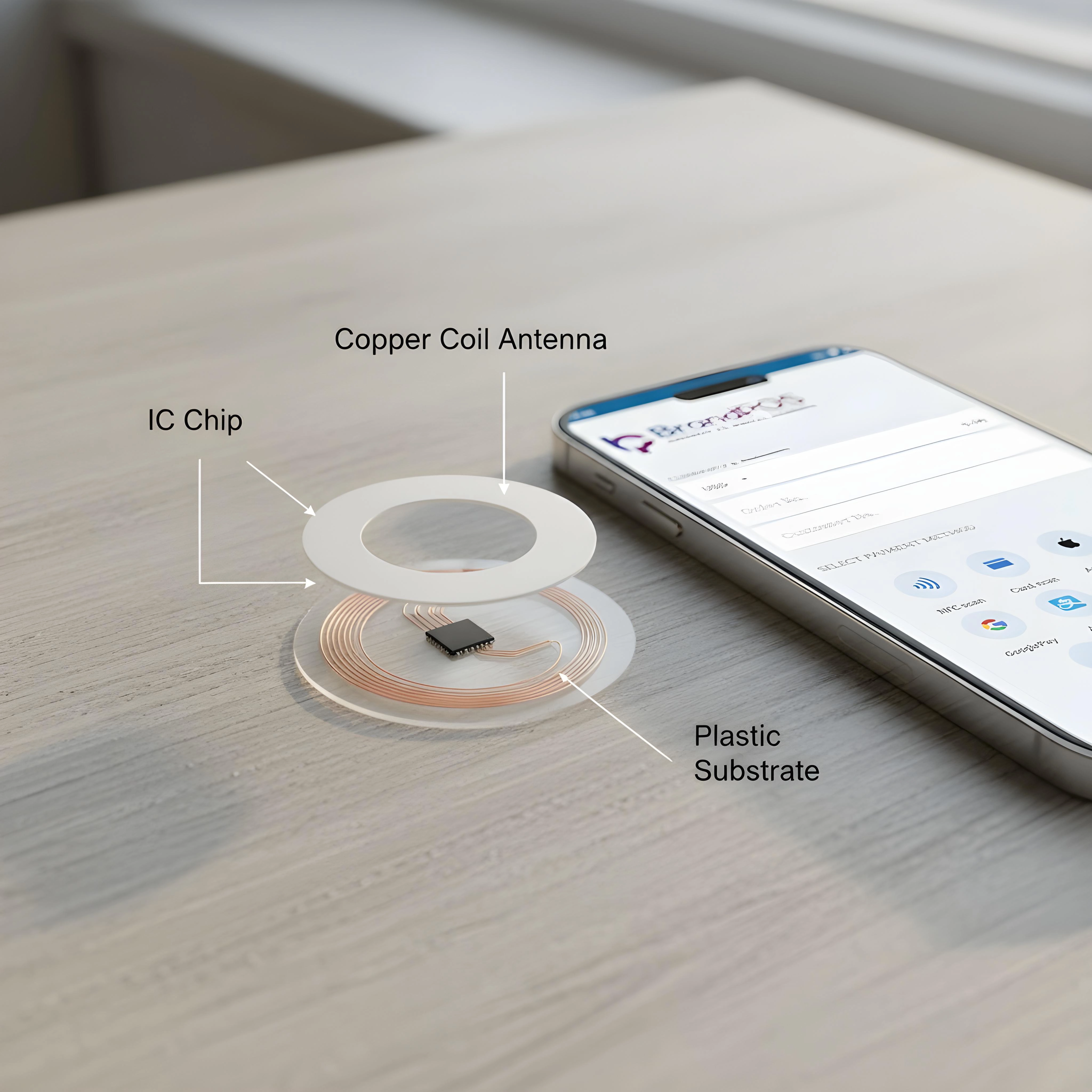
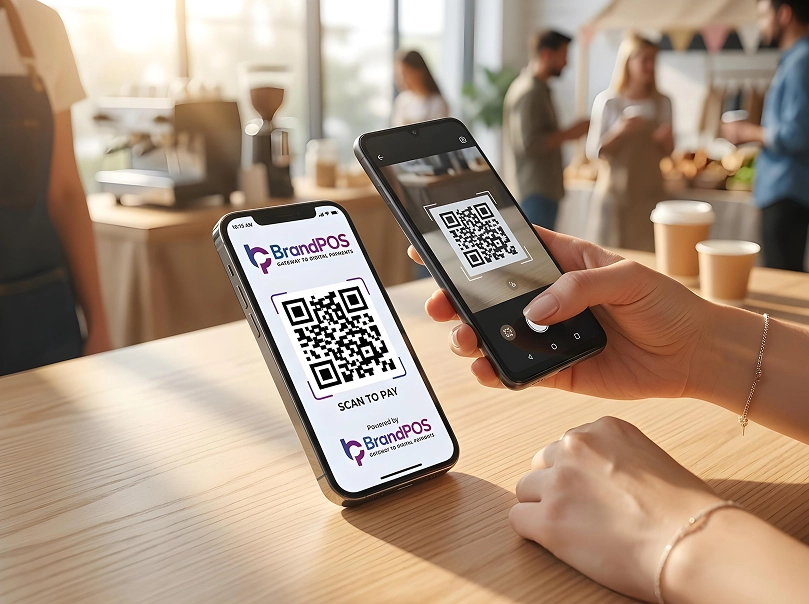
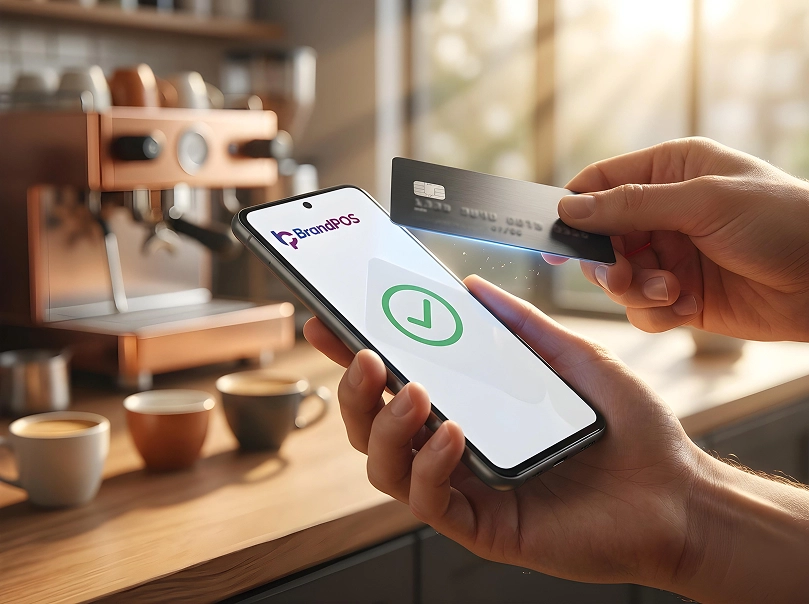
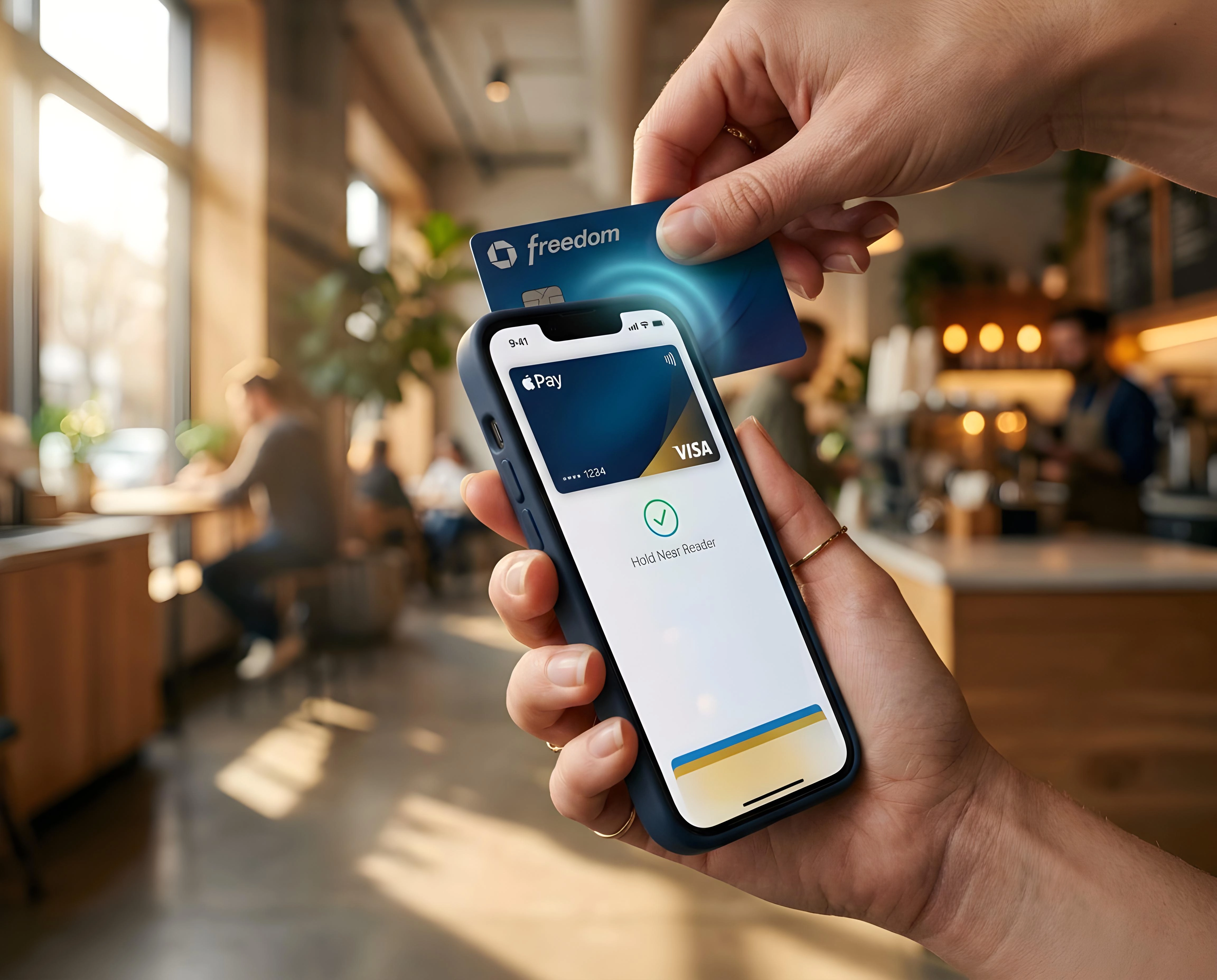
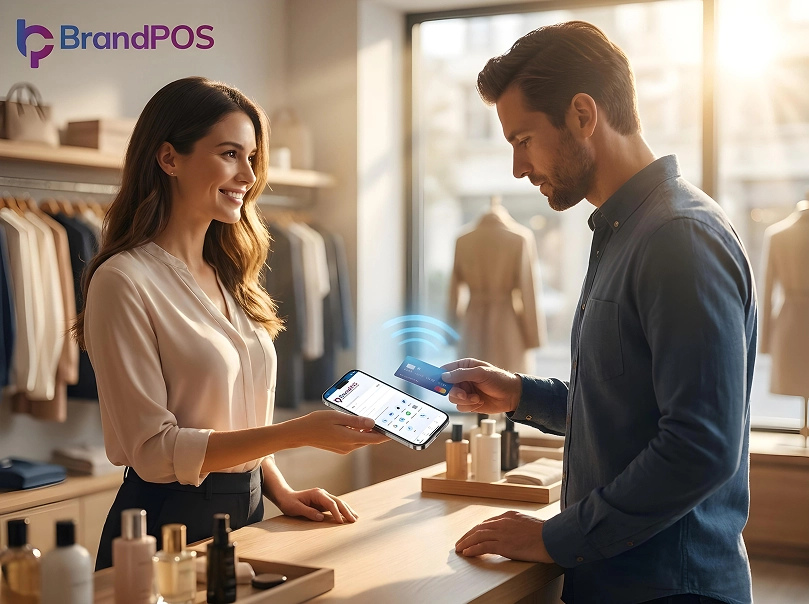
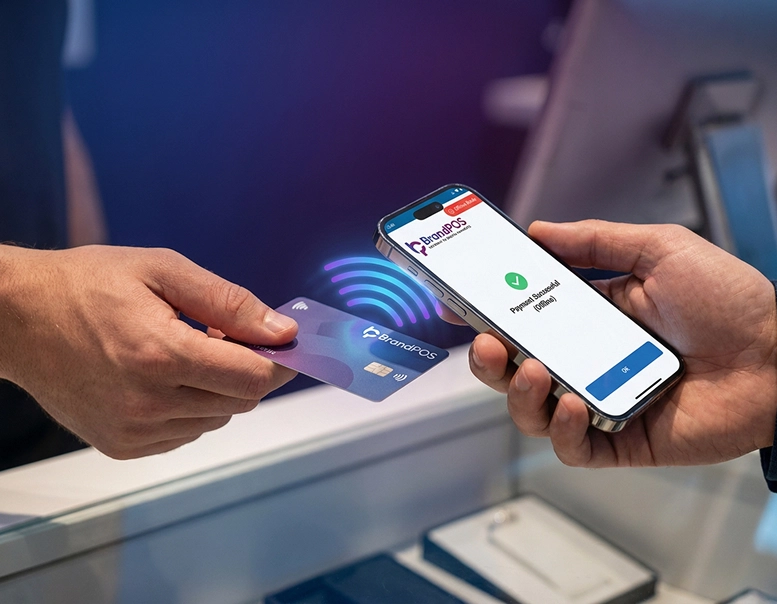
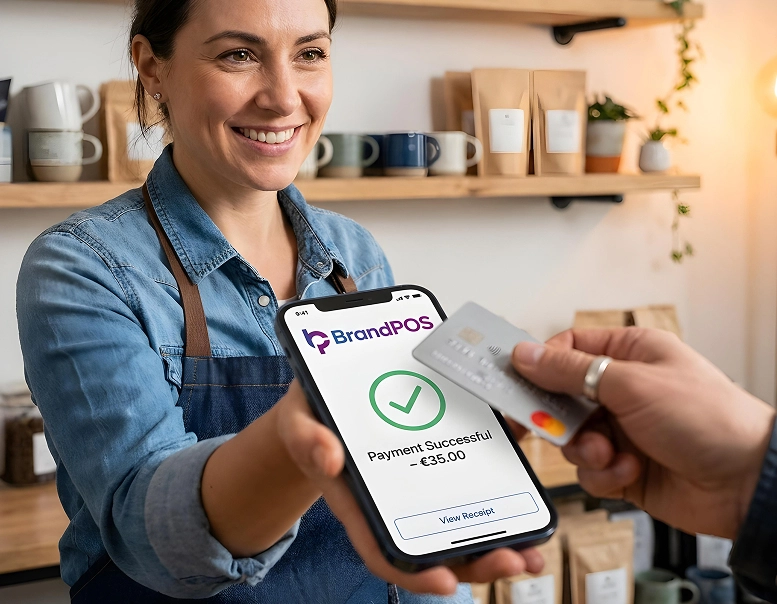
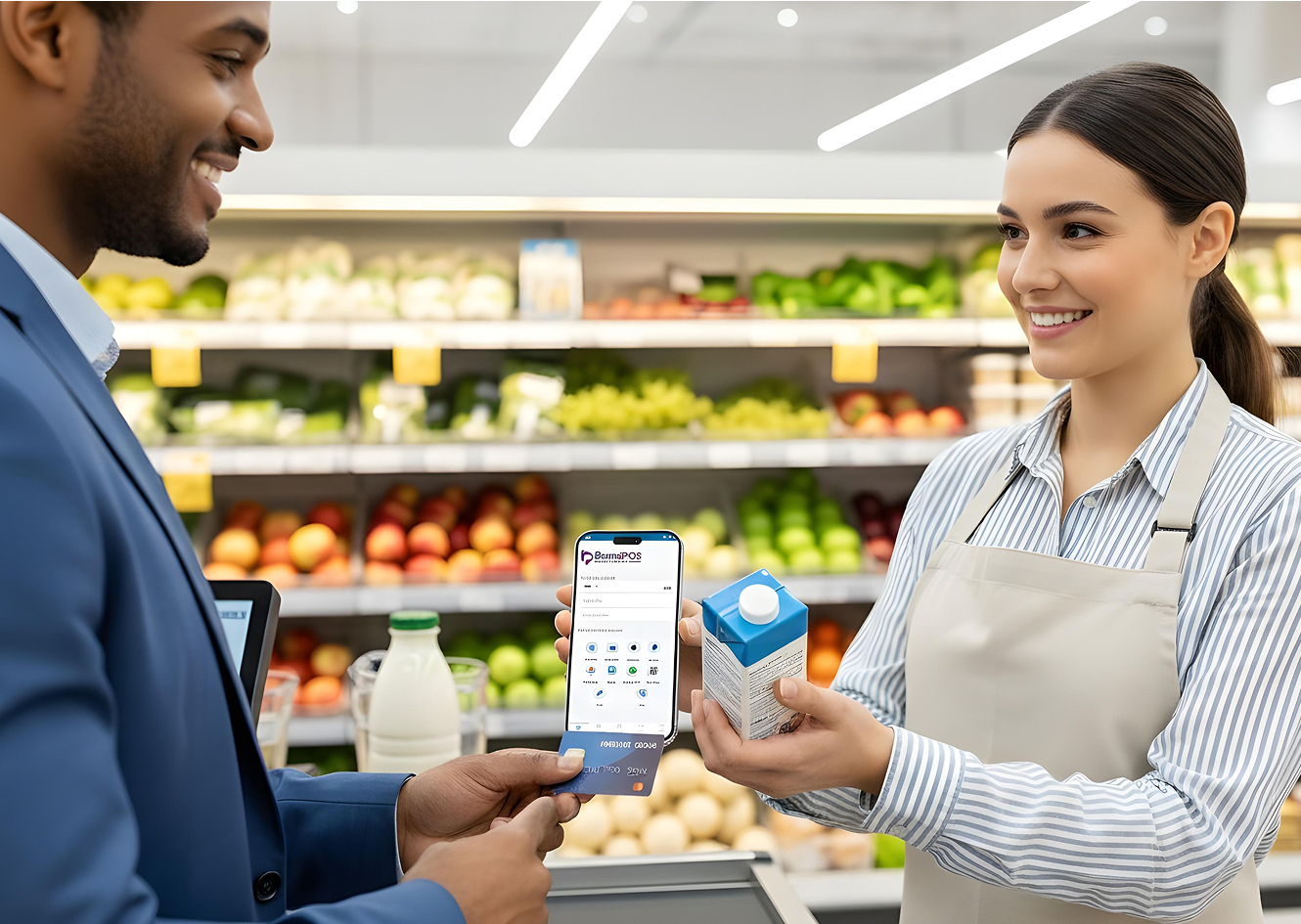
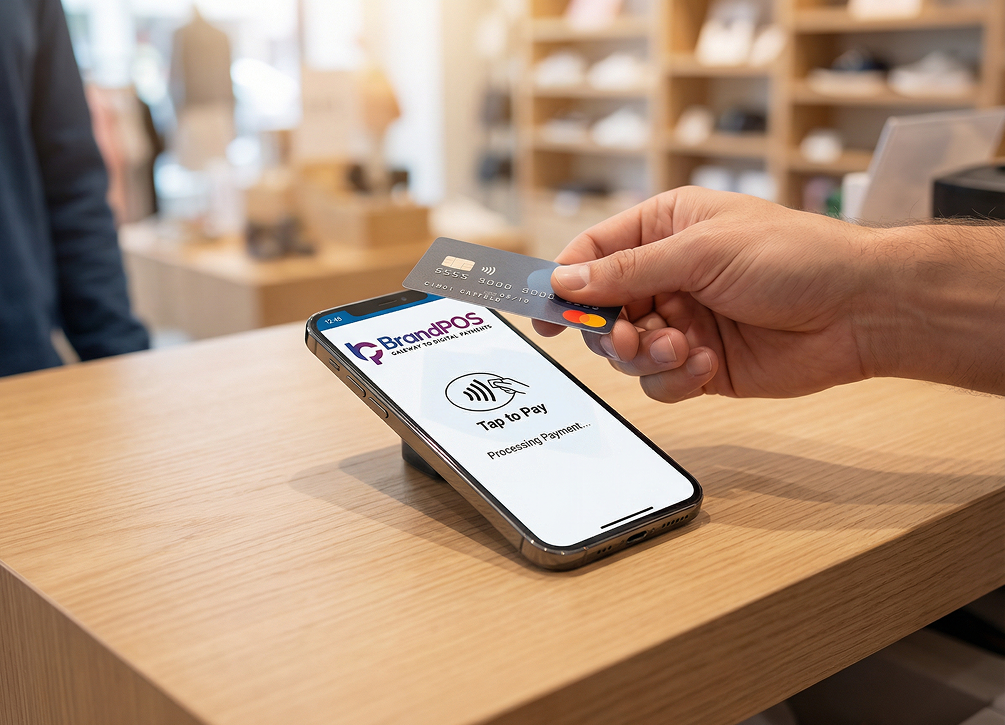
A SoftPOS app is a software-based application that turns a standard commercial off-the-shelf smartphone or tablet into a fully certified payment terminal. Unlike traditional setups, it requires no external card readers, dongles, or additional printing hardware. Once installed on a compatible device, the application utilizes the device's built-in NFC chip and secure processor to accept transactions directly. The customer simply taps their contactless debit/credit card, mobile wallet (like Apple Pay or Google Pay), smartwatch, or fitness tracker against the back of the merchant's phone. Furthermore, SoftPOS apps support alternative digital payment methods like QR codes, secure payment links, and account-to-account (A2A) transfers. To make an informed comparison of a card terminal vs softpos app, you must also look at how software-based payments function. To protect financial information, providers must comply with the strict PCI-MPoC (Mobile Payments on COTS) security standard. This framework enforces hardware-level encryption and tokenization, ensuring that cardholder data is completely isolated and never stored on the mobile device itself.
Also Read: What is SoftPOS?
Card Terminal vs SoftPOS App – Key Differences
The comparison between a card terminal vs softpos app highlights distinct paths for different business models. While a countertop card terminal remains a reliable choice for high-volume, fixed-location retail checkouts, a SoftPOS app offers unparalleled agility, speed, and cost efficiency for modern mobile merchants. Understanding the technical, operational, and financial differences between these two solutions will help you select the setup that aligns with your operational workflow.
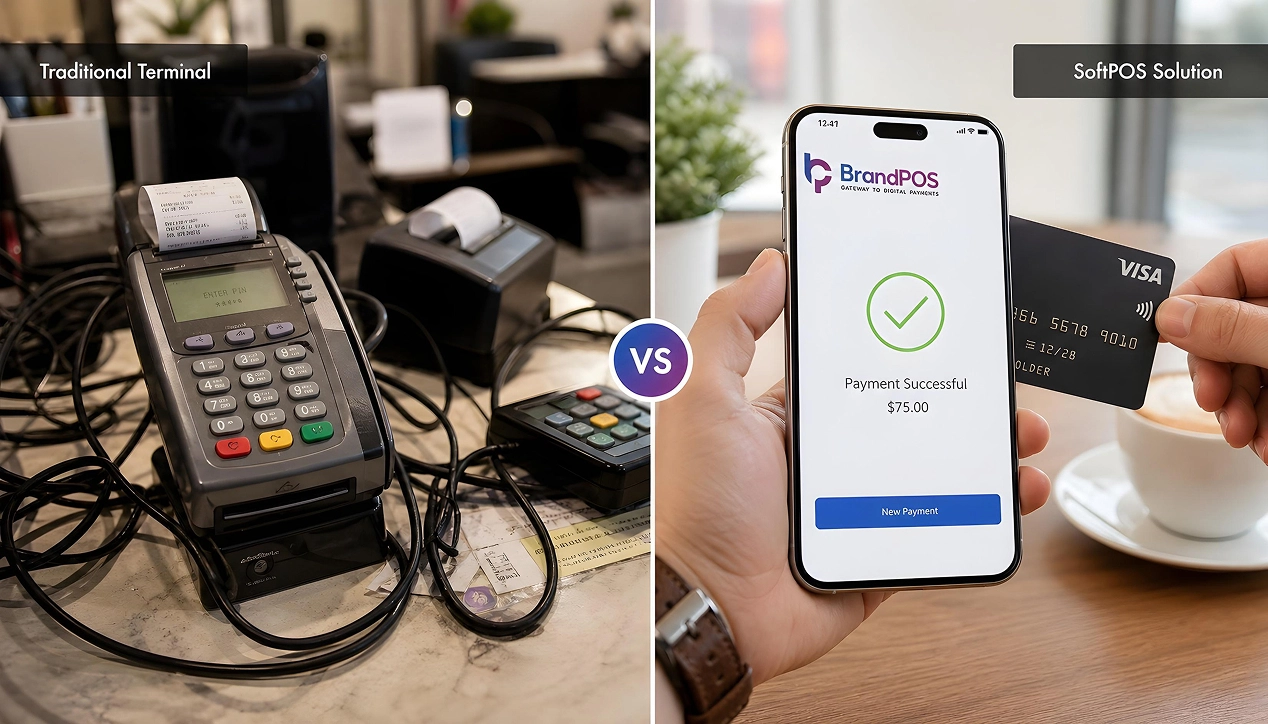
| Aspect | Card Terminal | SoftPOS App |
|---|---|---|
| Hardware required | Yes. Needs a dedicated device | No. It uses your smartphone/tablet |
| Upfront cost | $200–$1,000+ per device | Near zero (app only) |
| Monthly cost | $20–$150 (software + lease) | Low/free tiers or % per transaction |
| Setup time | Hours to days (shipping, config) | Minutes (download and go) |
| Mobility | Portable or countertop | Fully mobile — works anywhere |
| Payment methods | Chip, tap, swipe, NFC | Contactless, NFC, QR, wallets |
| Internet required | Yes | Yes |
| PCI compliance | PCI DSS | PCI MPoC |
| Maintenance | Device servicing, firmware updates | App updates only |
| Best for | High-volume fixed locations | Mobile merchants, small businesses, freelancers |
Benefits of Using a Card Terminal or SoftPOS App
When evaluating the benefits of a card terminal vs softpos app, each option delivers a specific set of operational advantages:
Your Phone Is Already a POS Terminal
Stop paying for hardware you don't need. Download BrandPOS and start accepting payments in minutes.
Download the App FreeTraditional card terminals offer familiar user experiences and hardware reliability. The benefits of using a dedicated card terminal include:
- Zero learning curve for customers, who are already highly familiar with inserting or tapping cards on dedicated payment hardware.
- High reliability for processing large transaction volumes with dedicated, stable hardware systems designed for high-frequency use.
- Offline transaction processing capabilities, allowing merchants to accept and store payments securely even when internet connectivity is spotty.
- Integration with customer-facing displays that clearly present transaction details, fostering transparency and building trust.
- Full compatibility with all card types, including tap-to-pay, contact chip cards, and older magnetic stripe cards.
SoftPOS apps offer low-cost entry points, unmatched flexibility, and scalable features. The benefits of using a SoftPOS app include:
- No hardware or device maintenance costs since the application runs directly on your existing personal or business smartphone.
- Rapid onboarding that allows you to download the app, complete merchant verification, and start processing payments within hours.
- Ultimate mobility, giving you the ability to accept payments anywhere, whether you are on the sales floor, at a pop-up market, or on a delivery run.
- Seamless scalability during busy shopping seasons by downloading the app onto additional employee smartphones and linking them to a single account.
- Contactless-by-design interface that aligns with modern customer preferences for hygienic, fast tap-to-pay transactions.
Card Terminal vs SoftPOS for Small Businesses
For a small business owner, deciding between a card terminal vs softpos app can make a huge difference in real-world operations—both in terms of operational ease and long-term cost-effectiveness. Investing in a traditional card terminal requires an upfront capital outlay ranging from $200 to $700 per unit, followed by recurring monthly software maintenance and leasing fees. Conversely, a SoftPOS app is highly cost-effective, allowing merchants to download and install the software onto existing smartphones. If the owner has their business documentation and tax records in order, verification can be completed rapidly, allowing them to begin accepting payments in hours or days (subject to completing banking and merchant verification requirements). Even for established small businesses, adopting a SoftPOS app adds invaluable operational flexibility, making it easy to accept payments at outdoor events, pop-up markets, and delivery doorsteps without buying extra equipment.
Which Businesses Should Choose a Card Terminal or SoftPOS App?
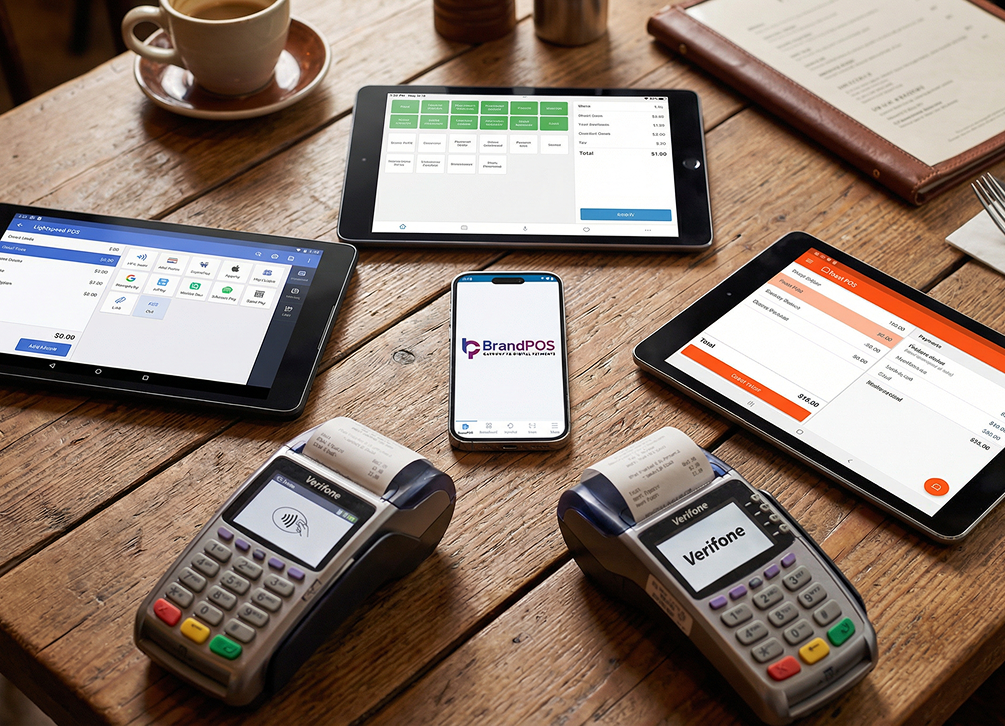
How do businesses choose between a card terminal vs softpos app? To find the right fit, they must analyze customer preferences, sales environments, and cost parameters. If your customers primarily pay with magnetic stripe cards or physical chip cards, or if they belong to an older demographic that feels more comfortable with physical keypads, a traditional card terminal at the counter remains a solid choice. In contrast, many multi-lane businesses place a card terminal at the checkout counter and install a SoftPOS app on floor employees' devices to handle peak hours and eliminate long checkout queues.
SoftPOS apps are suitable for businesses:
- Merchants looking for flexible payment options with low upfront investments and no long-term hardware lease commitments.
- Mobile businesses such as market vendors, food truck operators, and freelancers who need to accept payments on the go.
- Businesses participating in temporary events, trade shows, or seasonal pop-up shops who need temporary checkout counters.
- Rapidly expanding enterprises that require high operational flexibility for their growing team of field sales agents.
- Companies that benefit from real-time sales data, transaction analytics, and individual employee performance tracking.
- Merchants whose customer base prefers paying with mobile wallets, contactless cards, and other modern digital payment methods.
Future of Digital Payments – Are SoftPOS Apps Replacing Card Terminals?
The future of digital transactions is rapidly shifting away from hardware dependency. While a card terminal vs softpos app debate might seem ongoing, market indicators show a strong momentum towards app-based solutions. SoftPOS apps are not completely replacing traditional card terminals yet, but they are becoming the dominant option for new and expanding businesses. 71% of merchants already believe that SoftPOS is set to replace the traditional card terminals. Even the market data reflects this belief - the number of merchants who use SoftPOS apps is expected to grow by 475%. This rapid rise is fueled by the ubiquity of NFC-enabled smartphones, customer preferences for contactless tap-to-pay options, and the establishment of clear international regulatory frameworks like PCI-MPoC. Legacy terminals will continue to serve niche areas with older customer demographics, but SoftPOS is now a mainstream payment solution.
Start Accepting Payments Today with BrandPOS SoftPOS App
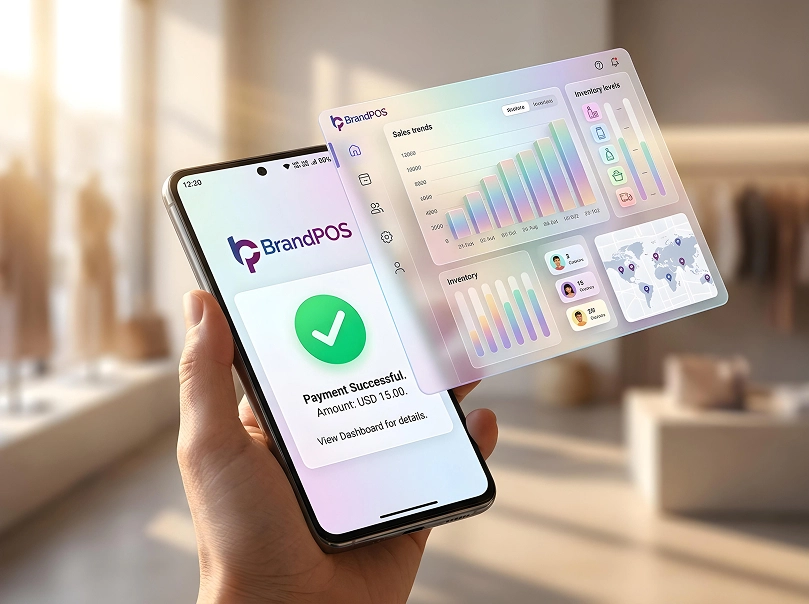
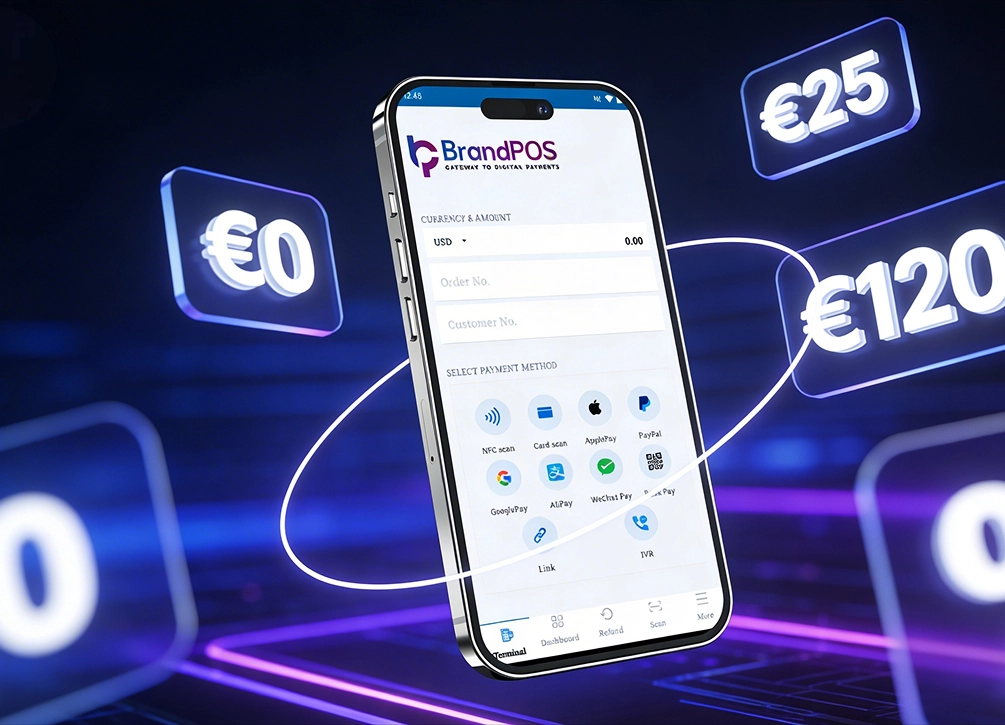
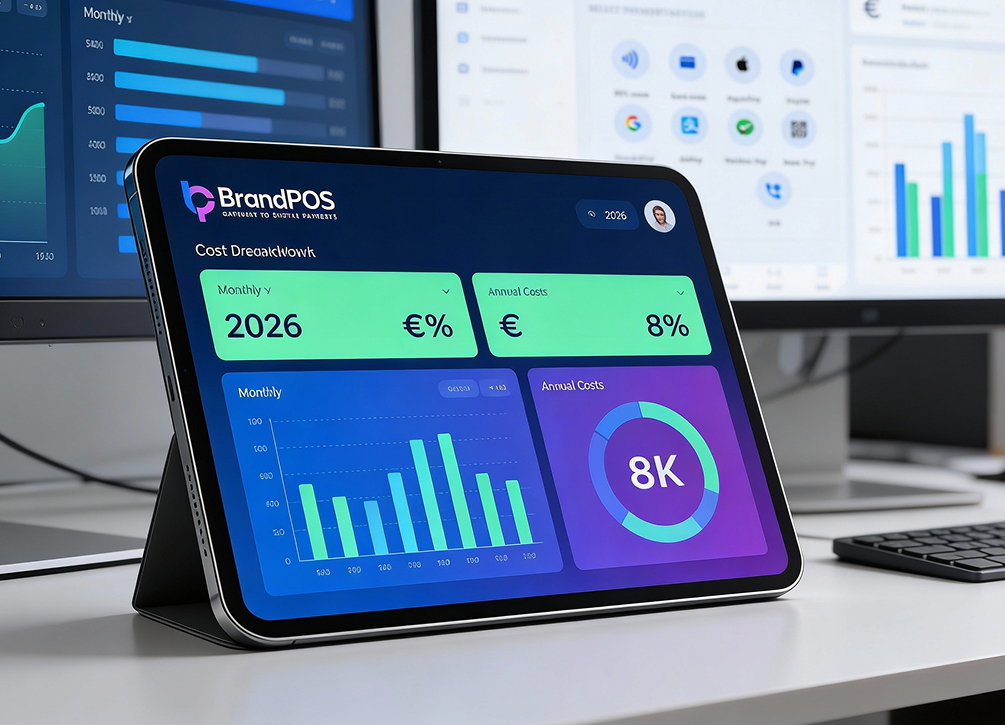
For businesses struggling to decide between a card terminal vs softpos app, BrandPOS makes the decision simple. BrandPOS is designed as a native, standalone SoftPOS app rather than an extension of a hardware system. This means it runs directly on your existing smartphone without requiring any proprietary dongles or external card readers. For small businesses and independent merchants, BrandPOS provides a low-barrier payment option with minimal upfront investment and a quick, transparent setup process. It eliminates the friction of traditional card-reading machines, providing an intuitive payment experience for customers and a comprehensive sales dashboard for merchants.
- Quick setup and onboarding with verification timelines based on standard banking and merchant validation checks.
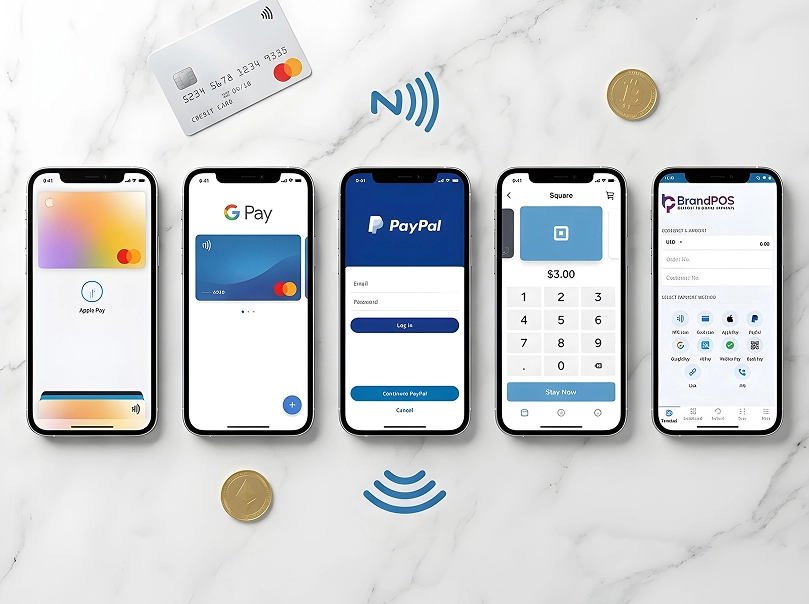
- Broad compatibility with multiple payment methods, including mobile wallets, contactless cards, QR codes, and payment links.
- Centralized merchant dashboard that provides real-time sales analytics and lets you manage transactions across multiple devices in one place.
- Flexible pricing plans, including an entry-level option with the first month free, and a professional tier with a 0.19% transaction fee (subject to a minimum €20 monthly invoice).