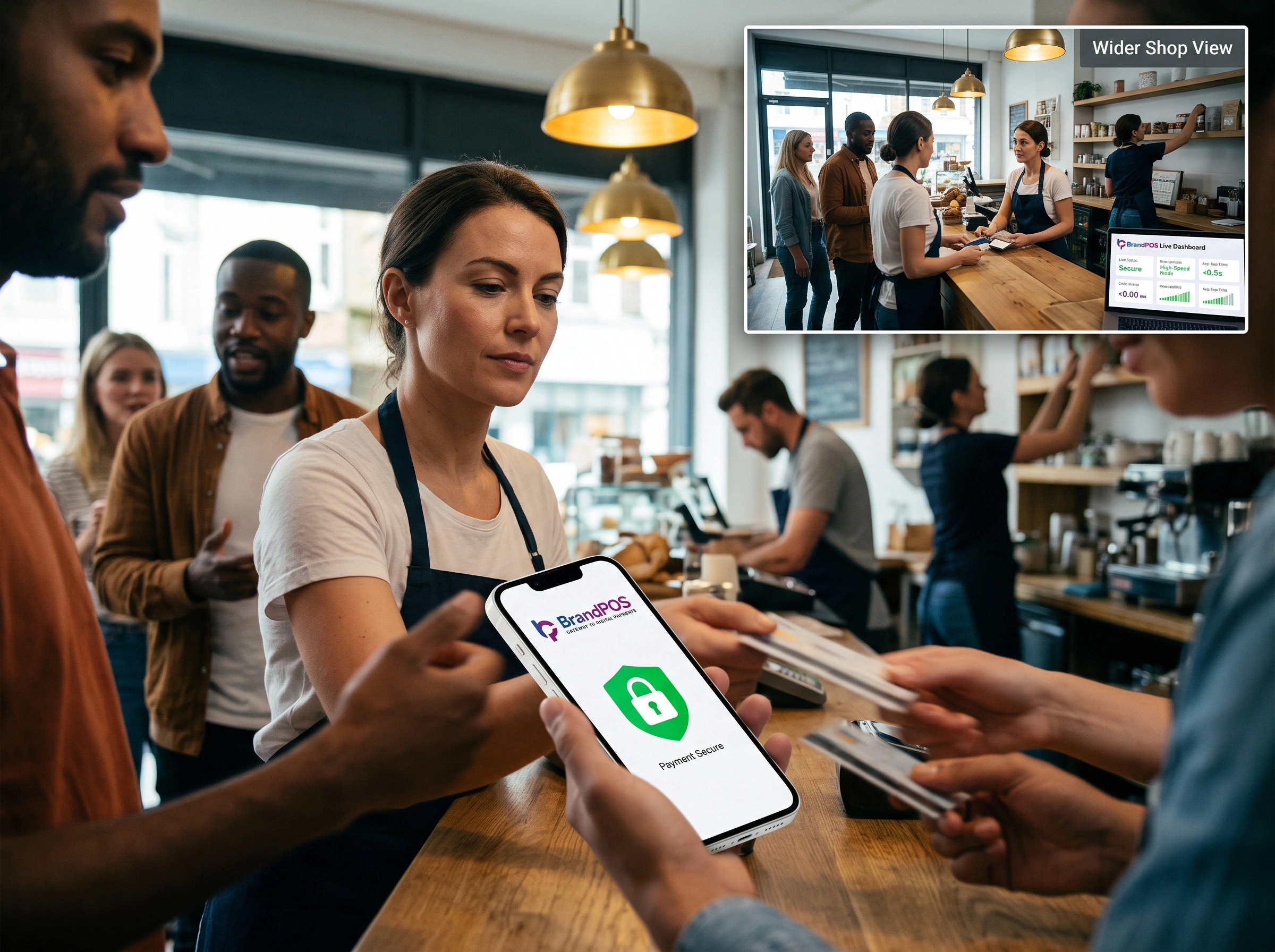
Is SoftPOS safe? This is one of the major concerns for any business that is switching to a SoftPOS app. As the payment data is handled through the smartphone that we use for calls or texts or browsing, it is natural to feel a bit of anxiety about SoftPOS security.
The questions like, is SoftPOS safe? And concerns about SoftPOS payment security are perfectly justified. And the answer to these questions about SoftPOS security lies to a large extent in the SoftPOS app that you choose.
Every merchant wants to eliminate clunky, leased hardware without exposing their customer relationships to fraud, stolen credentials, or compliance penalties. Understanding the robust multi-layer architecture behind tap-to-pay on commercial off-the-shelf devices demonstrates why mobile payment acceptance is rapidly becoming the global standard for modern commerce.
Accept Contactless Payments Securely on Your Phone
Turn your smartphone into a PCI-compliant payment terminal with BrandPOS. Zero extra hardware, zero card data stored on device, and end-to-end encryption.
Key Takeaways
- Mobile tap-to-pay architecture is engineered on a zero-trust model: sensitive cardholder data is tokenized and encrypted at the exact instant of the tap, meaning the smartphone never sees, handles, or stores cleartext card numbers.
- The PCI Security Standards Council regulates mobile tap-to-pay through the MPoC standard, requiring stringent third-party laboratory verification before any solution is publicly certified.
- Both iOS (via dedicated Secure Element hardware) and Android (via hardware-backed Trusted Execution Environments and active cryptographic attestation) prevent malicious software from intercepting contactless transactions.
- Unlike fixed card terminals prone to physical skimming devices and rogue overlay attachments, SoftPOS removes mechanical vulnerabilities while guarding against software tampering through continuous cloud health monitoring.
- Business owners maintain critical responsibilities for physical device hygiene, including enabling biometric authentication, using unique staff credentials, and selecting apps officially vetted on the PCI Council's public registry.
Is SoftPOS Safe?
A SoftPOS app is a safe option for processing payments when it has been built to the right security standard - the PCI MPoC (Mobile Payments on COTS).
The PCI Security Standards Council is the industry body that handles the card security rules. It had earlier published two security standards - for tap payments on phones and PIN payments on phones. In November 2022, it published a comprehensive standard that combined and refined these two earlier standards.
In plain terms, the MPoC benchmark is a long list of rigorous security requirements. A SoftPOS app has to be tested by an independent lab against all the security requirements before it can be termed as 'safe.'
When we answer a question like, "Is SoftPOS secure?" We have to differentiate between a payment method being safe vs. being risk-free.
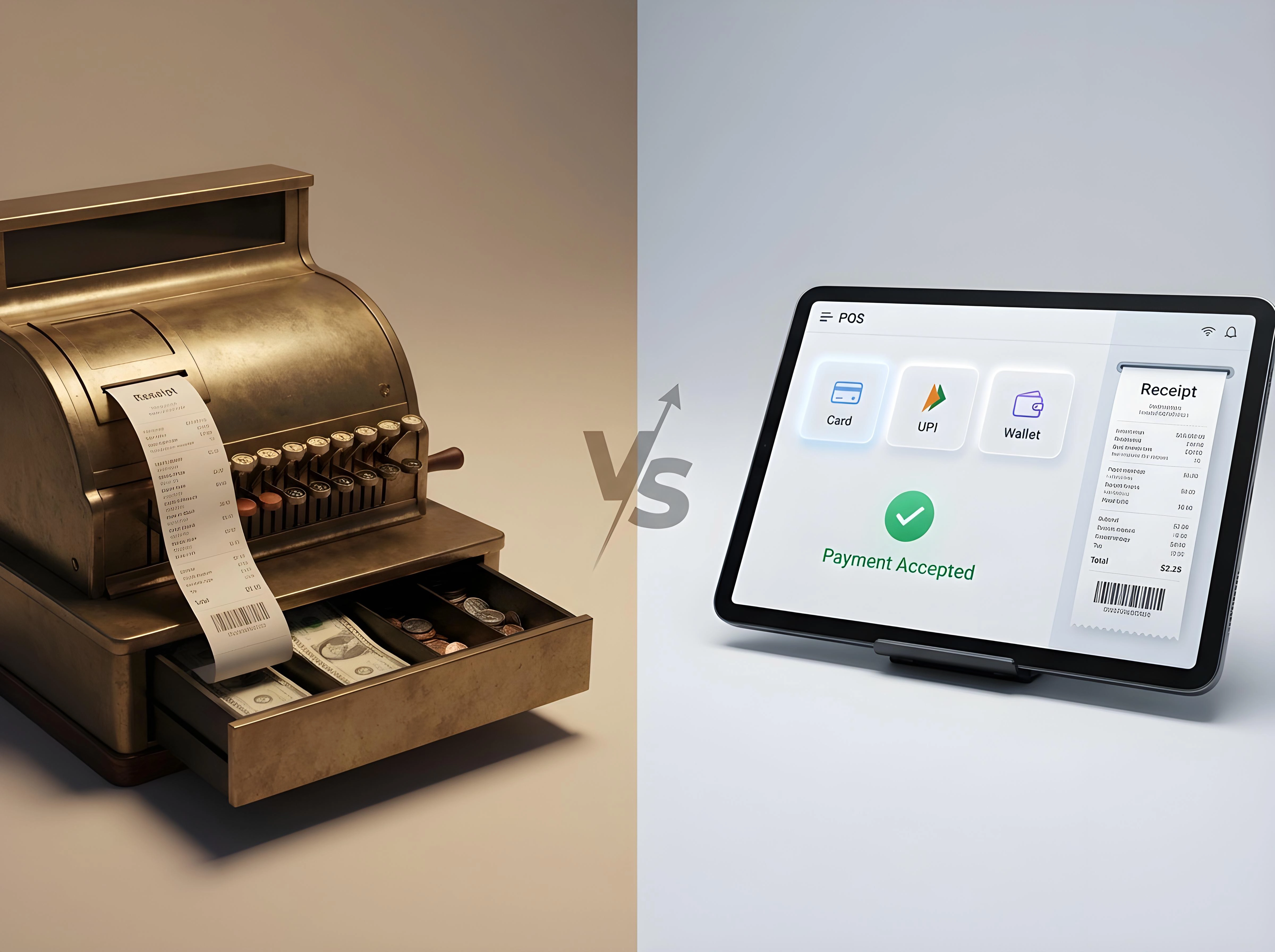
The traditional POS is a sealed box meant only for handling payments. As we are using SoftPOS apps on consumer devices meant for general purposes, there will be situations where they cannot offer the same level of safety as a physical POS.
A SoftPOS app makes up for the vulnerabilities of a phone with layers of software protection and constant monitoring. So, you need to have clarity about where your SoftPOS app can compensate for security risks and where you need to add more safety procedures on top.
How Does SoftPOS Work for Contactless Payments?
The contactless payment security in the case of a SoftPOS app relies on the principle that ‘the app shouldn’t be the one holding the sensitive data.’
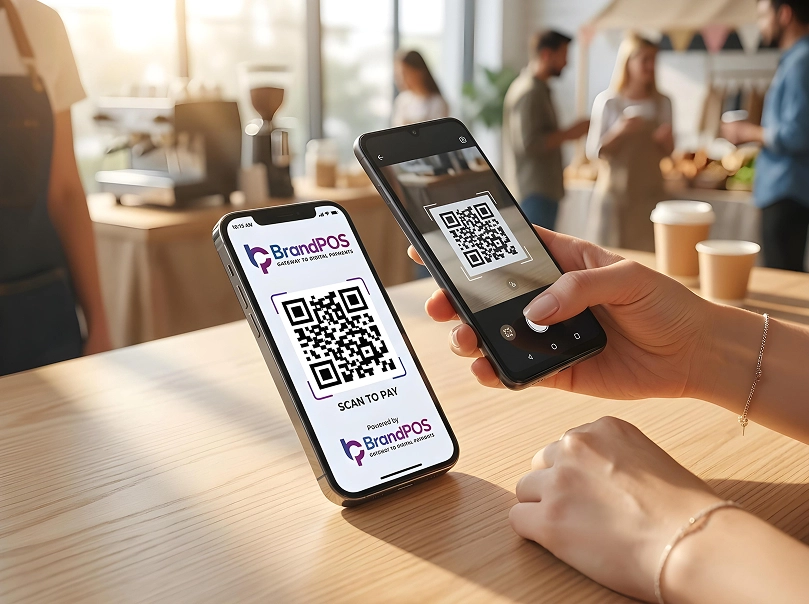
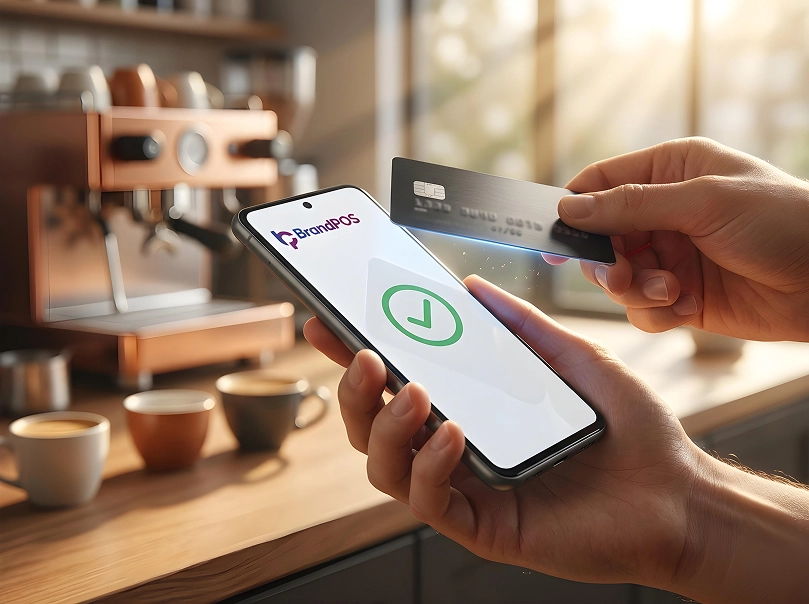
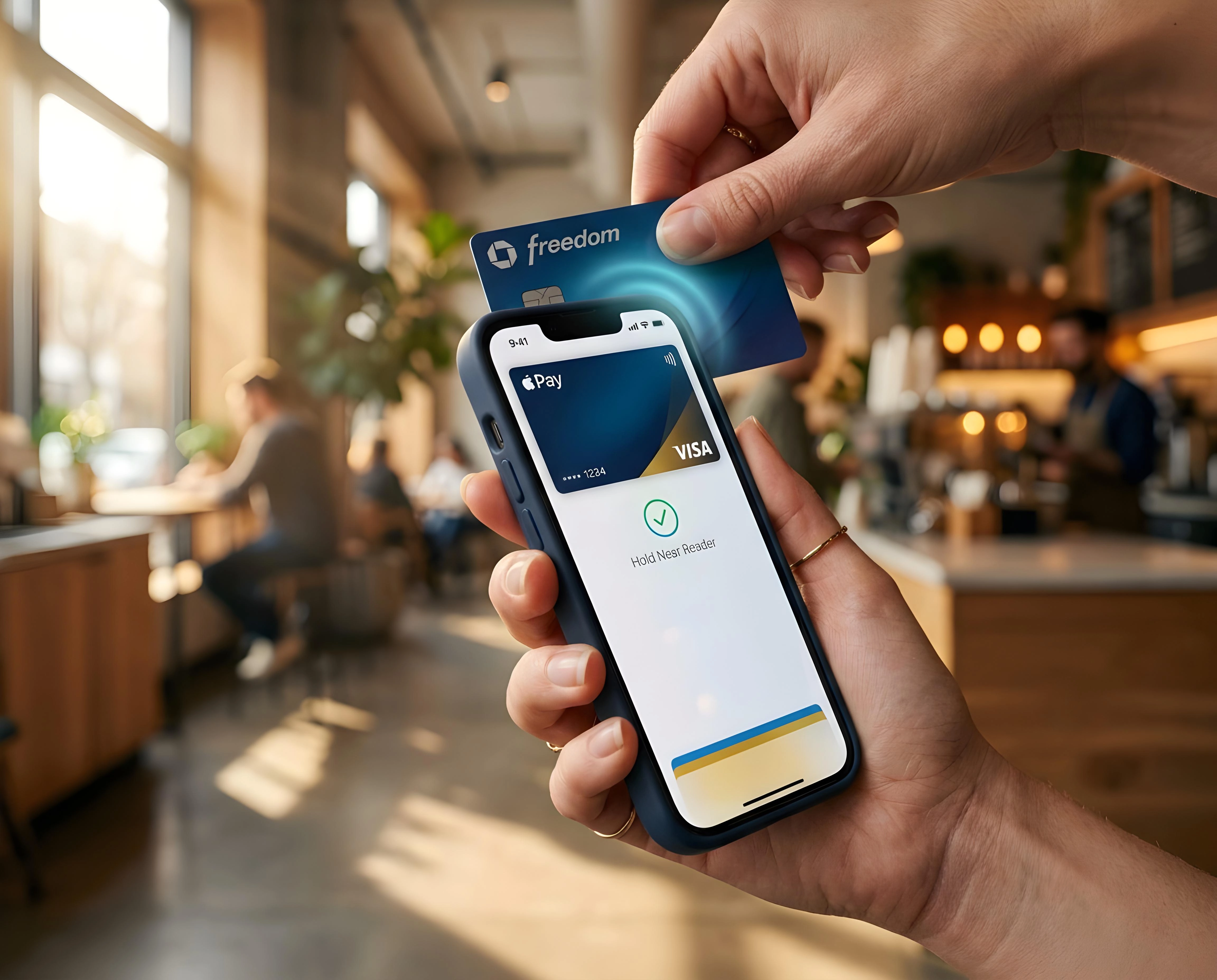
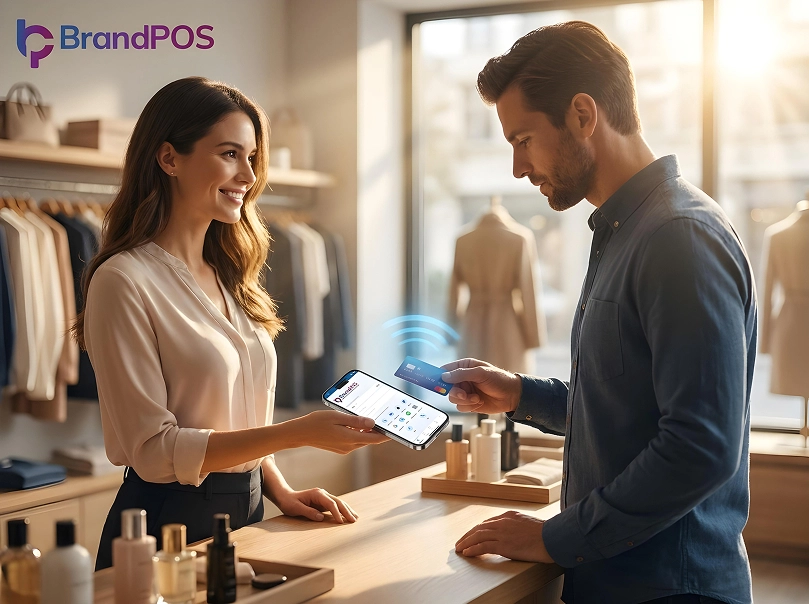
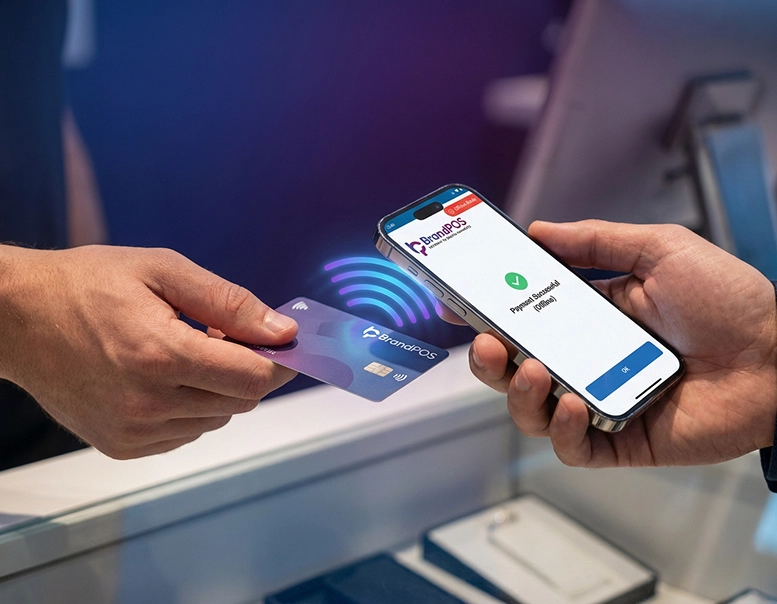
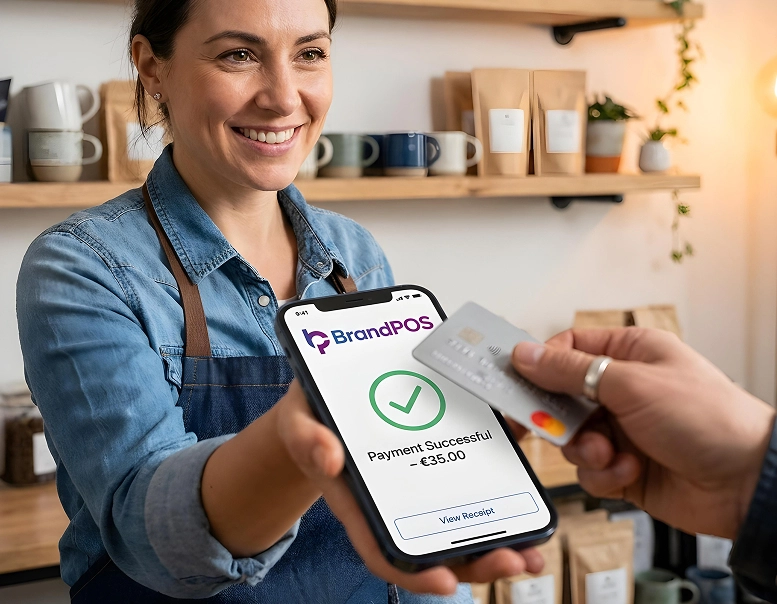
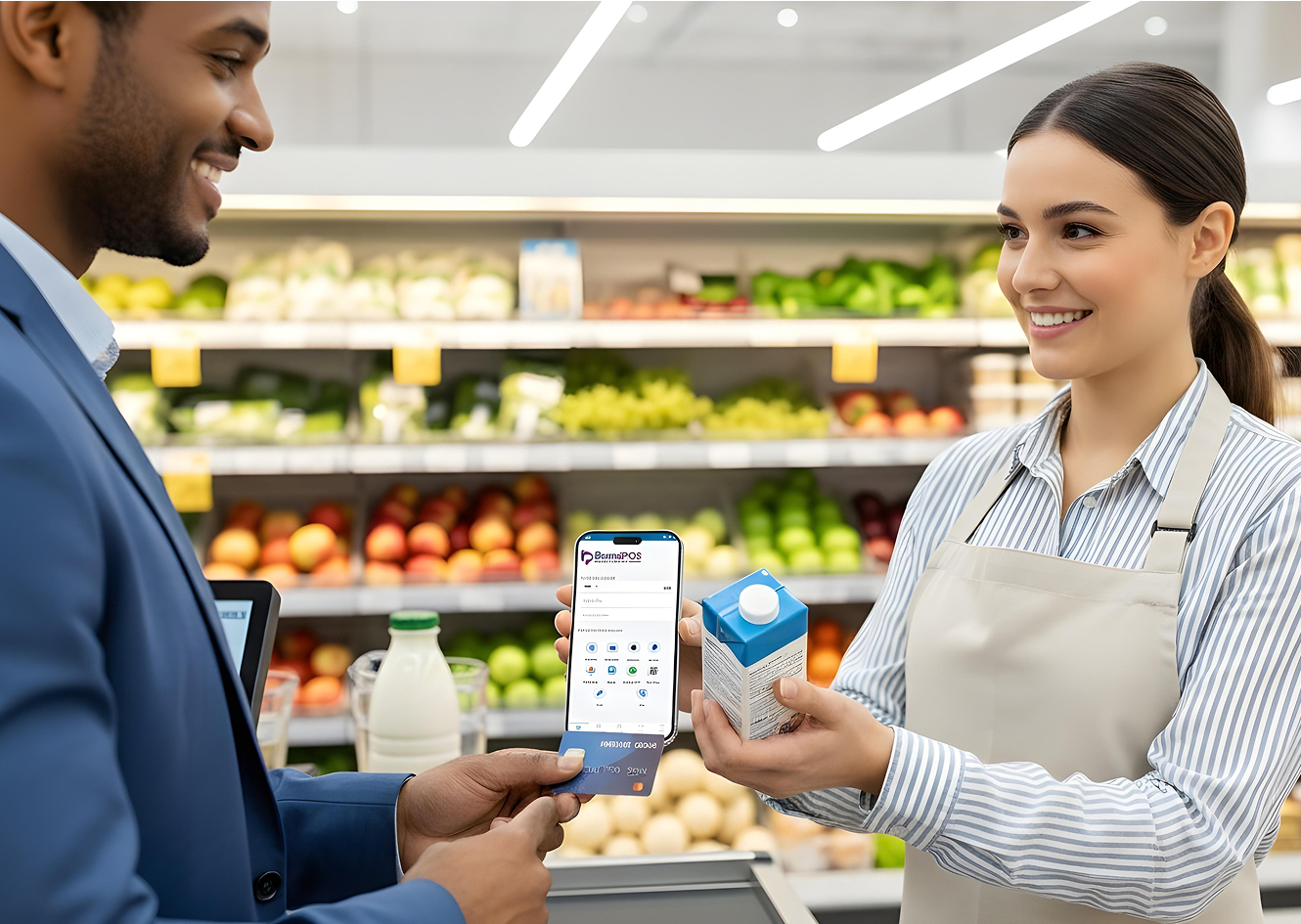
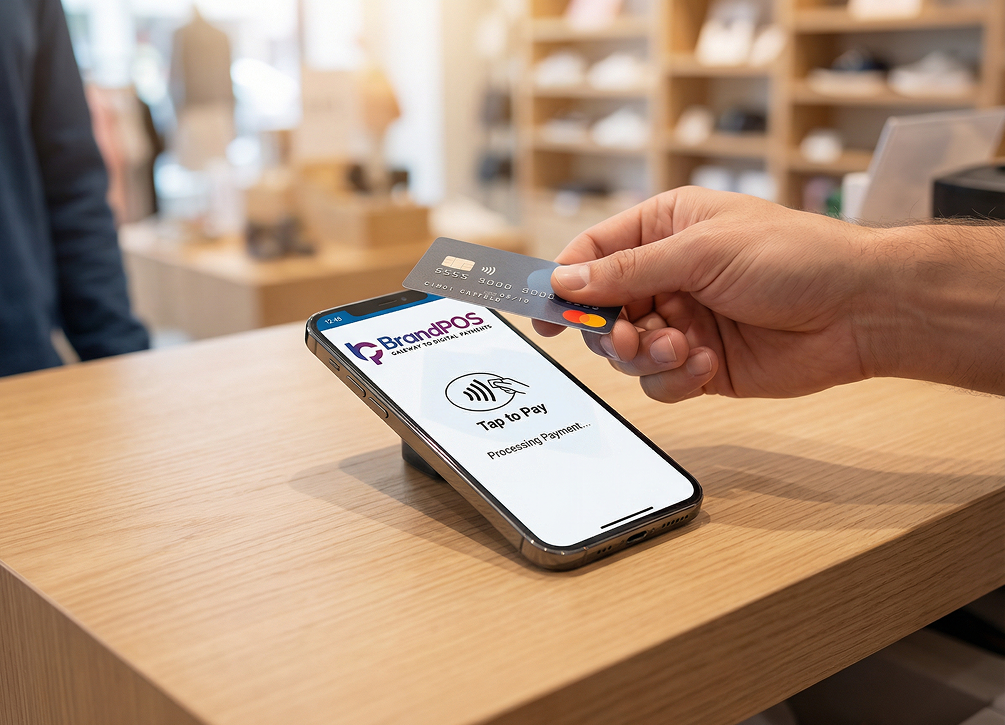
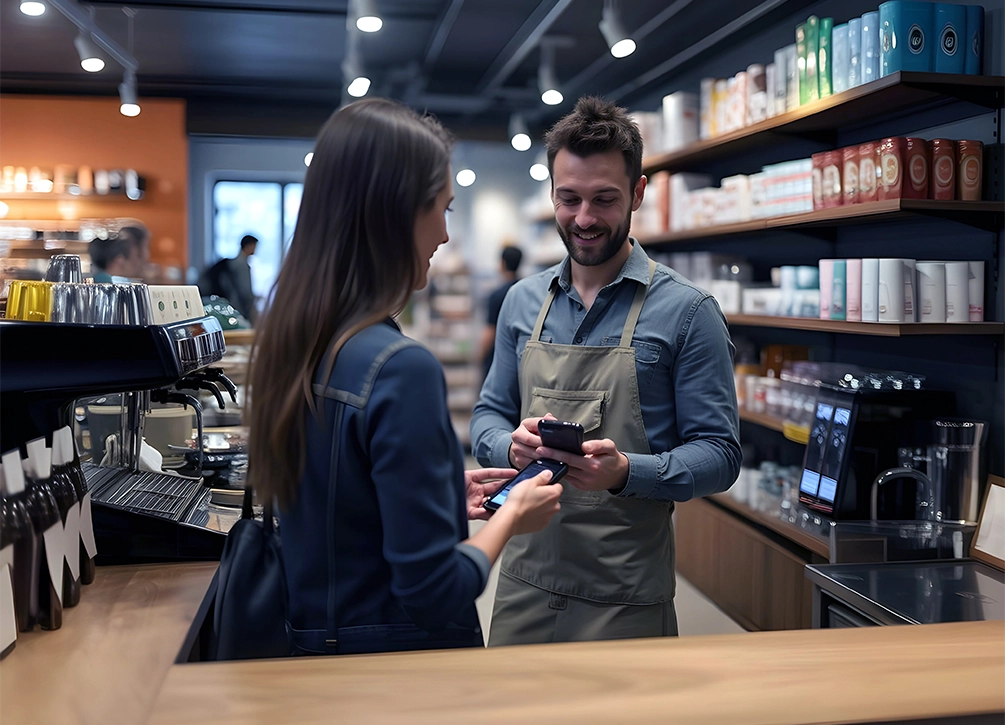
The tap: For a contactless payment, you have to enter the amount to be paid on your SoftPOS app, and the customer taps their contactless card, phone, or watch on the back of your phone to make the payment.
Your phone reads the payment credentials over its built-in NFC that has a limited range of a few centimeters.
Now the customer’s chip or wallet will generate a unique single-time code. This code is known as a cryptogram and is generated fresh for each tap.
The payment data is encrypted and sent to the servers of your payment provider. The bank/the card provider will accept or decline the payment.
SoftPOS on Apple
In the case of an iPhone, it has a dedicated security chip called the secure element for handling contactless payment security. When a card is tapped, the secure element takes control of the NFC reader. The card details are visible only to the security chip and are not shared with the SoftPOS merchant app at any point.
The secure element encrypts the payment data, and only the service provider can decrypt the data after getting the key from Apple’s servers. Apple also emphasizes that it does not store card details on its servers.
SoftPOS on Android
In the case of contactless payment security for Android, the core principle remains the same - the sensitive data is not shared with the merchant SoftPOS app. Android uses a combination of the phone’s own security features and the provider’s software protections to ensure SoftPOS payment security.
How Does SoftPOS Protect Card and Customer Data?
When we look at SoftPOS app security, a good SoftPOS app relies on a combination of safeguards.
Layer 1: A One-time Code for Every Tap
For every payment, a one-time code is generated (the EMV cryptogram), and it cannot be used for any other transactions, even if someone manages to intercept it.
Layer 2: Tokens that Cannot be Reused
All customer data is processed through tokenization, and the exact credentials are never saved or shared.
A study by VISA shows that when tokenization is used, fraud at the point of sale falls by a whopping 90%. The tokenized transactions have a 35% lower fraud rate than transactions that are not tokenized.
Layer 3: Encryption from the Moment of the Tap
The SoftPOS app never sees that data because the data is encrypted at the very moment the tap is made. The data stays encrypted when it reaches the payment provider. So, the SoftPOS app does not see, handle, or store the customer data at any point.
Layer 4: In-built Security of the SoftPOS App
When it comes to questions like, "Is SoftPOS safe?" the advantage of a SoftPOS app lies in how it views that consumer device. The MPoC treats the device as untrusted by default. So, it focuses on solutions to compensate for the vulnerability of the device:
- Software protections: The SoftPOS app has to resist tampering and reverse engineering.
- Attestation and monitoring: A backend service continuously checks the health of the app and the device to detect attacks and respond before sensitive data is compromised.
Layer 5: Independent Testing and a Public Listing
The SoftPOS apps are assessed by PCI-recognized labs, and the PCI Council recommends that the merchants should pick the SoftPOS options from its public list.
Layer 6: PIN Protection
For transactions that require PIN entry, when the customer enters the PIN on the SoftPOS screen, it is never available to the merchant for reading or storing.
What Are the Real Security Risks of SoftPOS?
Thanks to modern MPoC standards, in most cases you can confidently say yes to the question, "Is SoftPOS safe?" But as we have discussed above, safe does not mean that you are entirely protected from SoftPOS risks.
A Stolen Phone
SoftPOS security can be compromised if the merchant phone that has the SoftPOS app gets lost or stolen. Here the worry is not about risk to customer data but that a third party may get into merchant data. A passcode, biometrics, and remote-wipe tools protect you from this particular risk.
A Compromised Phone
The SoftPOS security can be put at risk if the phone has outdated software or has installed dodgy apps. The attestation measures of the SoftPOS app can catch some of these vulnerabilities, but the merchant still has the responsibility of keeping the device clean.
Weak Credentials
A stolen or guessed password is one of the most popular ways used for phishing. Using unique passwords and turning on two-factor authentication can strengthen the SoftPOS app security.
Shared Devices
When multiple staff are using the same device, it compromises SoftPOS security, as you cannot tell who did what. Give separate credentials for each staff member for maintaining a clear trail of transactions.
Unvetted App
If you install a SoftPOS app that is not publicly listed by the PCI Council, it carries a huge risk.
Is SoftPOS as Safe as a Traditional Card Terminal?
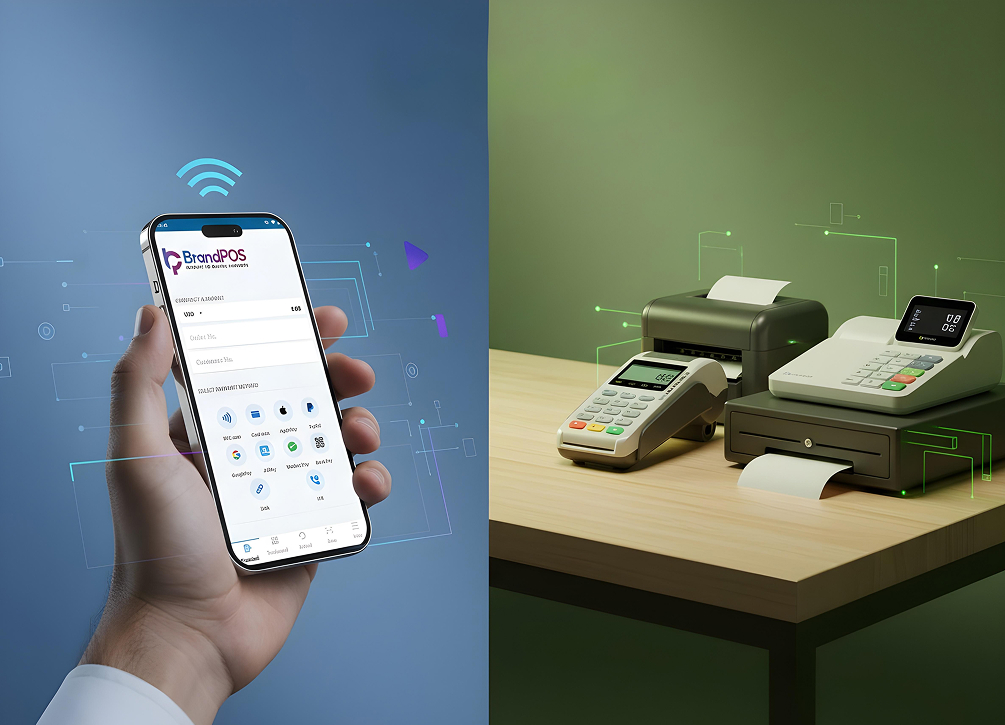
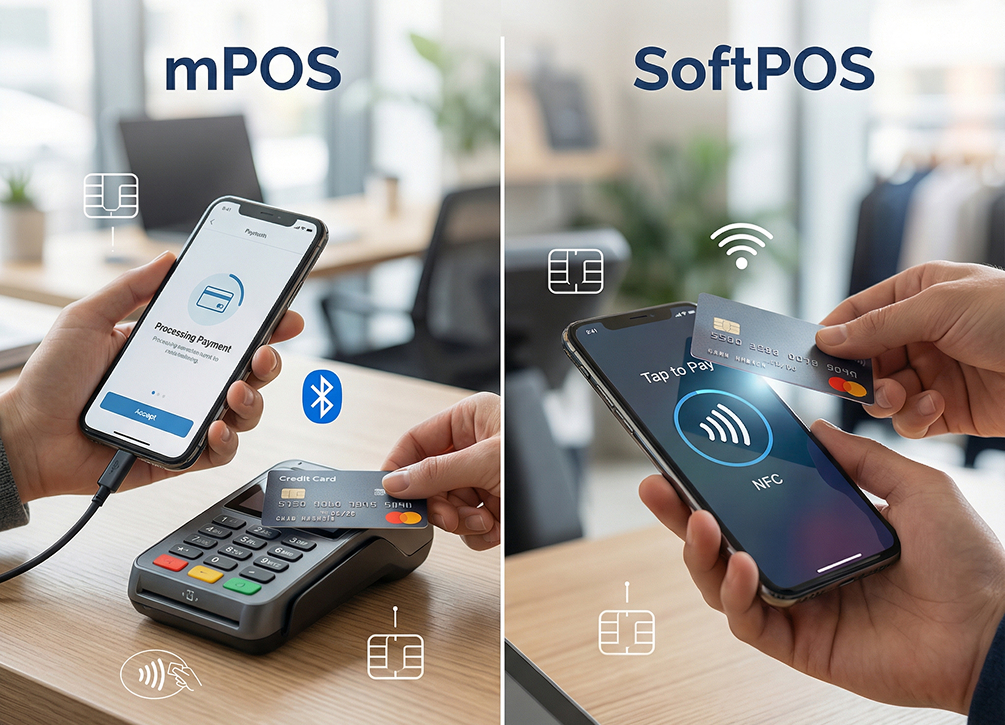
The traditional card terminal and a SoftPOS app have different security architectures and systems.
When you ask, "Is a hardware POS safe?" the answer lies in how tamper-proof and physically secure the dedicated hardware is. For a question like, Is SoftPOS safe?, the answer lies in the security mechanisms of the app itself and not on the device on which it is being used.
Here is a quick comparison of the SoftPOS payment security vs. traditional card terminal security:
| Security aspect | Traditional card terminal | SoftPOS on a phone |
|---|---|---|
| Physical tamper protection | Purpose-built hardware designed to resist physical tampering | None built in; the phone is ordinary hardware, so protection comes from software and monitoring |
| Where card data is read | Inside certified terminal hardware | Inside a protected part of the app or phone, depending on the solution (on iPhone, the Secure Element) |
| Transaction security | Per-transaction cryptograms and encryption | Same per-transaction cryptograms and encryption, since both use the EMV standard |
| Updates and patching | Updated by the provider, sometimes slowly | Updated through app releases and continuous backend checks |
| Monitoring | Varies by provider | Mandatory attestation and monitoring under standards |
| If it’s lost | Report it, and the provider deactivates it | Lock or wipe the phone, and have the provider deactivate the app |
| Biggest weak spot | Physical tampering, skimmer attachments | Device hygiene, weak passwords, unvetted apps |
How Can Businesses Choose a Secure SoftPOS App?
The first and the most important factor that answers your question, is SoftPOS safe? Lies in whether the app appears in the PCI council’s listing. Just a claim on the website without the backing of a PCI listing is worthless.
Your card networks also run their own compliance programs. You have to ask Visa, Mastercard, and any other brands that you want to use, "Is SoftPOS secure?" in the case of the app you have chosen.
The company that handles your payments should be able to confirm current PCI DSS compliance status. Does the SoftPOS provider give a list of phones and OS version requirements? You need a clear list, and the service provider should block devices that are too outdated or compromised.
A big part of questions like is SoftPOS secure? lies in data handling. The SoftPOS app should not store any data. And if there are exceptions like offline transactions, it should be clearly stated.
What Should Merchants Verify About BrandPOS SoftPOS?
BrandPOS is a true SoftPOS app, i.e., made to work completely from your phone without any extra hardware. When you want to verify the SoftPOS app security of BrandPOS, you need to ask the same questions that you would ask to any service provider:
- PCI listing: Confirm that the BrandPOS app appears on the PCI’s public list.
- Check with your card or bank service provider if they support BrandPOS in your country.
- Verify the device list of BrandPOS to ensure that it covers the devices used by your sales team.
- Get clarity and confirmation on how card data is handled and what, if anything, is kept on the device.
- Confirm if you can set up separate staff logins with granular transaction permissions.
- How does BrandPOS support you when you lose your phone? How quickly the app can be made secure and what exactly you need to do to protect your business data.
- Check what the support mechanism is for both regular security concerns and also for emergency situations where security may have been compromised.
Experience Bank-Grade Tap-to-Pay Protection with BrandPOS
Zero card data retained, instant attestation monitoring, and 0.19% transaction rates. Protect your checkout today.